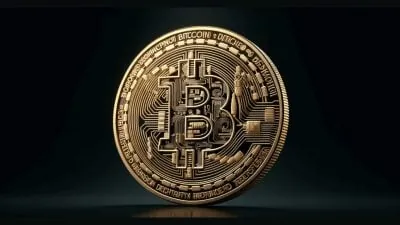
Bitcoin Reaches 20 Million Coins Mined, 95% of Total Supply
Bitcoin's circulating supply has surpassed 20 million coins, representing approximately 95% of the 21 million cap. With most new supply already in circulation, miners will increasingly rely on transaction fees rather than block rewards to sustain operations.
Written by CoinArticle’s AI Newsroom · from 1 cited source. How we work
Supply Milestone Reached
Bitcoin has mined more than 20 million coins out of its fixed 21 million cap, according to on-chain records. The remaining 1 million coins will be released over the next 120 years as block rewards continue to halve roughly every four years. The next halving, scheduled for 2028, will reduce block rewards from the current 6.25 BTC to 3.125 BTC per block.
Implications for Miners and Security
As block rewards shrink, miners face a narrowing window to rely on newly minted Bitcoin as a revenue source. Transaction fee income will become the primary economic driver for network security. This dynamic may pressure miners with higher operational costs while potentially increasing the competitive advantage of efficient operations. Network security ultimately depends on sufficient aggregate hashpower, which in turn depends on miner profitability.
Supply Constraint and Market Dynamics
Bitcoin's decreasing issuance rate removes a source of selling pressure from the network. If demand remains stable or increases, the tightening supply may create conditions that support or exert upward pressure on price. However, price alone does not guarantee mining profitability; the relationship between Bitcoin's market value and the cost of electricity and hardware will determine whether miners continue to invest in new capacity.
Why It Matters
For Traders
Reduced new supply entering the market removes one source of selling pressure, though macro and sentiment factors remain the primary price drivers in the near term.
For Investors
Supply scarcity increases over decades as issuance asymptotically approaches zero, tightening Bitcoin's long-term monetary policy and supporting the store-of-value thesis.
For Builders
Layer 2 and sidechain projects may see increased demand as transaction fees on Bitcoin mainnet rise, incentivizing users to seek lower-cost alternatives for payments and smart contracts.
This article is for information only and is not financial advice. Read the full disclaimer.