Bitcoin Rebounds to $82K as Trump Eases Iran Strike Concerns
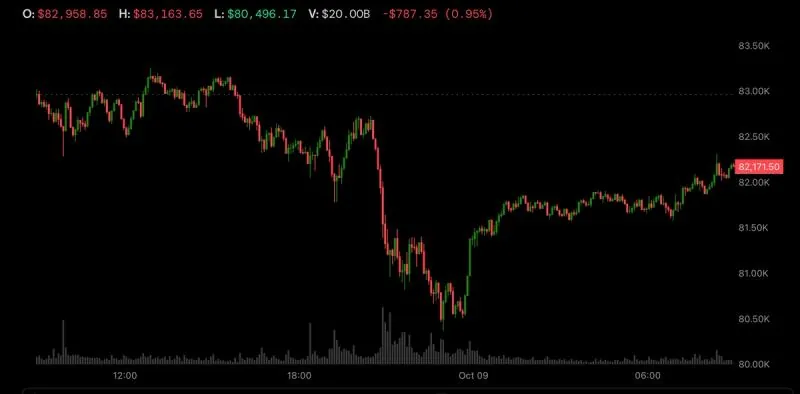
Bitcoin rose to $82,000 on Tuesday following Trump's statement ruling out military strikes against Iran and signaling a regional peace deal. The rebound came despite persistent ETF outflows and mixed technical signals, leaving the move's durability uncertain.
Written by CoinArticle’s AI Newsroom · from 3 cited sources. How we work
Story Updates
- Updated Oct 11, 2026, 05:10 PM: Trump announces cancellation of Iran strikes and signals multi-nation regional peace agreement, expanding scope of de-escalation.
Trump Cancels Strikes, Signals Multi-Nation Agreement
Bitcoin rallied to $82,000 on Tuesday after Donald Trump announced via Truth Social that he was canceling scheduled U.S. military strikes against Iran and signaling that a multi-nation agreement was close. Trump cited approvals from Israel, Saudi Arabia, the UAE, Qatar, Turkey, and other regional powers, removing a near-term flashpoint for wider Middle East escalation that traders had cited as a source of volatility in equities and crypto over the prior week.
Conflicting Signals on Durability
While the price action was positive, on-chain and market structure data painted a mixed picture. CoinDesk reported that crypto security experts pushed back against "bunker mode" concerns—suggesting panic-driven volatility fears were overblown. However, Crypto.news noted that spot Bitcoin ETF outflows continued even as price recovered, and that technical indicators remained weak, raising questions about whether $82,000 would hold as support or prove a brief relief rally.
The divergence between price and fund flows underscores the fragility of the bounce; a sustained move higher would require new inflows or reduced selling pressure from holders. The breadth of regional approval Trump cited suggests the agreement, if formalized, could provide durable de-escalation rather than a temporary pause.
Why It Matters
For Traders
Bitcoin at $82K faces resistance from persistent ETF outflows; durability depends on whether regional agreement holds or new geopolitical risks emerge within 48 hours.
For Investors
Multi-nation accord removes a material tail risk to risk assets, but weak technicals and continued ETF redemptions suggest institutional conviction remains cautious despite price recovery.
For Builders
Sustained geopolitical de-escalation may reduce near-term volatility demand, but the pattern underscores ongoing need for non-custodial hedging tools during macro uncertainty.
This article is for information only and is not financial advice. Read the full disclaimer.