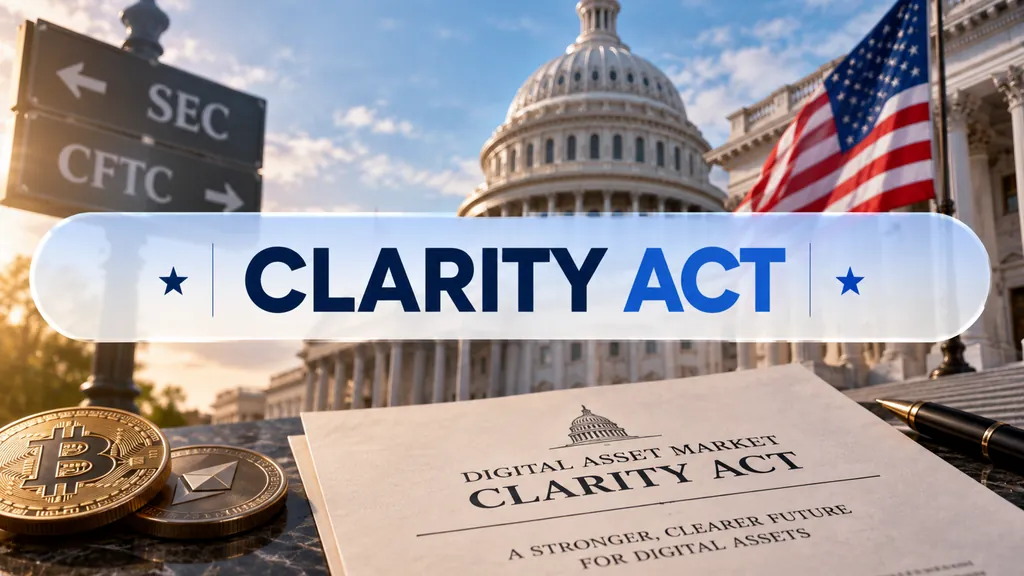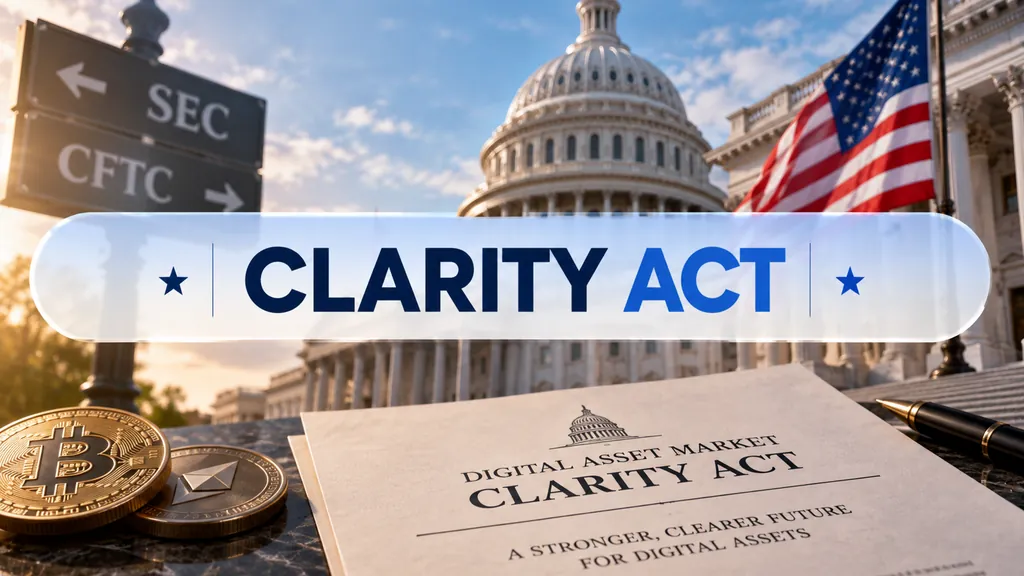
Bitwise CIO Says Crypto Better Off Without CLARITY Act After Senate Failure
The CLARITY Act failed in the Senate, and Bitwise's chief investment officer Matt Hougan argued the regulatory framework may have been too restrictive for the sector's long-term growth. Several cryptocurrencies including NEAR and Uniswap posted significant gains following the vote.
Written by CoinArticle’s AI Newsroom · from 2 cited sources. How we work
The CLARITY Act's Senate Defeat
The CLARITY Act did not advance in the Senate, marking a setback for the proposed regulatory framework intended to clarify cryptocurrency classification and oversight. Bitwise Asset Management's chief investment officer Matt Hougan characterized the outcome as potentially beneficial, arguing that the act as drafted was fundamentally misaligned with the crypto industry's needs.
Market Reaction Across Sectors
Multiple cryptocurrencies rallied following the vote. According to Bitwise analysis, NEAR Protocol gained 104% and Uniswap rose 49% between the Senate vote and September 30. Hougan identified four crypto sectors that benefited from the CLARITY Act's failure, though he did not specify all four in public statements. Bitcoin and Ethereum also rose during this period, though the sources do not provide precise percentage gains for these assets.
Bitwise's Rationale
Hougan's framing centered on the idea that while Bitcoin and Ethereum are "too big to crush" through regulation, smaller and mid-cap protocols would have faced material constraints under CLARITY's provisions. The implication is that clarity achieved through overly restrictive rules carries a higher opportunity cost than regulatory ambiguity for earlier-stage projects.
Why It Matters
For Traders
Regulatory uncertainty typically creates volatility spikes; the CLARITY failure removed one binary risk but leaves the long-term classification path unresolved.
For Investors
Delayed or rejected regulatory clarity may allow higher-risk protocols more runway to mature, but extends the timeline for institutional capital deployment at scale.
For Builders
Without a federal framework codified in law, most protocols continue operating under ambiguous state-by-state and agency-by-agency guidance, deferring but not resolving compliance questions.
This article is for information only and is not financial advice. Read the full disclaimer.