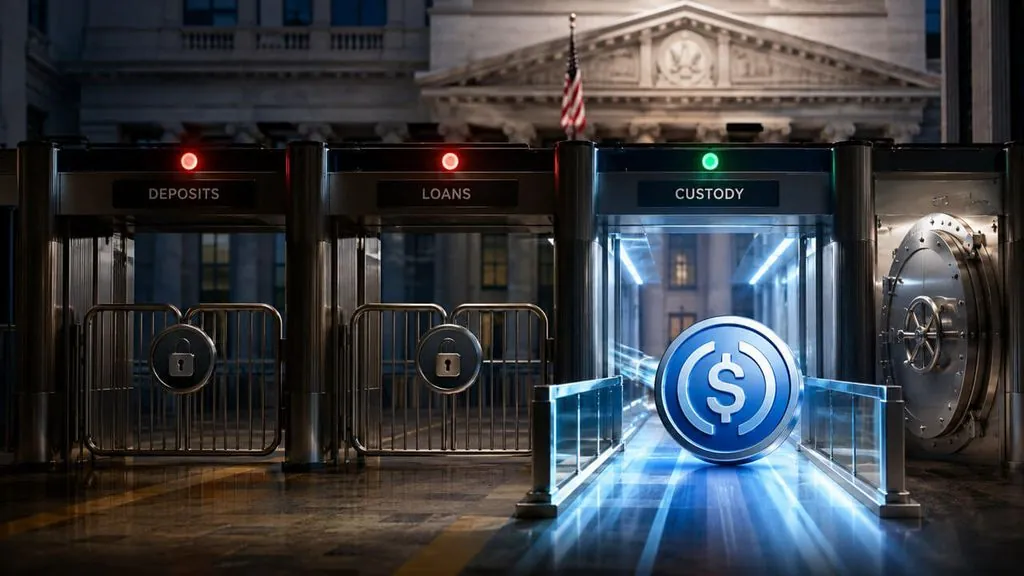
Circle Wins OCC Approval to Launch National Trust Bank
Circle secured final approval from the U.S. Office of the Comptroller of the Currency to establish a national trust bank, enabling it to hold USDC reserves under federal oversight. The charter initially restricts the bank to custody services for Circle and its affiliates, with expanded institutional custody and external deposit-taking ruled out at launch.
Written by CoinArticle’s AI Newsroom · from 2 cited sources. How we work
OCC Approval and Initial Scope
Circle received final approval from the Office of the Comptroller of the Currency to establish a national trust bank, according to filings and announcements from both Circle and the regulator. The charter grants Circle the legal authority to hold digital assets and cryptocurrency reserves under federal banking supervision. The initial scope of permitted activities is narrower than a full-service bank: Circle National Trust will offer custody services exclusively for Circle and its affiliates at launch.
What the Bank Cannot Do Initially
The OCC approval does not grant Circle the ability to accept deposits from the general public, issue loans, or hold reserves for unaffiliated institutions at this stage. CryptoSlate reporting indicates that outside institutional custody and USDC reserve management remain listed as future possibilities rather than immediate capabilities. This means Circle cannot immediately pivot to competing with traditional trust banks or offering third-party asset storage across its customer base.
Regulatory and Business Implications
The approval represents the first time a major stablecoin issuer has secured a national trust bank charter, placing USDC reserves under federal rather than state-level oversight. Bitcoin Magazine characterized the development as an expansion of Circle's regulated custody business. The limited initial scope suggests the OCC is staging the firm's expansion carefully, likely requiring demonstrated compliance before opening the trust bank to outside deposits and custody clients.
Why It Matters
For Traders
USDC backing now sits under federal banking oversight rather than state custody, potentially reducing counterparty risk for traders holding the stablecoin.
For Investors
Federal trust bank status signals regulatory acceptance of stablecoins as legitimate banking assets and sets a template for other issuers to follow.
For Builders
Smart contract protocols and DeFi apps can reference USDC reserves held in a federally regulated trust bank as a compliance assurance point when marketing to institutional users.
This article is for information only and is not financial advice. Read the full disclaimer.