CLARITY Act Passage Odds Collapse as Senate Stalls on Crypto Regulation
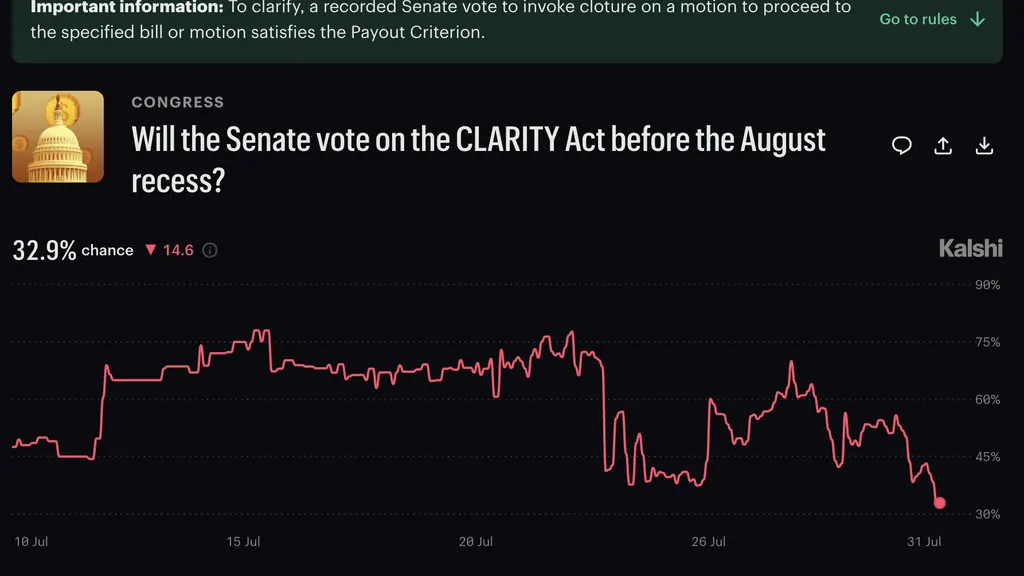
Odds of passing the CLARITY Act have fallen to between 10% and 34%, according to multiple forecasters, as the Senate deprioritizes the bill ahead of its August recess to focus on Russia sanctions and federal nominations. The regulatory uncertainty is keeping institutional capital on the sidelines heading into 2026.
Written by CoinArticle’s AI Newsroom · from 3 cited sources. How we work
Story Updates
- Updated Aug 22, 2026, 11:05 AM: Senate Majority Leader removes CLARITY Act from legislative schedule; Polymarket odds now at 34% as Russia sanctions and nominations take priority.
Odds Diverge Sharply Across Forecasters
The probability of the CLARITY Act passing has collapsed, but estimates now diverge significantly depending on the source. Polymarket prediction markets fell from 82% to around 34%, while Galaxy Digital's internal odds sit at 10%. JPMorgan, citing broader Senate stall dynamics, pegged the bill's chances at 30–37%. The wide range reflects genuine uncertainty about whether lawmakers will revisit the measure after Congress reconvenes in 2026.
Senate Removes Bill From Schedule
Senate Majority Leader removed the CLARITY Act from the legislative calendar to make room for Russia sanctions and federal nominations before the August recess, according to Crypto.news reporting. The bill, which aimed to establish a permanent regulatory framework for the $2.28 trillion crypto industry, has effectively lost its place in near-term priority votes. No single named reason for the deprioritization has been widely reported, but the combination of competing legislative priorities and divergent views within both parties appears to have prevented a floor vote.
Institutional Capital Sidelined
JPMorgan warned that the bill's deteriorating prospects are keeping institutional investors on the sidelines, viewing CLARITY Act passage as crypto's most significant near-term regulatory catalyst. The uncertainty may suppress inflows into crypto assets until either Congress revives the bill in 2026 or an alternative framework emerges.
Why It Matters
For Traders
Delayed regulatory clarity may suppress institutional inflows near-term; track Senate schedule changes and recess dates as key catalysts for bill revival attempts.
For Investors
Failure to pass CLARITY Act in 2026 would prolong structural regulatory uncertainty and further defer institutional adoption of crypto assets.
For Builders
Protracted regulatory ambiguity forces protocols and infrastructure providers to continue building defensively rather than to unified national framework.
This article is for information only and is not financial advice. Read the full disclaimer.