233k BTC Shifted to Multisig After Coldcard Exploit, Casa Data Shows
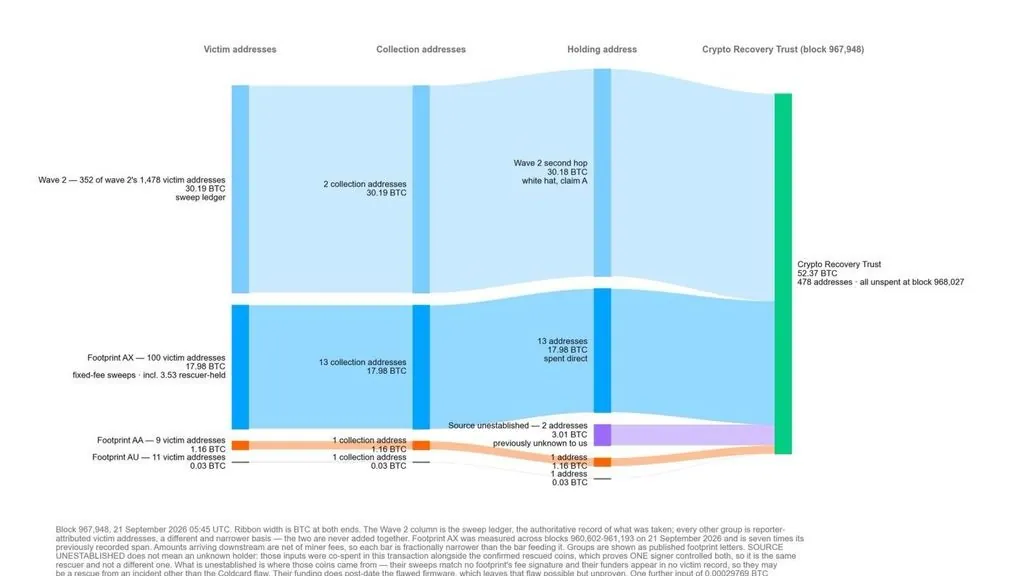
Casa CEO Nick Neuman reported that approximately 233,000 BTC flowed to multisig wallets and other custody arrangements following the Coldcard device exploit in July. The migration reflects users moving away from single-key setups on Ledger and Trezor devices, as well as existing multisig users removing Coldcard as a signing device.
Written by CoinArticle’s AI Newsroom · from 2 cited sources. How we work
The Migration After Coldcard's July Attack
Casa customer data shows approximately 233,000 BTC moved to enhanced custody arrangements in the weeks following the Coldcard exploit on July 30, according to Casa CEO Nick Neuman. The inflow came from two distinct user cohorts: those running single-key setups on Ledger and Trezor hardware wallets who switched to multisig configurations, and existing multisig users who removed Coldcard devices from their signing quorums.
The dollar value of the migration varies in reporting; Decrypt estimates the moved BTC at roughly $15 billion based on recent price levels, while the July exploit itself resulted in approximately $130 million in direct losses to Coldcard users who had their devices compromised.
Custody Model Implications
Neuman framed the migration as validation that distributed self-custody operates as an effective check on hardware wallet vulnerabilities. The pivot from single-device setups to multisig arrangements—where a compromised device cannot unilaterally move funds—suggests users responded to the exploit by increasing their custody redundancy rather than abandoning self-custody entirely.
The Coldcard exploit, which compromised the device's firmware through a supply chain vulnerability, exposed risks inherent to single points of failure in hardware-based signing. The Casa data indicates the market responded by distributing signing authority across multiple devices and vendors, a shift that would limit the impact of any future individual device compromise.
Why It Matters
For Traders
Large multisig migration may indicate retail self-custody interest remains strong despite exploit headlines; custody model shifts do not directly move price but signal conviction.
For Investors
User behavior post-exploit suggests the market is maturing toward defense-in-depth custody practices, reducing single-vendor concentration risk across the self-custody ecosystem.
For Builders
Hardware wallet vendors and multisig infrastructure teams should expect continued demand for interoperable signing schemes that do not lock users into single-device dependencies.
This article is for information only and is not financial advice. Read the full disclaimer.