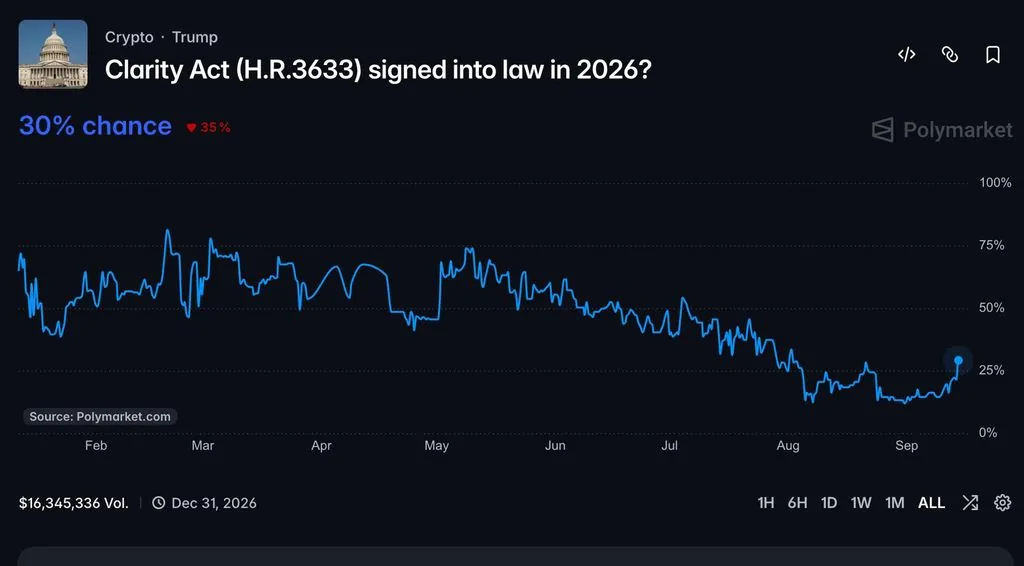
Crypto Clarity Act Fails to Clear Senate 60-Vote Threshold
A cloture motion on the Crypto Clarity Act fell short of the 60 votes required to advance debate in the U.S. Senate, receiving only 50 votes. The defeat marks the end of a years-long regulatory push to establish a unified framework for crypto market structure.
Written by CoinArticle’s AI Newsroom · from 2 cited sources. How we work
The Vote Failed Short
A cloture motion on the Crypto Clarity Act received 50 votes in the Senate, falling 10 votes short of the 60-vote supermajority needed to begin debate, according to vote tallies reported by Crypto.news. The measure did not clear the procedural hurdle required to move forward in the chamber.
What the Bill Aimed to Do
The Crypto Clarity Act represented years of legislative effort to establish unified U.S. regulations governing crypto market structure. The bill sought to clarify which regulatory agencies—the SEC, CFTC, and others—would oversee different segments of the digital asset market. Proponents argued the framework would provide clarity for market participants and reduce fragmented enforcement.
Path Forward Uncertain
The failed vote underscores the challenge crypto regulation faces in Congress even as bipartisan interest in the sector has grown. The 50-vote result suggests the bill lacked sufficient cross-party backing to overcome the Senate's 60-vote threshold for ending debate. No immediate plans for a revised vote or reintroduction have been announced.
Why It Matters
For Traders
Regulatory uncertainty persists; the absence of a unified framework means spot trading and derivatives markets will continue operating under overlapping and sometimes conflicting agency guidance.
For Investors
A stalled regulatory framework prolongs the structural risk that U.S. policy could shift sharply; institutional adoption may remain constrained by legal ambiguity.
For Builders
Protocol teams and exchanges cannot yet count on a stable domestic regulatory baseline; compliance roadmaps will continue to rely on piecemeal guidance from the SEC and CFTC.
This article is for information only and is not financial advice. Read the full disclaimer.