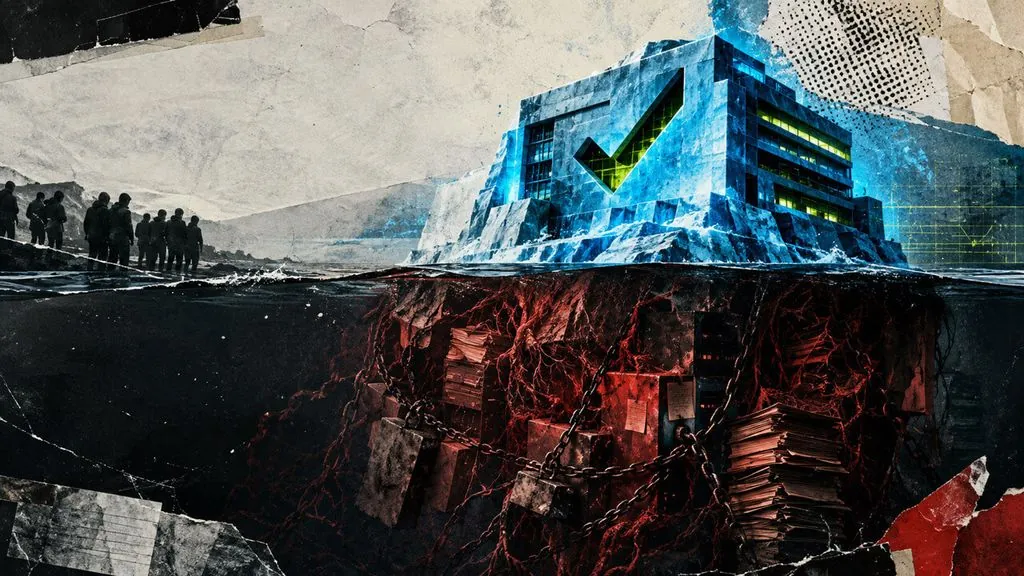
Crypto Exchanges Publish Reserves but Still Lack Solvency Proofs, Four Years After FTX
Four years after FTX's collapse, cryptocurrency exchanges continue to publish proof-of-reserves data that confirm individual customer balances but do not verify net solvency or liabilities. Technical soundness of Merkle tree verification does not guarantee an exchange's ability to cover all customer withdrawals.
Written by CoinArticle’s AI Newsroom · from 1 cited source. How we work
The Gap Between Asset Proof and Solvency
Crypto exchanges have adopted proof-of-reserves mechanisms that allow customers to verify their account balances appear in the exchange's dataset using Merkle tree verification. When a customer enters their details, the system confirms their balance was included in a cryptographic snapshot. However, this process only establishes that assets exist — it does not prove the exchange owns enough assets to cover all customer liabilities or that the published reserve figure is accurate.
What Remains Unverified
Proof-of-reserves data does not address whether an exchange is solvent in the traditional accounting sense. The mechanism cannot confirm whether customer deposits are being lent out, used for proprietary trading, or otherwise encumbered. It also does not guarantee the exchange has not understated total liabilities or overstated reserve quantities. An exchange could technically pass every customer's Merkle tree check while remaining insolvent on a consolidated basis.
Why It Matters
For Traders
Proof-of-reserves verification does not eliminate counterparty risk; verify balances on-chain when possible and consider withdrawal friction as a secondary solvency indicator.
For Investors
Regulatory bodies have not mandated full solvency audits or independent liability verification, leaving verification gaps similar to those that preceded FTX.
For Builders
Infrastructure for multi-proof solvency attestation—linking reserve verification to liability proof—remains an unmet need in custody and exchange tooling.
This article is for information only and is not financial advice. Read the full disclaimer.