1.6 Billion in DEX Liquidity Sits Idle Outside Active Trading Ranges
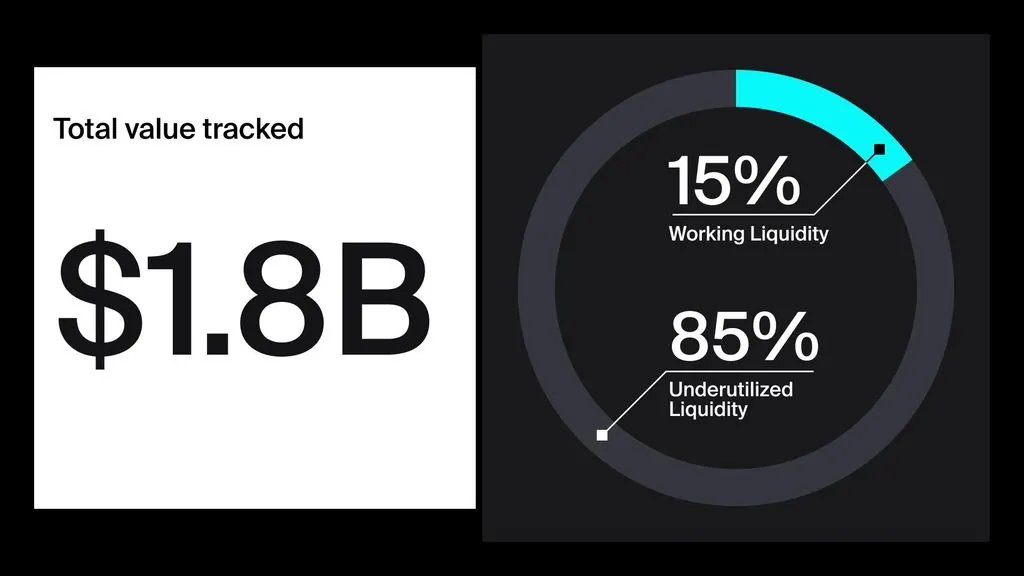
Approximately $1.6 billion in decentralized exchange liquidity is positioned outside active trading ranges and earning no fees, according to on-chain analysis. The idle capital represents a structural inefficiency in how liquidity providers deploy capital across volatile market conditions.
Written by CoinArticle’s AI Newsroom · from 1 cited source. How we work
The Scope of Idle Liquidity
On-chain data shows $1.6 billion in DEX liquidity remains inactive, with about $542 million weekly sitting outside the price ranges where trades actually occur. This capital generates zero trading fees for liquidity providers and contributes no market depth to active order books. The phenomenon reflects a mismatch between where LPs position capital and where price discovery happens.
Why Capital Gets Stranded
Liquidity providers on concentrated liquidity protocols like Uniswap v3 must select price ranges for their positions. When markets move sharply, positions drift "out of range," meaning trades no longer execute against that capital. LPs face a choice: withdraw their capital and redeploy it at current prices, incurring gas costs and slippage, or leave positions idle while monitoring for a potential reversion. During volatile periods, this creates a drag on overall protocol efficiency as liquidity fragments across stale price bands.
Structural Trade-offs in Modern DEX Design
Concentrated liquidity models improved capital efficiency compared to older bonding curves but introduced the out-of-range problem. LPs balancing risk and gas costs sometimes rationally choose inaction over redeployment, especially on Layer 1 chains where transaction costs remain elevated. Automated market makers designed to address this issue — through active rebalancing vaults or dynamic fee structures — remain niche relative to total DEX volume.
Why It Matters
For Traders
Fragmented liquidity across out-of-range positions can widen slippage on large orders during volatile moves, affecting execution quality.
For Investors
Idle capital signals LP capital inefficiency; this structural friction could shift yield seekers toward protocols or vaults with active rebalancing.
For Builders
Protocols addressing out-of-range drift through automation or improved UX have a clear market gap; current designs fail to retain LP capital during normal volatility.
This article is for information only and is not financial advice. Read the full disclaimer.