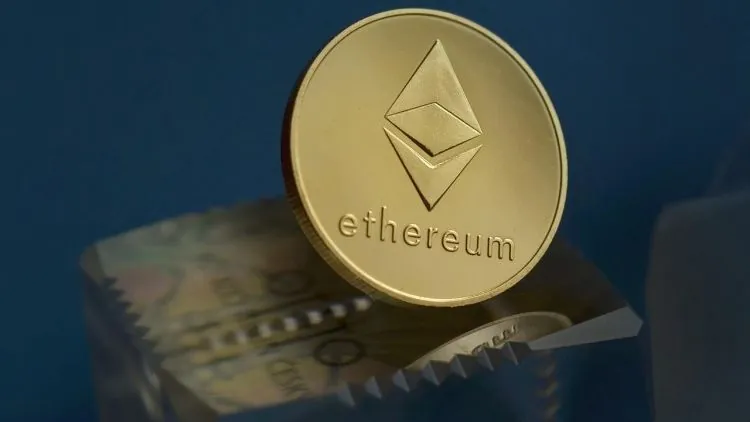
Ethereum's Record Activity Fails to Lift ETH Price as Adoption Outpaces Revenue
Ethereum is processing record transaction volumes and user activity, yet ETH price has not risen proportionally, reflecting a divergence between network usage and token value. The protocol appears optimized for adoption over near-term fee capture, prioritizing market share growth before monetization.
Written by CoinArticle’s AI Newsroom · from 1 cited source. How we work
The Activity-Price Gap
Ethereum's on-chain metrics have reached new highs in recent periods, with transaction volumes, daily active addresses, and protocol revenue all climbing. Yet ETH has not appreciated in line with these fundamentals, suggesting the market is pricing network growth separately from token value. This disconnect persists even as competitors claim smaller user bases but sometimes command higher valuations, raising questions about how network adoption translates to token economics.
Strategy: Growth Before Revenue
Ethereum's positioning prioritizes user acquisition and dApp ecosystem expansion over immediate fee monetization. The network continues to support low-friction entry points—through Layer 2 rollups, liquid staking derivatives, and diverse application categories—even when these features suppress base-layer fee capture. This mirrors early-stage platform strategy, where user lock-in and network effects are expected to precede concentrated revenue extraction.
Staking rewards and MEV redistribution mechanisms further complicate the fee-revenue picture by distributing value away from the protocol's headline metrics. A validator earning 3.5% annual returns on staked capital benefits from network security demand without necessarily seeing that return reflected in ETH price appreciation on a daily or weekly basis.
Why It Matters
For Traders
ETH's disconnect from record on-chain activity suggests momentum may not track traditional adoption signals; position sizing should not assume strong correlation between network growth and near-term price action.
For Investors
Ethereum's deliberate adoption-first strategy delays monetization, making patient capital more suitable than traders seeking near-term fee-driven rallies.
For Builders
The protocol's emphasis on low-friction user onboarding over fee extraction means applications can scale with lower L1 cost burdens, enabling more ambitious user growth targets.
This article is for information only and is not financial advice. Read the full disclaimer.