FinCEN Withdraws Proposed Rules on Self-Hosted Wallets and Crypto Mixers
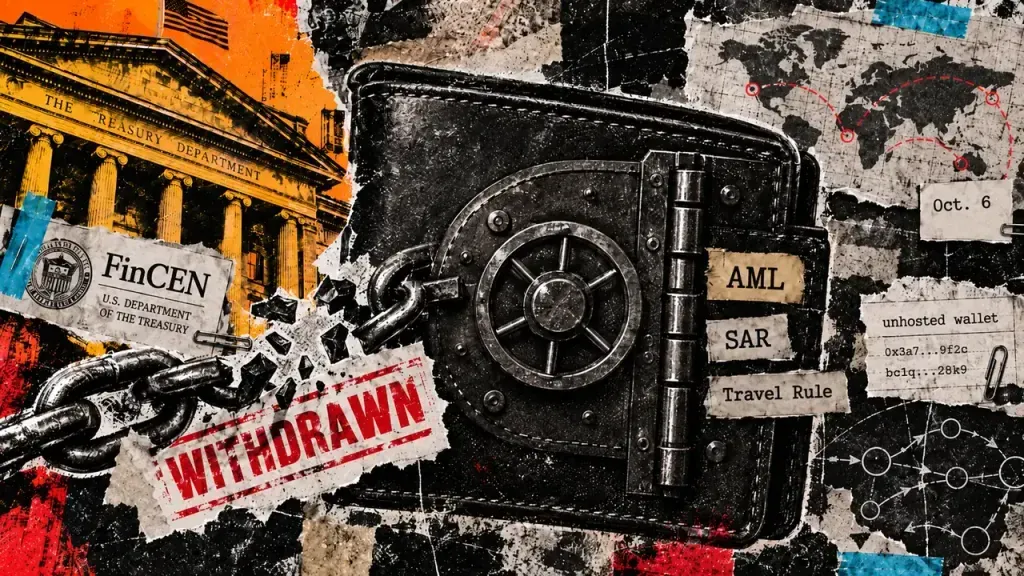
FinCEN withdrew two longstanding proposals that would have imposed stricter reporting requirements on transfers to self-hosted wallets and the use of privacy-mixing services. The withdrawal follows years of industry and civil-liberties backlash against the rules.
Written by CoinArticle’s AI Newsroom · from 2 cited sources. How we work
The Proposals Withdrawn
FinCEN formally withdrew a 2020 proposal that would have required financial institutions to maintain records and verify customer identity for transfers above $3,000 sent to self-hosted wallets, according to CryptoPotato. The agency simultaneously abandoned a separate proposal targeting crypto mixing services, which had faced sustained criticism from privacy advocates and industry participants over concerns about overreach into legitimate privacy tools.
What Would Have Changed
Had the wallet proposal taken effect, banks and other regulated entities would have been forced to treat transfers to non-custodial addresses much like international wire transfers, requiring detailed documentation and ID verification when transaction size crossed the $3,000 threshold. The mixing-service rule would have imposed additional reporting burdens on transactions routed through privacy-enhancing protocols. Neither rule had been finalized, meaning both remained in the proposal stage after years of public comment periods.
Existing AML Framework Remains Intact
The withdrawal does not alter FinCEN's existing anti-money-laundering authority or requirements, according to CryptoSlate. Banks and exchanges continue to operate under current know-your-customer (KYC) and suspicious-activity reporting rules. The agency's action reflects a retreat on new powers rather than a dismantling of existing compliance infrastructure.
Why It Matters
For Traders
Regulatory clarity on self-custody may reduce compliance uncertainty for centralized exchanges facilitating withdrawals to non-custodial addresses.
For Investors
The withdrawal signals political and public-opinion limits on unilateral FinCEN rulemaking, potentially shaping appetite for future privacy-related proposals.
For Builders
Privacy protocols and wallet applications face reduced near-term regulatory threat, though existing AML compliance duties for institutions remain unchanged.
This article is for information only and is not financial advice. Read the full disclaimer.