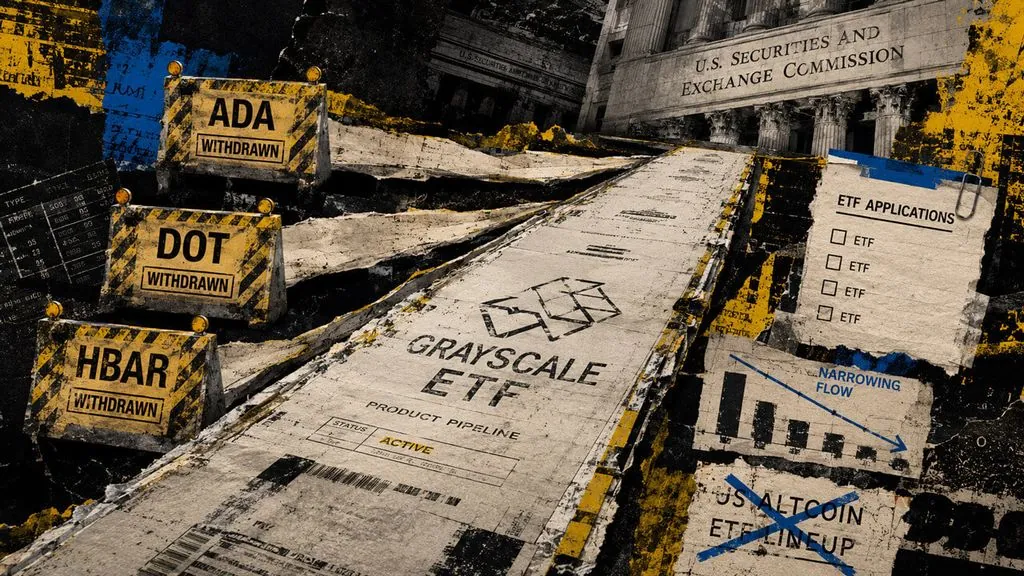
Grayscale Withdraws Cardano, Hedera, and Polkadot ETF Filings
Grayscale withdrew registration statements for spot ETFs tracking Cardano, Hedera, and Polkadot on August 7, two days before Cardano cleared the SEC seasoning threshold. The timing raises questions about regulatory expectations and institutional appetite for altcoin spot products.
Written by CoinArticle’s AI Newsroom · from 4 cited sources. How we work
Story Updates
- Updated Aug 15, 2026, 06:04 AM: Cardano cleared SEC seasoning threshold on August 9, two days after Grayscale's withdrawal; Bitwise and Canary continue pursuing altcoin spot ETF approvals.
- Updated Aug 14, 2026, 03:02 AM: Grayscale stated it no longer intends to proceed with the three ETF offerings; no securities were issued.
Grayscale Abandons Three Altcoin ETF Plans
Grayscale withdrew its registration statements for spot ETFs tracking Cardano, Hedera, and Polkadot on August 7, with the three withdrawals occurring within four minutes of each other, according to SEC filings. The company stated it no longer intends to proceed with the offerings. No securities were issued or sold under any of the three filings.
The timing is notable: Cardano cleared the SEC's 75-day seasoning threshold on August 9, just two days after Grayscale's withdrawal, making ADA newly eligible for spot ETF consideration under the regulatory framework that enabled Bitcoin and Ethereum spot products.
Remaining Applications and Competitive Landscape
Five other Grayscale altcoin ETF applications remain on file with the SEC in preliminary status. Bitwise and Canary Capital continue to pursue altcoin spot ETF approvals, according to available filings, suggesting competitive tension in the market for regulated altcoin products.
Grayscale has been actively pursuing spot ETF registrations across multiple alternative assets since the SEC's approval of the spot Bitcoin ETF in January 2024. The company has left the door open for potential resubmission at a later date by formally withdrawing rather than allowing the filings to lapse.
Regulatory Path Narrows for Altcoin Products
The timing of the withdrawals underscores the regulatory complexity surrounding spot ETF approval for assets beyond Bitcoin and Ethereum. Grayscale did not provide a public explanation for the decision, but the move suggests either a reassessment of market timing or shifting assessment of regulatory feasibility. The fact that Cardano became eligible the same week Grayscale withdrew raises questions about whether the company anticipated regulatory headwinds despite clearing the seasoning requirement.
Why It Matters
For Traders
ADA, HBAR, and DOT lost a near-term institutional inflow catalyst; competitive filings from Bitwise and Canary suggest approval uncertainty rather than rejection.
For Investors
Grayscale's pullback despite Cardano meeting regulatory eligibility suggests the SEC may be conditioning altcoin spot ETF approval on factors beyond seasoning; approval remains uncertain.
For Builders
Protocols should assume spot ETF approval is discretionary; regulatory gatekeeping on altcoins persists even when technical eligibility criteria are met.
This article is for information only and is not financial advice. Read the full disclaimer.