Grayscale Files for Zcash ETF, Testing SEC's Stance on Privacy Assets
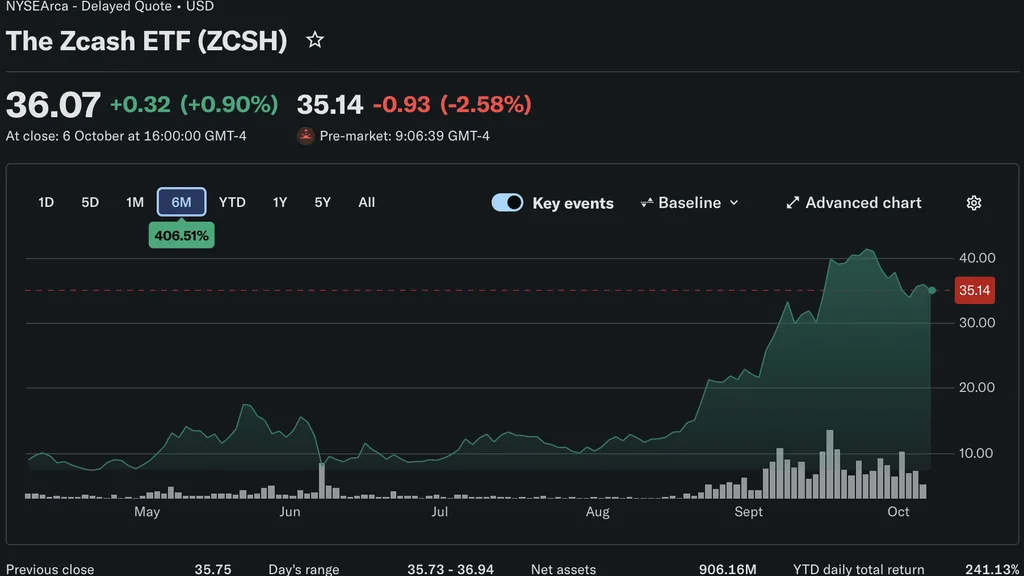
Grayscale submitted an ETF filing for Zcash to the SEC, marking the first major institutional push to bring a privacy-focused cryptocurrency to U.S. spot market exposure. The move raises questions about how regulators will treat optional-privacy assets in a regulated fund wrapper.
Written by CoinArticle’s AI Newsroom · from 2 cited sources. How we work
The Filing and Its Significance
Grayscale has filed for a Zcash ETF with the SEC, advancing its bid to offer institutional investors direct spot exposure to the privacy-focused blockchain asset. The filing represents a test case for regulatory appetite toward privacy coins in mainstream investment products; previous Zcash attempts at ETF approval have stalled or been withdrawn, leaving unclear precisely which privacy features the SEC will tolerate in a registered fund.
Regulatory and Market Implications
Zcash's optional-privacy model—where users can transact transparently or shielded—may position it differently from mandatory-privacy coins like Monero, which have faced fiercer regulatory scrutiny. A Grayscale approval could establish new precedent for how privacy-enhanced assets are classified and approved for spot ETF trading, potentially reshaping the regulatory framework for the sector. If denied, the filing would reaffirm tighter constraints on privacy assets in U.S. markets.
Zcash had largely faded from mainstream attention until this filing. The renewed regulatory spotlight adds a new variable to how the protocol community and its stakeholders view the risk-return profile of privacy-coin infrastructure going forward.
Why It Matters
For Traders
Zcash spot price may see volatility around approval milestones; ETF rejection or approval timing could swing sentiment toward privacy-asset viability.
For Investors
An approved Zcash ETF would be the first privacy-coin vehicle available to U.S. institutional investors, shifting perception of privacy assets from regulatory pariahs to tolerated holdings.
For Builders
Protocol teams working on optional-privacy features will watch Grayscale's outcome as a signal for whether privacy-enhanced UX is viable in regulated product pipelines.
This article is for information only and is not financial advice. Read the full disclaimer.