Michigan Judge Orders Kalshi to Halt Sports Contracts, Issues $500K Daily Fine
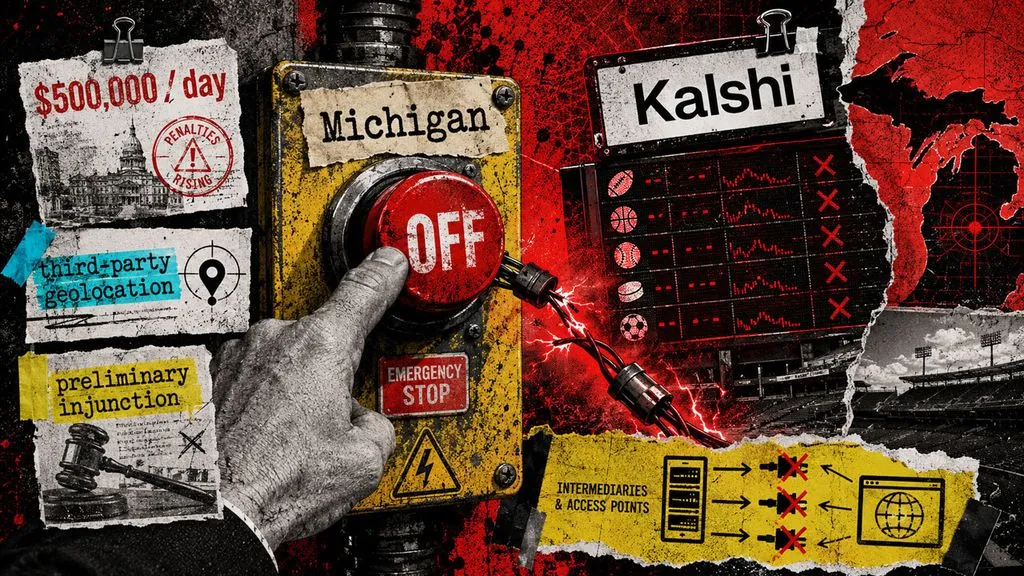
A Michigan judge issued a preliminary injunction against prediction market platform Kalshi, ordering it to take sports event contracts offline and imposing a $500,000 daily fine for non-compliance. The order characterizes Kalshi's offering as sports betting disguised as an investment product.
Written by CoinArticle’s AI Newsroom · from 2 cited sources. How we work
The Injunction
A Michigan judge issued a preliminary injunction against Kalshi, ordering the prediction market platform to remove all sports event contracts from its offerings and imposing a $500,000 daily fine for any violation. According to Decrypt, the order characterizes Kalshi as a sports betting operation "masquerading as an investment opportunity." The injunction remains in effect until a final order is entered, according to CryptoSlate reporting.
Regulatory Obligations Added
The preliminary injunction also requires Kalshi to provide notice to futures brokers about its regulatory status, adding a compliance layer beyond the contract takedown. CryptoSlate noted the ruling arrives amid an existing appellate split on how prediction markets should be regulated — a disagreement that has left Kalshi's legal status ambiguous across U.S. jurisdictions.
Market Standing
Kalshi operates as a CFTC-regulated derivatives exchange and has previously secured no-action relief from federal regulators. The Michigan order represents the first state-level enforcement action to directly challenge the platform's business model by forcing removal of sports contracts rather than imposing penalties after the fact.
Why It Matters
For Traders
Kalshi's removal of sports contracts narrows addressable markets and may reduce platform volume and liquidity for event-based positions.
For Investors
The ruling signals state-level hostility toward prediction markets despite CFTC approval, creating regulatory fragmentation that complicates national expansion.
For Builders
Prediction market protocols face renewed uncertainty about which event types are legally defensible under state law, even when federally registered.
This article is for information only and is not financial advice. Read the full disclaimer.