OCC Encourages Community Banks to Issue Stablecoins as Rules Near
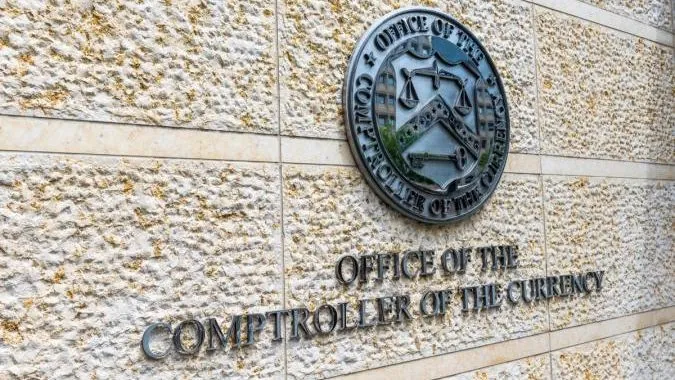
The U.S. Office of the Comptroller of the Currency is urging community banks to apply as stablecoin issuers under the GENIUS Act, with federal licensing requirements taking effect January 18, 2027. No applications have opened yet, and prospective issuers will require regulatory approval before launching operations.
Written by CoinArticle’s AI Newsroom · from 3 cited sources. How we work
Story Updates
- Updated Oct 27, 2026, 06:04 PM: GENIUS Act takes effect January 18, 2027; OCC now explicitly urging community bank applications ahead of that date.
GENIUS Act Sets Hard Deadline
The OCC is actively encouraging community banks to prepare stablecoin issuance applications ahead of the GENIUS Act licensing regime, which takes effect January 18, 2027, according to Bitcoinist. The act establishes a federal framework for permitted stablecoin issuers and marks the first explicit statutory authorization for bank-issued tokenized deposits in the United States. The OCC's outreach signals an attempt to broaden the pool of potential issuers beyond the large custodial banks and fintech companies that have dominated prior discussions.
Application and Approval Timeline
Applications for stablecoin issuance have not yet opened. Any new issuer seeking to operate in the United States will be required to win regulatory approval before beginning operations. The OCC has not yet published detailed guidance on the approval process, the specific criteria for community bank applicants, or how quickly the agency will process filings once the January 2027 effective date arrives. This uncertainty leaves prospective issuers with limited concrete information about the mechanics of the licensing regime.
Why Community Banks Matter
Community banks represent a large share of U.S. lending institutions by headcount but hold a smaller portion of total assets compared to national megabanks. Bringing them into stablecoin issuance could decentralize the infrastructure for tokenized payment rails, though it also expands the regulatory surface area the OCC will need to monitor and enforce against.
Why It Matters
For Traders
Stablecoin supply dynamics may shift if community banks gain issuance access after January 2027, potentially fragmenting liquidity across multiple issuers.
For Investors
A statutory framework for bank-issued stablecoins strengthens regulatory legitimacy for tokenized deposits and reduces concentration risk in the ecosystem.
For Builders
Protocol teams targeting stablecoin integrations should prepare for a more fragmented issuer landscape after the January 2027 deadline; settlement logic may need redesign.
This article is for information only and is not financial advice. Read the full disclaimer.