Open Intents Framework Positioned as Neutral Cross-Chain Infrastructure
The Open Intents Framework, designed without native tokenization or governance bias, is advancing adoption as a shared cross-chain infrastructure layer. The neutral design aims to reduce friction between blockchains and enable broader ecosystem coordination.
Written by CoinArticle’s AI Newsroom · from 1 cited source. How we work
Framework Design Removes Adoption Barriers
The Open Intents Framework operates without a native token or centralized governance structure, distinguishing it from many existing cross-chain protocols. This token-free architecture eliminates economic incentive misalignment between participating chains and reduces friction for ecosystems evaluating whether to integrate the standard.
Cross-Chain Coordination Use Case
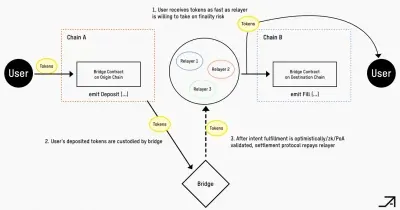
The framework positions itself as a shared infrastructure layer for intent-based transactions, where users specify desired outcomes rather than precise execution paths. By remaining neutral to any single chain or token, the framework can theoretically operate across heterogeneous blockchains without preference, enabling developers to build interoperable applications without vendor lock-in concerns.
Adoption Trajectory
Progress toward wider integration remains in early stages, with the framework's success dependent on developer adoption and chain support. If adoption accelerates, the design could serve as a reference model for other infrastructure protocols seeking to remain chain-agnostic.
Why It Matters
For Traders
Cross-chain infrastructure maturation may reduce slippage and execution costs on intent-based swaps, but adoption timeline and actual performance gains remain uncertain.
For Investors
A successful neutral cross-chain standard could reduce fragmentation across L1s and L2s, but competitive pressure from tokenized alternatives makes dominance unlikely.
For Builders
Developers can experiment with intent-based UX without token overhead, though framework stability and network effects will determine whether it achieves meaningful adoption.
This article is for information only and is not financial advice. Read the full disclaimer.