Pi Network Slips Below $0.09 as Moving Average Support Falters
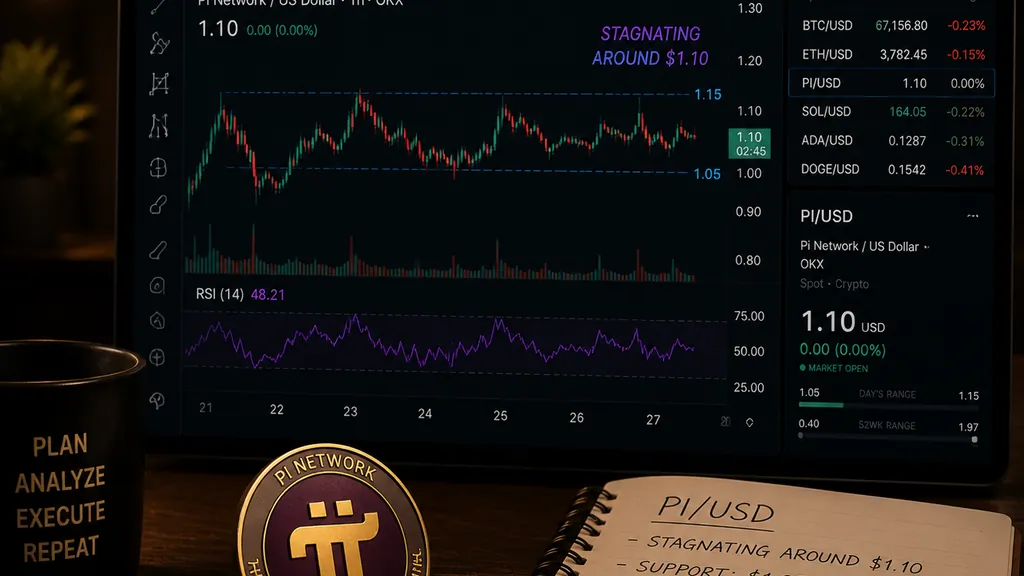
Pi Network fell below $0.09 on September 24 after a recovery attempt near $0.093 failed to hold, extending losses from the prior day. The pullback leaves PI trading below key daily moving averages amid weakening short-term momentum.
Written by CoinArticle’s AI Newsroom · from 5 cited sources. How we work
Story Updates
- Updated Sep 24, 2026, 07:09 AM: Pi Network extended losses on September 24 after recovery attempt near $0.093 failed to hold, widening pullback.
- Updated Sep 23, 2026, 06:02 PM: Pi Network slipped to $0.088 on September 23 after failing to hold above $0.092 intraday rally.
- Updated Sep 14, 2026, 10:03 AM: Pi Core Team released SoloHost and Desktop 0.6.3 updates; token rose to $0.097 over two consecutive weeks.
Continued Retreat Below Key Levels
Pi Network fell below $0.09 on September 24 after an intraday recovery attempt near $0.093 collapsed, extending the decline from the prior day's close at $0.088. According to PI/USDT charts, the token is now trading below its main daily moving averages as short-term momentum weakens further, signaling sustained seller pressure despite the failed upside attempt.
Ecosystem Updates Offset by Technical Weakness
Recent SoloHost updates and Pi Desktop version 0.6.3 releases, which aim to improve network reliability and developer tools, have not sustained upward price momentum. PI now trades below its 50-day exponential moving average at $0.094, a shift from earlier positioning where the token had held above that level. The continued failure to hold above key technical levels suggests traders are weighing network improvements against persistent concerns about liquidity and exchange accessibility.
Structural Headwinds Reassert
OpenPay's restoration of its cash-in feature continues to provide a conversion path to OUSD stablecoin, but limited exchange availability remains the core constraint on price discovery. Analysts have noted that software upgrades alone cannot overcome the structural need for broader listings or measurable acceleration in user adoption. The $0.10–$0.1022 resistance zone now appears further from current price action.
Why It Matters
For Traders
PI retreat extending below 50-day EMA with momentum deteriorating signals continued downside risk; nearest support now $0.088 with further weakness possible.
For Investors
Repeated failures to hold above key moving averages despite ecosystem improvements suggest development updates alone insufficient to drive sustained price recovery.
For Builders
Improved developer tools remain necessary but unproven as driver of adoption; builders shipping on Pi should monitor price stability and user on-ramp conditions independently.
This article is for information only and is not financial advice. Read the full disclaimer.