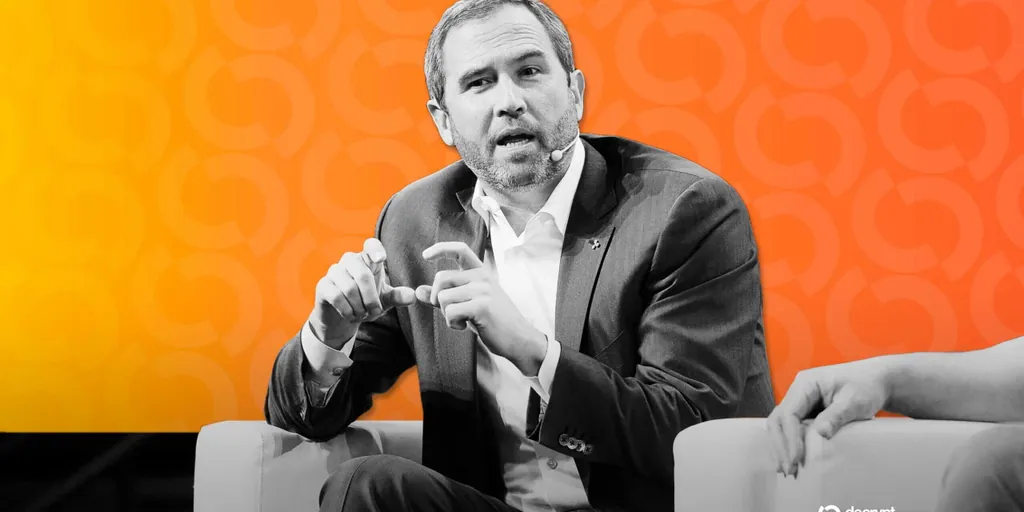
Ripple CEO Garlinghouse Rebuts JPMorgan's Dimon on CLARITY Act Criticism
Ripple CEO Brad Garlinghouse publicly disagreed with JPMorgan CEO Jamie Dimon's criticism of the proposed CLARITY Act, a key piece of crypto legislation. Garlinghouse said Dimon mischaracterized the bill as weakening compliance standards when it would actually clarify regulatory frameworks.
Written by CoinArticle’s AI Newsroom · from 2 cited sources. How we work
Dimon's Concerns and Garlinghouse's Response
JPMorgan CEO Jamie Dimon criticized the proposed CLARITY Act, drawing a public rebuttal from Ripple CEO Brad Garlinghouse. According to reporting on the exchange, Dimon had targeted both Coinbase and the legislation itself, raising questions about the bill's approach to crypto regulation. Garlinghouse disputed Dimon's framing, accusing the JPMorgan chief of mischaracterizing the CLARITY Act in a way that "does a disservice" to the actual text and intent of the proposal.
The Core Disagreement on Compliance Standards
The central point of contention centers on whether the CLARITY Act would weaken or strengthen compliance oversight. Dimon's criticism suggested the legislation would lower existing compliance standards, a claim Garlinghouse rejected outright. Garlinghouse argued the act instead aims to clarify regulatory boundaries for crypto assets and businesses, a clarification he framed as necessary for compliance to function effectively rather than as a dilution of it.
Why It Matters
For Traders
Regulatory clarity signals affect crypto asset volatility and exchange accessibility; ongoing legislative debate creates near-term pricing uncertainty for assets with regulatory exposure.
For Investors
The CLARITY Act's fate depends partly on industry consensus; high-profile disagreement between traditional finance and crypto leaders signals prolonged legislative uncertainty.
For Builders
Competing visions of compliance standards from JPMorgan and Ripple reflect deeper fragmentation over what future crypto regulation should require of on-chain and off-chain infrastructure.
This article is for information only and is not financial advice. Read the full disclaimer.