SEC Grants Innovation Exemption for Tokenized Stock Trading
The SEC has issued guidance allowing qualifying venues to trade tokenized versions of U.S. stocks on public blockchains without registering as exchanges, under a new temporary 'innovation exemption.' The relief excludes synthetic price-tracking instruments and permits companies to restrict tokenization of their own shares.
Written by CoinArticle’s AI Newsroom · from 2 cited sources. How we work
The Exemption Framework
The SEC has granted a temporary innovation exemption enabling certain venues to facilitate trading of tokenized U.S. stocks on public blockchains without meeting the formal registration requirements for exchanges. According to the regulator's guidance, the exemption applies to actual tokenized securities—direct on-chain representations of underlying equities—traded through onchain liquidity pools and similar mechanisms.
Scope and Limitations
The exemption explicitly excludes synthetic price-tracking instruments that do not represent direct ownership claims. Companies retain the right to prohibit tokenization of their own shares, a provision that preserves issuer control over how their securities are fractionalized and distributed. The temporary nature of the exemption suggests the SEC intends to gather data and market feedback before determining whether to make the framework permanent or refine its terms.
Industry Context
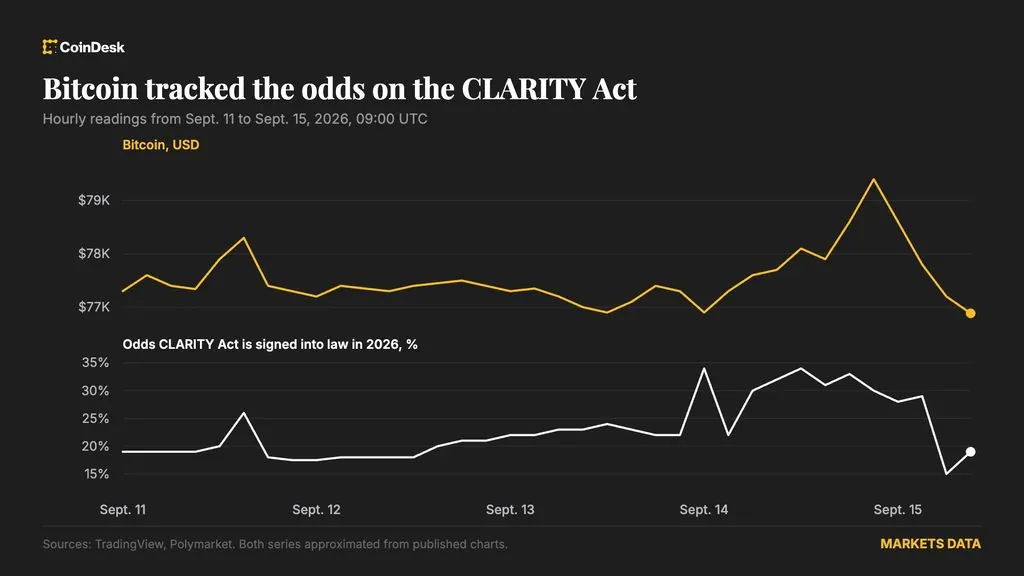
The decision follows previous regulatory efforts such as the Clarity Act, which had aimed to establish clearer rules for digital asset trading but did not result in immediate action. This exemption represents an incremental step—narrower in scope than comprehensive legislation but broader than the blanket prohibition framework that preceded it. The relief signals regulatory openness to onchain equity trading infrastructure provided it operates under defined guardrails.
Why It Matters
For Traders
Venues operating under the exemption may offer tokenized stock pairs with lower friction and 24/7 trading, though regulatory uncertainty around duration and scope creates execution risk.
For Investors
Direct on-chain stock ownership expands cryptocurrency's addressable market beyond pure digital assets and signals regulatory acceptance of blockchain settlement, but issuer opt-out rights may fragment liquidity.
For Builders
Platforms can now build tokenized equity infrastructure without exchange registration if they exclude synthetics and respect issuer preferences, reducing compliance overhead for compliant venues.
This article is for information only and is not financial advice. Read the full disclaimer.