Solana Activates 350ms Slot Time on Mainnet, Begins Scaling Path
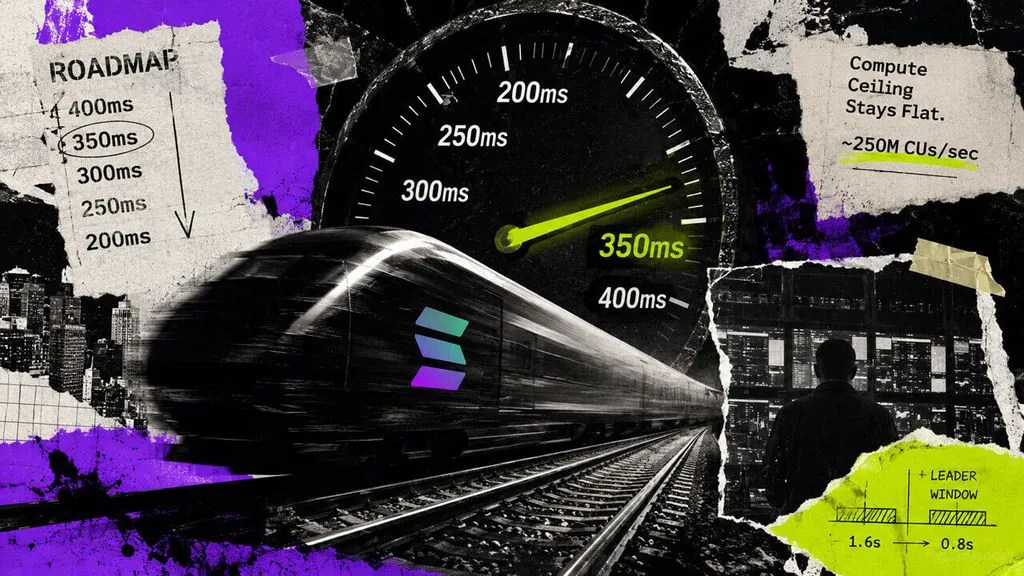
Solana activated 350-millisecond slot times on mainnet Wednesday, the first reduction since launch, as the network begins a phased approach toward 200ms blocks. The network is cutting per-slot compute limits to maintain stability as block production accelerates.
Written by CoinArticle’s AI Newsroom · from 3 cited sources. How we work
Story Updates
- Updated Aug 22, 2026, 01:02 AM: Solana has activated 350ms slots on mainnet; the change rolls out epoch by epoch rather than as a single event.
Slot Time Reduction Enters Mainnet
Solana has activated 350-millisecond slot times on mainnet, reducing the target from 400ms and marking the first such cut since the network's 2020 launch, according to The Defiant. The change rolls out epoch by epoch rather than as a single consensus event, allowing validators time to adjust operations as the network compresses its block-production window.
Compute Caps Tighten as Slots Accelerate
Solana is simultaneously reducing per-slot compute unit limits to prevent network overload during faster block intervals, according to Solana Foundation VP of Technology Jacob Creech. The reductions maintain a manageable validator load despite the speed increase—total compute-per-second throughput does not rise, only redistributes across shorter blocks. This approach prioritizes network stability over raw transaction velocity.
Roadmap to 200ms Blocks
Solana Foundation leadership has outlined three additional reduction stages beyond the current 350ms phase, though specific timelines remain undisclosed. The phased rollout reflects a deliberate scaling strategy tied to validator performance monitoring rather than a fixed calendar schedule.
Why It Matters
For Traders
Lower slot times reduce confirmation latency but compute caps may increase transaction competition and fees during peak load periods.
For Investors
Solana prioritizes stability over raw throughput as it scales; the measured phased approach signals disciplined infrastructure growth over aggressive expansion.
For Builders
Applications must recalibrate transaction packing strategies and re-run simulations against the 350ms parameters; tighter compute budgets per block require contract optimization.
This article is for information only and is not financial advice. Read the full disclaimer.