Stablecoins Shift to Business Infrastructure, Data Shows SaaS-eCommerce Growth
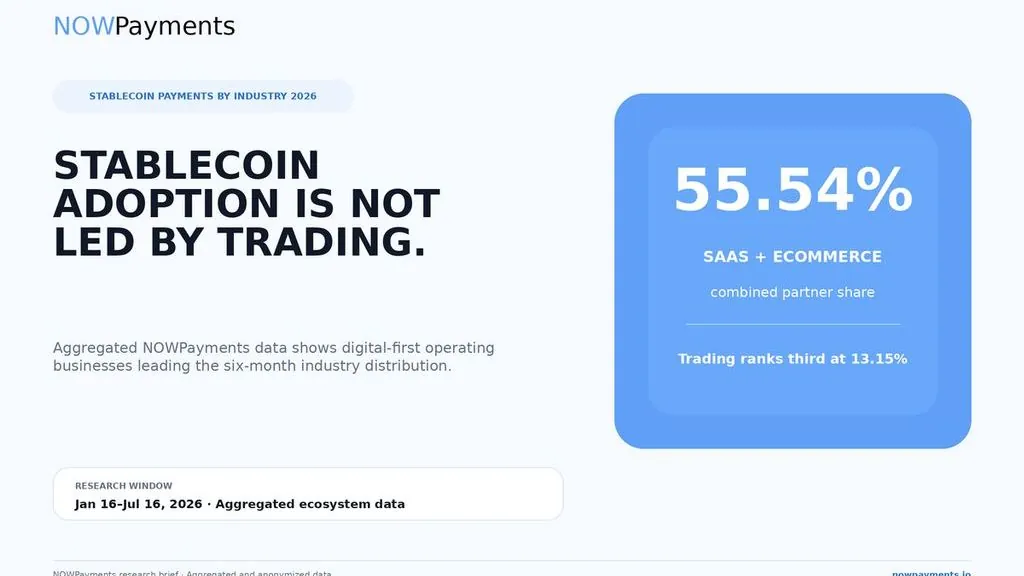
NOWPayments data released October 8 shows SaaS and eCommerce use cases rose from 48.26% to 55.54% of stablecoin activity, while Trading fell from 14.07% to 13.15%. The shift suggests stablecoins are consolidating around operational workflows rather than speculative trading.
Written by CoinArticle’s AI Newsroom · from 2 cited sources. How we work
Where Stablecoin Usage Is Shifting
NOWPayments, a payments processor, released data October 8 showing that SaaS and eCommerce use cases combined rose from 48.26% to 55.54% of total stablecoin activity on its platform. Trading activity, by contrast, fell from 14.07% to 13.15% over the same measurement window. The data suggests stablecoins are clustering around non-financial business operations—billing, checkout, settlement, and payouts—rather than speculation.
How This Reshapes Infrastructure Decisions
Building stablecoin infrastructure around the wrong problem is a common misstep, according to the NOWPayments analysis. Many teams treat stablecoin choice as primarily a token-and-network decision: Bitcoin or Ethereum, USDC or USDT. But for digital businesses, the operational requirements are broader. A SaaS platform or eCommerce merchant does not need to optimize for trading volumes or TVL; they need infrastructure that handles billing cycles, recurring payments, settlement timing, and multi-currency payouts reliably. The underlying stablecoin becomes less important than the platform's ability to abstract the token layer and route transactions through the workflows a business actually runs.
Implications for Stablecoin Adoption
The data also implies that stablecoin utility is decoupling from price volatility and exchange listing announcements. If SaaS and eCommerce use cases now account for 55% of activity, merchant adoption may be outpacing speculative trading—a reversal of the sector's earlier profile, when DeFi yields and spot trading dominated volumes.
Why It Matters
For Traders
Stablecoin dominance by non-trading use cases may reduce intraday volatility and liquidity for speculative pairs, narrowing trading windows.
For Investors
Growing business infrastructure adoption signals stablecoins are moving beyond DeFi speculation toward core payments and B2B workflows, widening their addressable market.
For Builders
Payment infrastructure is becoming the primary stablecoin use case; protocols optimizing for trading volume or TVL may be solving a shrinking problem relative to merchant operations.
This article is for information only and is not financial advice. Read the full disclaimer.