Turkey, Pakistan, Saudi Arabia Sign Mutual Defense Pact Modeled on NATO Article 5
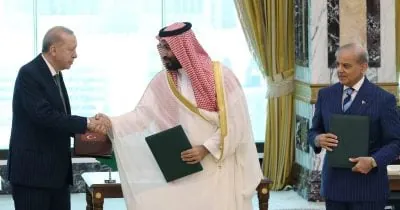
Turkey, Pakistan, and Saudi Arabia have formalized a trilateral defense agreement that Turkish officials say mirrors NATO's collective defense clause. The pact could reshape security alignments in the Middle East and South Asia.
Written by CoinArticle’s AI Newsroom · from 1 cited source. How we work
The Agreement
Turkey, Pakistan, and Saudi Arabia have signed a mutual defense pact that Turkish officials say is equivalent to NATO's Article 5, which obligates member states to treat an armed attack on one as an attack on all. The agreement formalizes security cooperation among the three nations and establishes a framework for coordinated response to external threats.
Regional Implications
The pact could reshape geopolitical alignments in the Middle East and South Asia. It represents a deepening security partnership outside traditional Western-led alliances and signals growing coordination among major regional players. The agreement may influence how Turkey, Pakistan, and Saudi Arabia respond to regional conflicts and balance their relationships with other powers including Russia, Iran, and China.
Strategic Context
The three nations have separate but overlapping security interests across multiple theaters. Turkey leads NATO's eastern flank, Pakistan borders Afghanistan and China, and Saudi Arabia anchors the Persian Gulf. By formalizing collective defense obligations, the pact aims to institutionalize coordination that previously relied on ad-hoc cooperation.
Why It Matters
For Traders
Geopolitical shifts can affect energy markets and currency pairs; traders holding Turkish lira, Pakistani rupee, or Saudi riyal should monitor how this pact affects regional stability and capital flows.
For Investors
Regional security realignment may influence cross-border investment and infrastructure projects; long-term positions in Middle Eastern and South Asian assets warrant reassessment of geopolitical risk.
For Builders
Cross-border blockchain and financial infrastructure projects spanning these regions may face new regulatory or diplomatic considerations as security cooperation deepens.
This article is for information only and is not financial advice. Read the full disclaimer.