AI Race Fractures Global Tech Order, Redefining 2025's Tech Landscape
Emerge names the AI race's disruption of the global tech order as 2025's defining story. The US-China rivalry weaponized technology, reshaping international relations and impacting industries like cryptocurrency and blockchain.
Written by CoinArticle’s AI Newsroom · from 2 cited sources. How we work
Key Takeaways
- 1**Control of essential minerals:** Nations imposed export controls and supply chain restrictions on minerals vital for semiconductor and hardware production.
- 2**Advanced AI models:** Access to cutting-edge AI systems became restricted, with governments prioritizing national security over open collaboration.
- 3**Military integration:** AI capabilities were embedded into defense strategies, turning the race into a matter of national security and accelerating the fragmentation of global tech cooperation.
AI Race Fractures Global Tech Order, Redefining 2025's Tech Landscape
Emerge has officially designated "How the AI Race Fractured the Global Tech Order" as its 2025 Story of the Year, spotlighting how the fierce competition for artificial intelligence supremacy fundamentally reshaped global technology relations and power dynamics. The recognition underscores the deep intertwining of AI development with geopolitical strategy and national security concerns.
What We Know
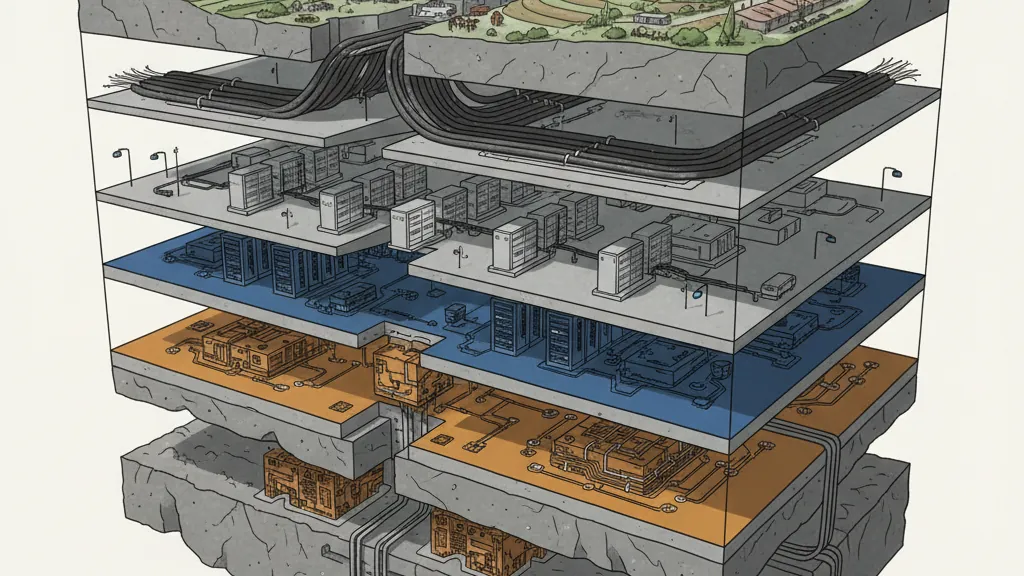
Emerge's selection, reported by both Decrypt and BITRSS, highlights the profound transformation in how nations approached technology development and deployment throughout 2025. Central to this shift was the escalating rivalry between the United States and China, which weaponized nearly every layer of the technology stack in their pursuit of AI dominance. This competition transformed what was once a relatively open global tech ecosystem into a fragmented landscape of strategic advantage.
The weaponization extended across critical domains, including:
- Control of essential minerals: Nations imposed export controls and supply chain restrictions on minerals vital for semiconductor and hardware production.
- Advanced AI models: Access to cutting-edge AI systems became restricted, with governments prioritizing national security over open collaboration.
- Military integration: AI capabilities were embedded into defense strategies, turning the race into a matter of national security and accelerating the fragmentation of global tech cooperation.
Key Details
The fracturing of the global tech order in 2025 marked a departure from decades of increasingly interconnected technological development. The AI race served as the catalyst for this shift, as both the US and China recognized artificial intelligence as a foundational technology with far-reaching implications for economic competitiveness, military capabilities, and global influence.
The competition created parallel ecosystems, limiting international collaboration that had previously driven innovation. Minerals essential to computing infrastructure became strategic assets, while advanced AI models were weaponized as tools of statecraft. Military doctrine evolved to incorporate AI, further entrenching the divide between the two superpowers.
This militarization of AI transformed the race from a purely technological and economic rivalry into a matter of national defense. As cooperation became increasingly untenable, the global tech order fractured, creating lasting implications for innovation, commerce, and international relations.
Why This Matters
Emerge's designation of this story as 2025's most significant development carries important implications for the cryptocurrency and blockchain industries, as well as the broader technology sector.
The fragmentation of the global tech order introduces uncertainty for technologies reliant on international cooperation and standardization. Cryptocurrency and blockchain systems, which emphasize decentralization and borderless operation, may face new challenges as regulatory frameworks diverge along geopolitical lines.
The focus on AI supremacy also signals where governments are directing resources and attention. Technologies perceived as less strategically critical—or those that challenge centralized control—may encounter increased scrutiny or reduced support. The weaponization of technology layers, from minerals to military applications, demonstrates the extent of government intervention in technology markets when national interests are at stake.
For the crypto industry specifically, this serves as a stark reminder that no technology operates in isolation from geopolitical forces. As nations increasingly equate technological leadership with global power, industries founded on decentralization may find themselves navigating increasingly complex political environments.
Emerge's Story of the Year designation suggests that 2025 marked a turning point—one where the promise of unified global technological progress gave way to competing spheres of influence. This shift will likely have enduring consequences for innovation, commerce, and international relations.
Key entities: Emerge, US, China
Sentiment: Bearish
This article is for information only and is not financial advice. Read the full disclaimer.