Binance's $6.3 Billion Hack Becomes Test Case for CFTC Offshore Exchange Plan
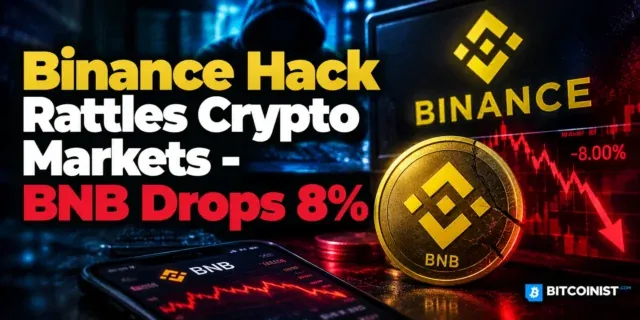
CFTC Chairman Michael Selig cited the Binance hack, estimated at $6.3 billion to $6.4 billion depending on the source, as evidence that offshore exchanges need US cybersecurity oversight. Binance has said it will cover customer losses and is reserving $6.34 billion for that purpose.
Written by CoinArticle’s AI Newsroom · from 2 cited sources. How we work
What Happened
An attack on Binance on October 29, 2026 drained an estimated $6.3 billion in funds, according to Crypto Briefing, which makes it the largest theft recorded in crypto history. Decrypt put the figure at roughly $6.4 billion. The two outlets differ on the number, and neither source reconciles the gap. The previous record was a $1.5 billion theft linked to the North Korean group TraderTraitor. Binance has said it will cover customer losses from company funds and is reserving $6.34 billion for that purpose.
The two reports also differ on how the attack unfolded. Crypto Briefing said attackers drained the funds in about 20 minutes and that partners had frozen around $3 billion of the stolen assets at the time of the incident. Decrypt reported that the attacker used EIP-7702, an Ethereum feature that lets ordinary wallets execute smart-contract code, to turn a Binance hot wallet into a sweeper using 50 pre-signed authorizations. The Secret Service and FBI have opened an investigation, and TRM Labs and Chainalysis have linked the theft to TraderTraitor.
The Root Cause Is Disputed
Binance first attributed the breach to a compromised DevOps engineer's laptop. Its CEO, Richard Teng, said on Friday that the investigation had since uncovered additional points of breach and described a more complex attack that did not rely on a single engineer's permissions. TRM Labs said the broader breach points to a compromise of Binance's signing infrastructure rather than a flaw in any blockchain.
CFTC Chairman Michael Selig, speaking to CNBC, described the incident as a vulnerability introduced from an individual's laptop and said the blockchain and its smart contracts were not broken. That framing is narrower than the Binance and TRM accounts, which both point to internal infrastructure. Selig's characterization may therefore be incomplete, as Decrypt notes.
Regulatory Push
Selig is using the incident to promote a voluntary federal registration pathway for offshore exchanges. Under the plan, platforms that agree to US cybersecurity standards and customer protections could register with American regulators. The framework targets exchanges that offer retail margin and leverage. A proposed rulemaking aims to establish the option by December 14, 2026.
Selig acknowledged that full federal registration would require Congress to act. Decrypt reports the CFTC has advanced its own crypto rulemaking while the Clarity Act has stalled in the Senate, a shift in which regulators are leading after legislative progress slowed.
What to Watch
Three items will determine how the episode plays out: whether the December 14 target for the voluntary registration option is met, whether Congress signals broader registration authority, and how much of the roughly $3 billion frozen at the time of the incident is recovered. The final root-cause findings from Binance will also bear on whether the regulatory case rests on a single-engineer failure or on wider infrastructure weaknesses.
Why It Matters
For Traders
Binance's reserved $6.34 billion and the frozen funds recovery figures will shape near-term sentiment around exchange counterparty risk over the coming days.
For Investors
A federal voluntary registration pathway for offshore exchanges could eventually bring compliance costs and oversight that reshape where and how large retail derivatives volume is held.
For Builders
Exposure to EIP-7702 delegated wallet code and multi-signature hot wallet infrastructure should be reviewed, since the breach was reported to involve pre-signed authorizations on a hot wallet.
This article is for information only and is not financial advice. Read the full disclaimer.