Binance Hack Drains $6.36B, Pushing Bitcoin Below $77,000
Bitcoin fell below $77,000 on October 30 after hackers drained an estimated $6.36 billion from Binance, the largest crypto theft on record. Traders are now watching whether buyers can hold the $76,000-$77,000 zone and reclaim $80,000.
Written by CoinArticle’s AI Newsroom · from 2 cited sources. How we work
Price Action After the Breach
Bitcoin dropped to $76,500 early on Friday, October 30, hours after hackers drained about $6.36 billion from Binance, according to 99Bitcoins. Crypto.news placed Bitcoin at $76,944 shortly after midnight UTC on Binance market data, before a recovery toward $78,000 later in the session. The two outlets differ on the exact low and current level, with 99Bitcoins reporting $77,800 at the time of its write-up and down 3% over 24 hours.
The bounce has been thin, and analysts remain divided on whether the low is in. Token Talk's October 30 chart placed Bitcoin near $78,300, above a support zone between $76,200 and $76,800, within a descending channel that has produced lower highs for several weeks. Crypto.news also cited a post from Rekt Fencer declaring the bottom in, although that post offered no separate confirmation that selling had ended.
Where Traders Are Watching
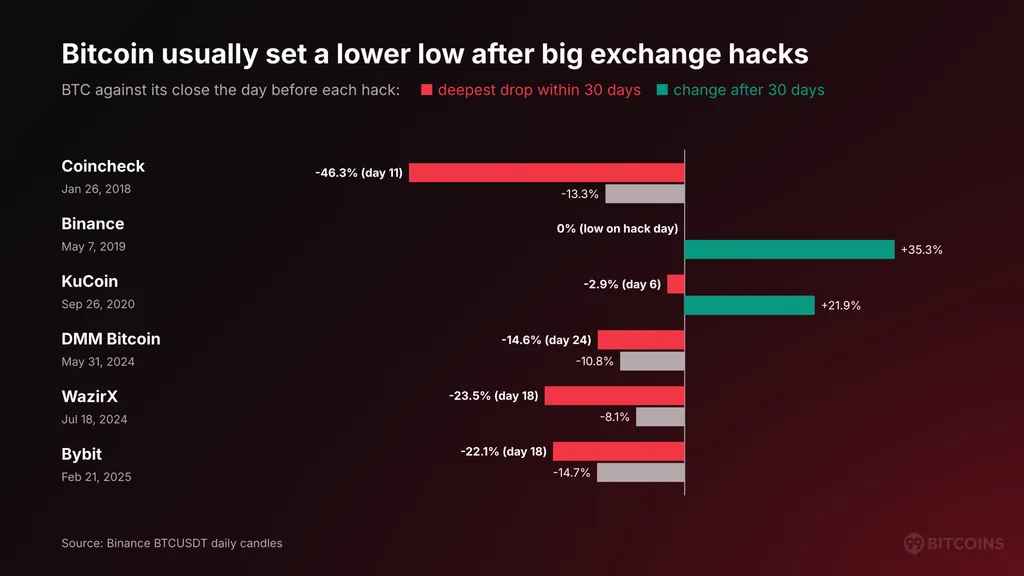
Lacie Zhang, research lead at Bitget Wallet, told crypto.news that $76,000-$77,000 is the area to hold, and that a sustained recovery of $80,000 through spot demand would signal stabilization. Token Talk's framework points to $84,000-$86,500 as the next target if Bitcoin reclaims $80,000 and breaks the upper channel line. 99Bitcoins framed the central question as whether the move is a bottom or a repeat of the post-Bybit pattern, and reported that retail traders were adding longs into the dip.
What Happened on Binance
Blockaid's initial analysis, cited by crypto.news, traced at least $3.5 billion leaving Binance hot wallets on Ethereum, Arbitrum, Optimism and Avalanche within an hour. Co-founder and CEO Ido Ben-Natan said the attacker reprogrammed a major Ethereum hot wallet so a single operator could drain it, including new deposits, and reused that access more than an hour later. Blockaid also identified preparation involving Tornado Cash funding and test-wallet rehearsals hours before the theft.
Binance initially pointed to a compromised DevOps engineer's laptop, but later reported additional points of breach, according to AFP. Binance said it had set aside more than $6.34 billion in company funds, including $5 billion held in affected token assets, and that partners had frozen approximately $3 billion separately, per Reuters.
Tracing the Funds
Nansen's analysis, shared with crypto.news, traced 18,270 BTC worth about $1.48 billion from a Binance hot wallet through a central address into 19 wallets, none of which had moved again when the analysis was prepared. On Ethereum, the attacker deposited roughly $60 million in USDT into Aave and borrowed $43.5 million in ETH. Nansen also identified 442,000 ETH across exploiter-linked wallets, and separately tracked $414 million in assets through 11 wallets that swapped tokens on decentralized exchanges. Circle froze $823 million in USDC, and 233.46 million XRP, about $297 million, sat in one wallet. These figures describe separately traced holdings and movements and should not be summed without further reconciliation.
Security Implications
Stefan Deiss, CEO of The Hashgraph Group, told crypto.news that trusted access requires independent controls, recommending verified identities, accountable human operators, spending limits and an off switch for financial AI agents.
Why It Matters
For Traders
Bitcoin's reaction to the $76,000-$77,000 zone and any reclaim of $80,000 over the coming sessions will show whether the dip is being bought or sold into.
For Investors
A theft of this scale at a top exchange raises questions about custody risk and could shape long-term views on centralized exchange solvency and reserve disclosures.
For Builders
The reported reprogrammed hot wallet and reused access highlight the need for hot-wallet key controls, spending limits and independent approval paths in custody infrastructure.
This article is for information only and is not financial advice. Read the full disclaimer.


