FBI May Have Identified Coldcard Hacker Behind 1,082 BTC Theft
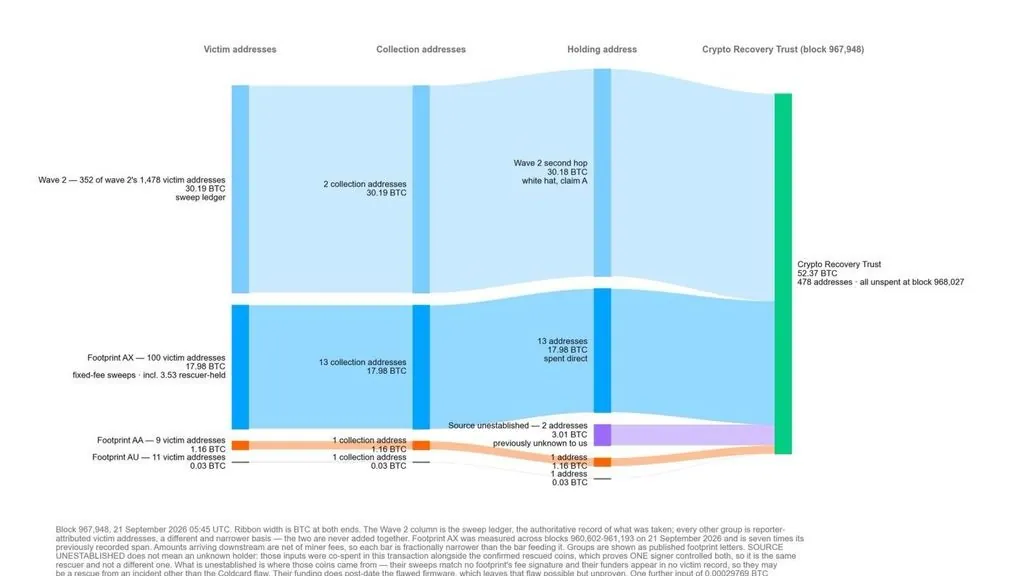
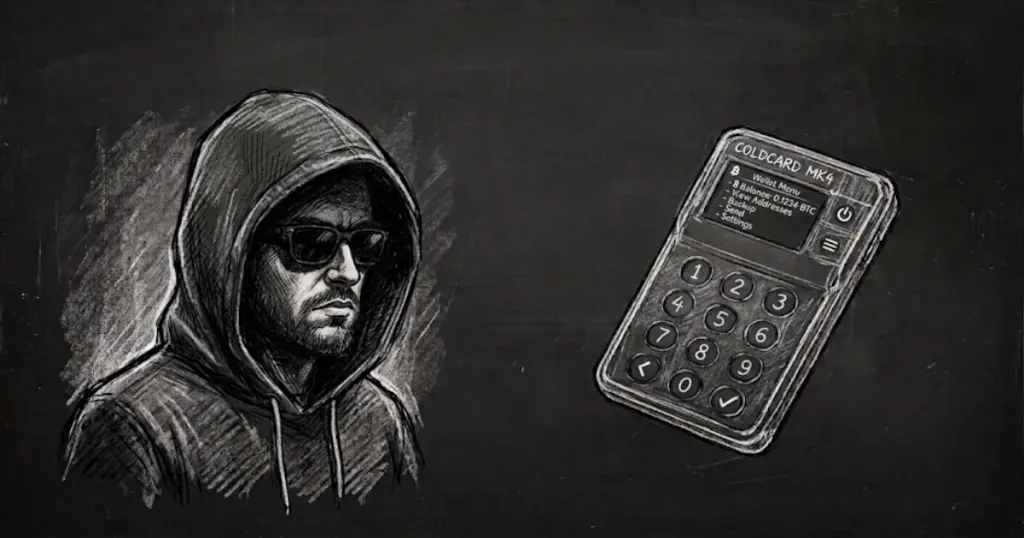
Investigators traced the first wave of Coldcard hardware wallet thefts to 1,082.65 BTC moved through a paid data provider's account with unusual specificity, suggesting potential FBI awareness of the attacker's identity. The stolen coins remain unmoved on-chain, though the FBI has not publicly confirmed any charges or arrests.
Written by CoinArticle’s AI Newsroom · from 2 cited sources. How we work
Investigation Links Theft to Data Account
Researchers investigating the Coldcard hardware wallet compromise connected the first wave of thefts—1,082.65 BTC—to a paid data provider's internal logs, according to reporting by Bitcoin Magazine. The matching of transaction patterns to account activity occurred with what the investigation describes as "extraordinary specificity," implying a narrow set of suspects with access to both the victim keys and the provider's systems.
FBI Status Unclear
While the specificity of the trace suggests law enforcement involvement or awareness, the FBI has not publicly confirmed identifying or charging anyone in connection with the theft, according to Crypto.news. The 1,082.65 BTC remain stationary on-chain, indicating the attacker has not attempted to move or sell the coins since the initial sweep. The lack of movement and the investigative precision point to an active, ongoing probe rather than a resolved case.
Why It Matters
For Traders
Unmoved stolen coins pose no immediate liquidity threat, but any future movement or exchange listing could trigger volatility in affected token or asset classes.
For Investors
The investigation's specificity and potential FBI awareness suggests hardware wallet supply chain security remains a material operational risk for custodians and self-custody users.
For Builders
Hardware wallet manufacturers face renewed scrutiny on key derivation and firmware integrity; the data provider angle suggests third-party access vectors deserve architectural review.
This article is for information only and is not financial advice. Read the full disclaimer.