QIE Blockchain Proposes Identity Layer for Web3 Wallets
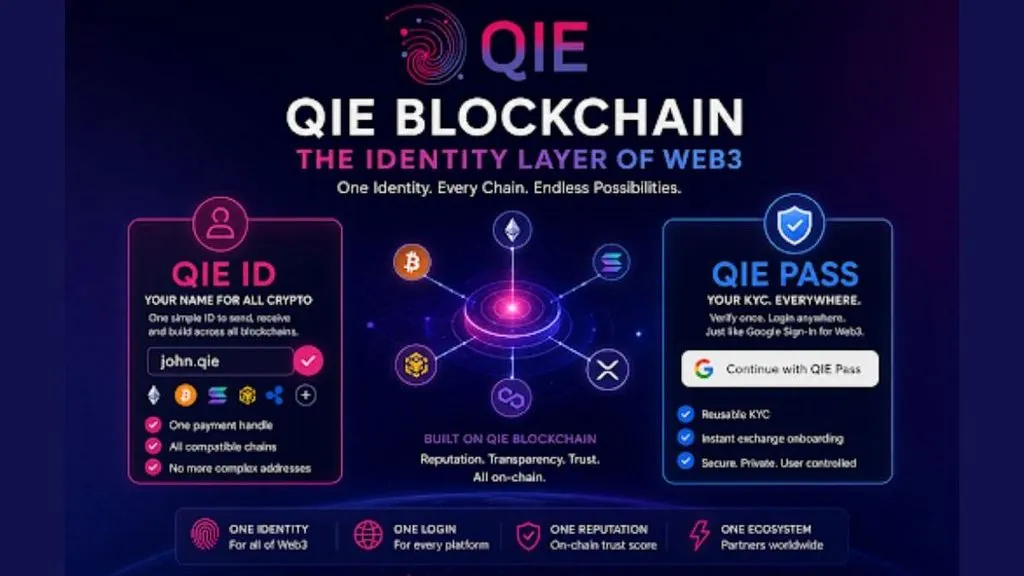
QIE Blockchain has proposed a new identity layer for Web3 aimed at simplifying wallet management across blockchains. The system would consolidate multiple wallet addresses into a single human-readable identifier, potentially reducing KYC friction across exchanges and dApps.
Written by CoinArticle’s AI Newsroom · from 1 cited source. How we work
The Problem QIE Identifies
Every blockchain wallet is represented as an opaque hexadecimal string—0x8b34…bc1q9, TQf7—with no consistent identifier across chains. Users must complete separate KYC procedures on each exchange and provide wallet addresses to each dApp they interact with. QIE argues this fragmentation creates friction that keeps casual users from adopting crypto.
QIE's Proposed Solution
QIE Blockchain proposes an identity layer that maps a single human-readable identifier to wallets across multiple blockchains. The model is explicitly compared to email, where a single username routes to a universal inbox rather than requiring a new address on each platform. The proposal suggests this layer could streamline onboarding, reduce redundant KYC cycles, and make dApp interactions more intuitive.
Open Questions
The source material provided does not include technical specifications, a timeline for launch, or details on how the identity layer would handle privacy and self-custody principles central to decentralized finance. Governance structure, token economics, and testnet availability are not specified. QIE's whitepaper or technical documentation would be required to assess feasibility and differentiation from existing identity protocols.
Why It Matters
For Traders
No immediate trading implications; the proposal is conceptual and lacks a live product or token.
For Investors
Identity fragmentation is a known UX barrier to retail adoption; credible solutions here could improve onboarding velocity across protocols.
For Builders
A standardized identity layer could reduce per-protocol KYC engineering and improve composability across chains, but requires buy-in from exchanges and dApps.
This article is for information only and is not financial advice. Read the full disclaimer.