Two Robinhood Engineers Charged With Wire Fraud Over $50K Crypto Scheme
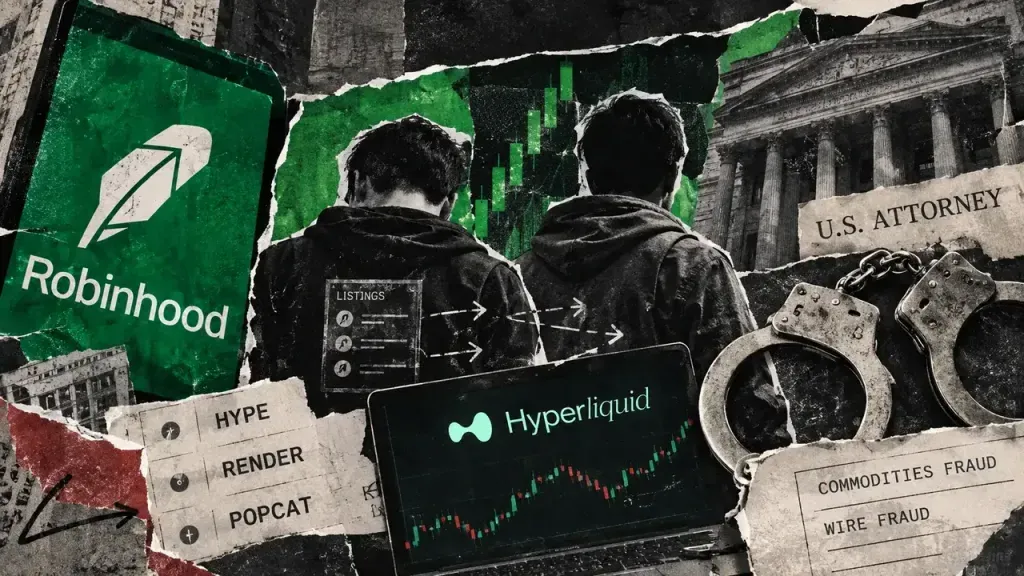
Federal prosecutors have charged two Robinhood engineers with commodities and wire fraud for allegedly trading crypto perpetual futures on confidential information about planned token listings. Each engineer is accused of profiting more than $50,000 from the scheme and faces potential sentences of up to 30 years.
Written by CoinArticle’s AI Newsroom · from 2 cited sources. How we work
Charges and Alleged Trading
The U.S. Attorney's Office charged two Robinhood engineers with wire fraud and commodities fraud after they allegedly used confidential information about planned token listings to trade perpetual futures ahead of official Robinhood announcements. According to the DOJ, each engineer earned more than $50,000 through the scheme. The charges carry potential sentences of up to 30 years in prison.
How the Scheme Worked
Prosecutors allege the engineers exploited advance knowledge of which tokens Robinhood planned to list. They then used this information to place trades on Hyperliquid, a decentralized perpetual futures platform, before Robinhood made its listing decisions public. Because Robinhood listings typically move token prices significantly, early traders positioned ahead of the announcements stood to profit from the anticipated price movement.
Broader Pattern
The charges reflect ongoing federal enforcement around insider trading in crypto markets. Unlike equities, where strict information barriers exist between trading desks and corporate strategy teams, crypto exchanges and protocols have faced scrutiny over information asymmetries between employees and traders. The case highlights how traditional securities law frameworks are being applied to crypto trading activities.
Why It Matters
For Traders
Robinhood's token listing announcements may face temporary credibility questions if institutional flow was front-run, though this does not directly affect retail trading mechanics.
For Investors
The case signals federal prosecutors are applying insider-trading law to crypto perpetual futures, establishing precedent that trading on material nonpublic information violates commodities law regardless of exchange type.
For Builders
DEX and perp platforms should review employee trading controls and information access policies; decentralized systems offer no inherent protection against insider-trading charges if the traders themselves possessed the information.
This article is for information only and is not financial advice. Read the full disclaimer.