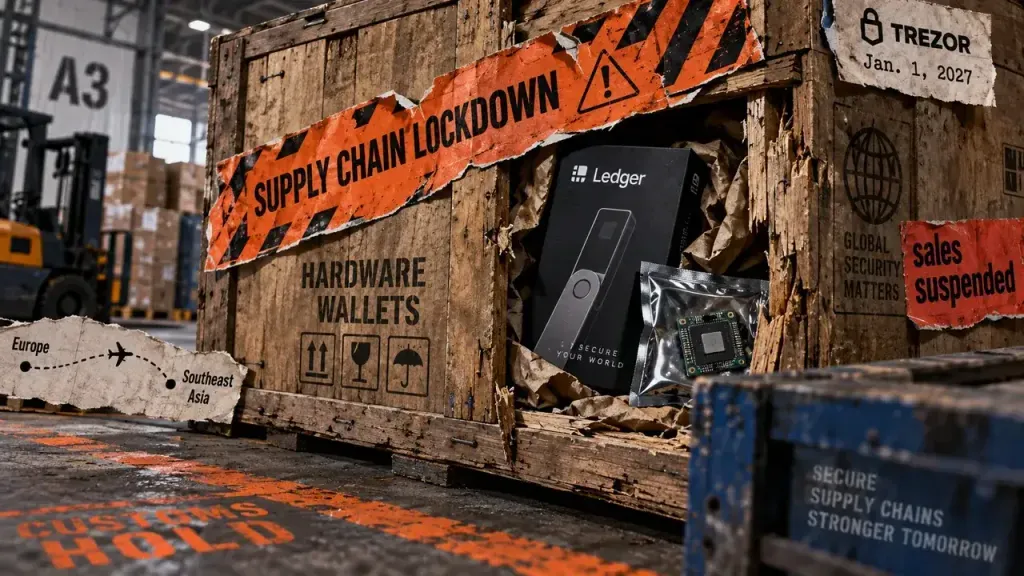
Trezor Data Breach Expands to 80,689 Customers; ShipMonk Retention Failure Confirmed
Trezor's confirmed data breach has grown to approximately 80,689 affected customers after CryptoSlate reported discovery of shipping logs that were supposed to be deleted. The expansion underscores third-party vendor failures in data retention compliance across the hardware wallet supply chain.
Written by CoinArticle’s AI Newsroom · from 4 cited sources. How we work
Story Updates
- Updated Sep 5, 2026, 07:04 PM: Confirmed breach total grows to 80,689 customers; CryptoSlate reports discovery of shipping logs supposedly deleted by ShipMonk.
- Updated Sep 5, 2026, 12:02 AM: ShipMonk identified as the third-party vendor responsible for retaining customer data beyond agreed 90-day window.
Shipping Partner Identified as Source of Data Retention Failure
Trezor's third-party shipping partner ShipMonk retained customer data well beyond the agreed 90-day deletion window, according to reporting from Bitcoin Magazine and earlier coverage by CryptoPotato and Decrypt. The discovery identifies a specific vendor responsible for the data retention failure that contradicted Trezor's public statements about data handling practices.
Scale and Timeline of Exposure
The confirmed customer data breach has grown to approximately 80,689 affected individuals, according to CryptoSlate reporting on newly discovered shipping logs. The expanded figure represents a sixfold increase from Trezor's initial disclosure and includes records dating back to 2019—contradicting the company's stated policy that data partners would retain customer information for a maximum of 90 days. The presence of older records and the discovery of shipping logs that were supposedly deleted raise questions about what data still exists at other points in Trezor's vendor ecosystem.
Trezor has not published a detailed timeline of when it discovered ShipMonk's retention failure, disclosed which customer categories were newly confirmed as exposed, or provided a row-level overlap check to determine whether the 80,689 figure includes duplicates across multiple reported breaches.
Why It Matters
For Traders
Custody risk from hardware wallet breaches may prompt reassessment of wallet providers or custody models for significant holdings.
For Investors
Expanding breach scope and repeated disclosure gaps signal material governance and vendor oversight failures that could extend across operational controls.
For Builders
Developers integrating hardware wallet APIs should treat third-party data retention promises as unverified and design systems assuming longer-than-stated retention periods.
This article is for information only and is not financial advice. Read the full disclaimer.