Uniswap Governance to Vote on V4 and Robinhood Chain Fee Routing
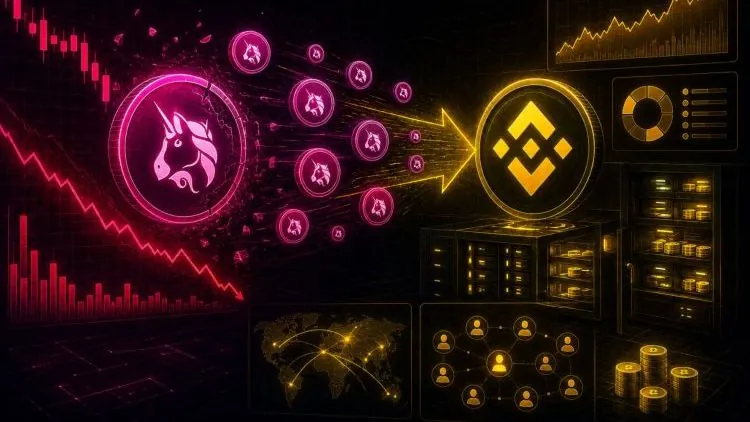
Uniswap will hold a governance vote on protocol fees from V4 and Robinhood Chain deployments, with the potential to route new revenue into the existing UNI burn mechanism. The vote could accelerate token supply reduction if approved.
Written by CoinArticle’s AI Newsroom · from 1 cited source. How we work
Proposed Fee Structure
Uniswap governance will soon vote on enabling protocol fees from both Uniswap V4 and deployments on Robinhood Chain. If approved, a portion of these fees would be directed into the existing UNI token burn mechanism, creating a new source of deflationary pressure on the token supply.
Mechanism and Timing
The vote will determine which revenue streams qualify for burn routing and at what rate. Robinhood Chain represents a new deployment opportunity for Uniswap, and V4's modular design opens additional fee collection vectors compared to earlier protocol versions. Once ratified, the mechanism would begin automatically routing eligible fees to burn as transactions occur on those networks.
Governance Implications
This proposal signals UNI holders' appetite for supply-side tokenomics adjustments tied to new protocol growth. Whether the vote passes will depend on quorum and supermajority support from the DAO. The outcome will also set precedent for how future Uniswap deployments on emerging chains are monetized.
Why It Matters
For Traders
UNI burn acceleration could reduce sell pressure from new issuance, though token price depends on broader market conditions and vote outcome.
For Investors
Directing protocol revenue into burns rather than treasury improves long-term token holder returns by compressing dilution and could signal a shift in Uniswap's monetization strategy.
For Builders
Fee routing on V4 and Robinhood Chain establishes clearer economic incentives for liquidity provisioning on those surfaces, potentially affecting competitiveness versus other DEX deployments.
This article is for information only and is not financial advice. Read the full disclaimer.