Coinbase Partners with Moov to Offer Stablecoin Services to 1,000 Community Banks
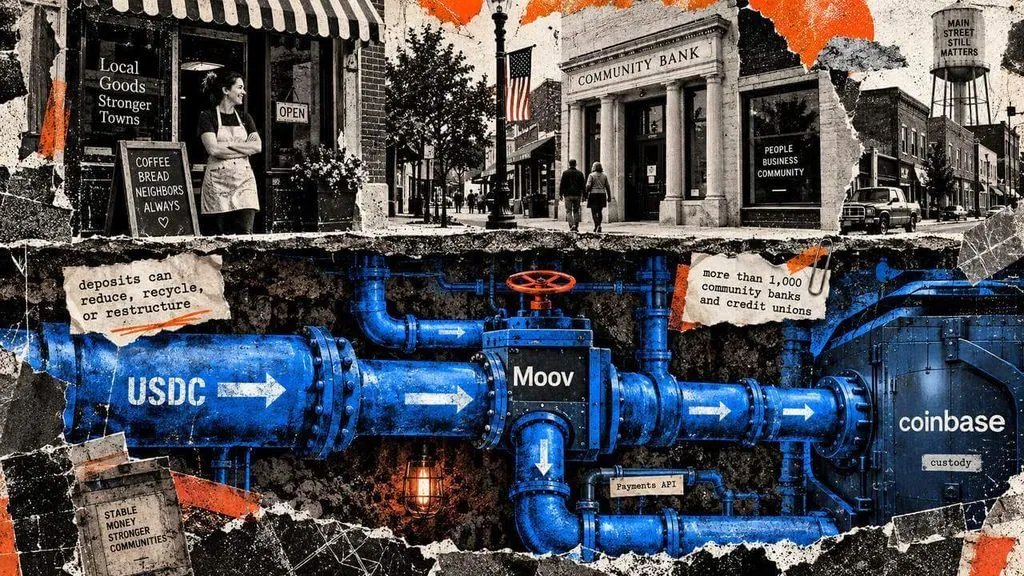
Coinbase and fintech platform Moov announced a partnership to connect over 1,000 community banks and credit unions with stablecoin-based payments, custody, and settlement services. Banks will retain their customer relationships while Coinbase provides underlying infrastructure, though pricing and revenue-sharing terms remain undisclosed.
Written by CoinArticle’s AI Newsroom · from 2 cited sources. How we work
The Partnership Structure
Coinbase and Moov said Wednesday they will enable stablecoin payments, custody, settlement, and funding access across a network of more than 1,000 community banks and credit unions. The model keeps the customer interface and direct relationships with depositors at the bank level, with Coinbase supplying the blockchain infrastructure and stablecoin rails underneath. Neither party disclosed the fee structure, data sharing arrangements, or how revenue will be split between them.
Why This Matters for Regional Banks
The partnership lets smaller financial institutions compete with larger peers on payment technology without building blockchain infrastructure in-house. Community banks and credit unions gain access to stablecoin-powered settlement and funding rails, which Coinbase frames as faster and cheaper than traditional correspondent banking. The exact terms determining which party captures the economic value—Coinbase, Moov, or the banks themselves—remain opaque pending formal service-level agreements and pricing documentation.
Custody and Compliance Questions
The arrangement raises questions about liability and regulatory responsibility. Coinbase will handle custody, but banks retain the customer touchpoint, creating potential ambiguity around which entity bears compliance burden for customer-facing stablecoin transactions. The partnership does not specify which stablecoin or stablecoins will be used, or whether Coinbase's own USDC is included.
Why It Matters
For Traders
No immediate price impact expected; this is a B2B infrastructure play without direct effect on spot markets or derivatives positioning.
For Investors
The deal signals Coinbase's strategy to embed crypto rails into traditional banking plumbing rather than competing directly for retail deposits, but undisclosed terms obscure economic value capture.
For Builders
Stablecoin infrastructure providers should expect similar white-label approaches; banks integrating blockchain rails will require compliance and custody solutions, not just tokens.
This article is for information only and is not financial advice. Read the full disclaimer.