Crypto's $55M Bet on Husted and Brown Hinges on Ohio Senate Race
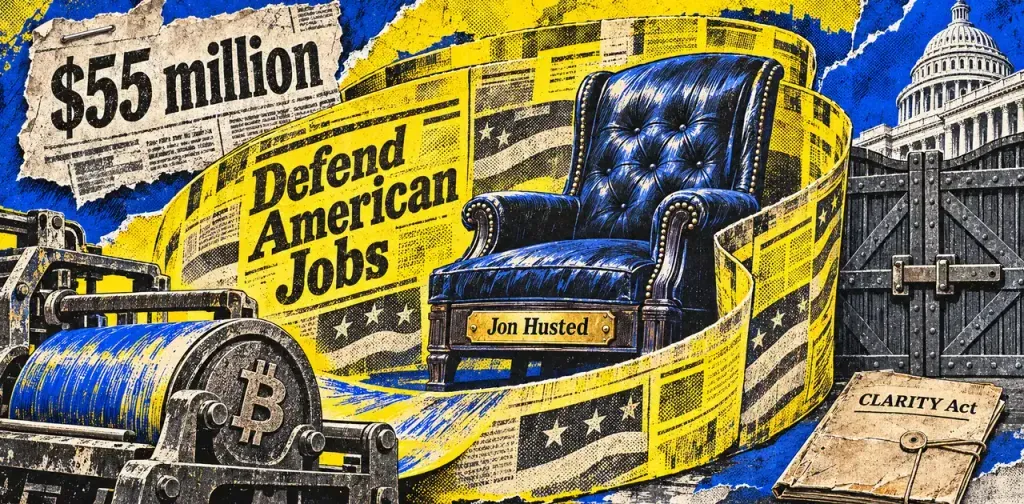
Crypto-backed Defend American Jobs spent over $55 million backing Republican Jon Husted and opposing Democrat Sherrod Brown in Ohio's Senate race before Tuesday's midterm vote. Election results will shape Senate control and the path for the stalled CLARITY Act, though the bill's core disputes remain unresolved.
Written by CoinArticle’s AI Newsroom · from 2 cited sources. How we work
The Spending and the Stakes
Crypto-backed political group Defend American Jobs spent more than $55 million supporting Republican Jon Husted and opposing Democrat Sherrod Brown in Ohio between Sept. 21 and Oct. 26, according to Americans for Financial Reform. Reuters estimated that crypto groups had spent roughly $176 million across more than 100 races by late October, making Ohio one of the industry's largest single bets in the cycle.
Americans vote Tuesday, Nov. 3, in midterm elections that will determine control of Congress for the next two years. Republicans currently hold both chambers, and the midterms will shape committee leadership, hearings and the timing of any future vote on crypto legislation.
Why Husted Matters to the Industry
Husted has already voted to advance the CLARITY Act, the federal market-structure proposal intended to set clearer rules for crypto. Keeping him in Washington would protect a vote the industry already has. Defeating Brown would prevent a prominent crypto critic from returning to the Senate after he lost his previous seat in 2024.
The sources differ on how much this outcome would change. CoinDesk frames Brown's campaign as a potential threat to the industry's legislative agenda. CryptoSlate argues that neither result resolves the underlying disagreements, since the bill failed to clear the 60-vote Senate threshold in September and Brown was not in the Senate at the time of that vote.
What Still Blocks the Bill
Republicans hold 53 seats, so even a united caucus would need support from outside the party to reach 60 votes. Senators Susan Collins, Josh Hawley and Jerry Moran voted against advancing the bill. Thom Tillis also recorded a no, but did so to preserve the option of seeking reconsideration, a procedural step rather than opposition to the bill itself, according to CryptoSlate.
The main dispute centers on stablecoin rewards. Crypto platforms pay customers for holding stablecoins, and banking groups argue those payments function like deposit interest and draw money away from community banks and credit unions. Collins has called for further study of whether those institutions could lose deposits that fund mortgages and small-business loans. The September proposal would bar third-party payments that function like interest on idle balances while still permitting rewards tied to transactions or activity. Lawmakers are also still debating banking risks and customer protections for crypto firms that hold client funds.
What to Watch After Election Day
The outcome in Ohio will affect which lawmakers sit on the committees that would draft and vote on the bill, but the rewards dispute and the consumer protection questions are not resolved by the election itself. Observers should watch whether the Senate reaches a deal on the rewards language and whether any Democratic or Republican holdouts shift their positions in the next session.
Why It Matters
For Traders
Election results may shift near-term odds on Senate action, but no committee vote is scheduled, so any price effect would depend on post-election signals about the bill's path.
For Investors
The outcome signals how much weight crypto-funded campaigns carry, yet the stablecoin rewards fight will determine whether market-structure legislation advances this Congress.
For Builders
Stablecoin reward design is the live regulatory variable, so products paying yield on idle balances should monitor proposed limits on third-party interest-like payments.
This article is for information only and is not financial advice. Read the full disclaimer.