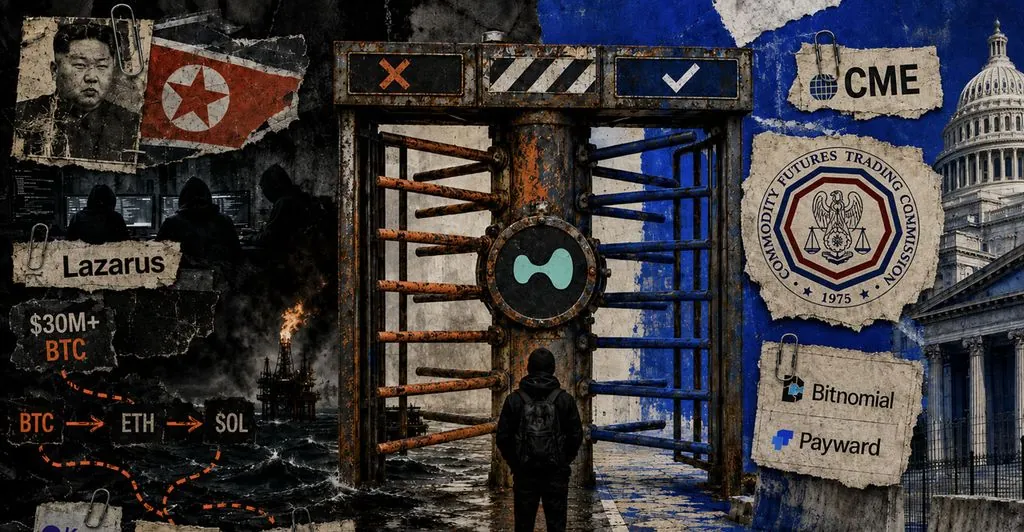
North Korean Hackers Deploy Local AI to Automate Crypto Firm Attacks
The North Korea-linked hacking group Kimsuky has built three local AI environments to automate cyberattacks targeting cryptocurrency and financial companies, according to a report from South Korean cybersecurity firm Genians. The group is researching AI applications for malware development, data analysis, and attack technique advancement.
Written by CoinArticle’s AI Newsroom · from 2 cited sources. How we work
Story Updates
- Updated Aug 13, 2026, 09:06 AM: Kimsuky researching AI for malware development and attack technique advancement, expanding scope beyond initial infrastructure report.
Kimsuky's AI Infrastructure
Kimsuky, a hacking group linked to North Korea's intelligence services, has constructed three isolated AI environments designed to support automated attack campaigns, Genians reported Monday. The cybersecurity firm did not disclose the specific AI models or platforms used, but indicated the infrastructure represents a deliberate effort to scale reconnaissance and exploitation operations without relying on internet-connected systems that leave forensic traces. According to CryptoPotato reporting, Kimsuky is actively researching ways to integrate AI technology into malware development, data analysis, and the refinement of attack techniques themselves.
Targets and Threat Model
The AI systems are positioned to support attacks on cryptocurrency exchanges, wallet providers, and traditional financial institutions. By automating reconnaissance, phishing email generation, and vulnerability scanning, Kimsuky can conduct parallel attacks at lower manual cost and with reduced detection risk. The use of locally hosted rather than cloud-based AI also limits visibility to third-party security vendors and law enforcement. The group's research focus on malware development and attack technique advancement suggests an intent to evolve its toolkit beyond current capabilities.
Security Industry Response
Genians released the findings as part of ongoing threat monitoring of North Korean state-sponsored activity. Cryptocurrency exchanges and custodians have faced sustained targeting from state actors seeking to access private keys, seed phrases, and hot wallet credentials. The integration of AI tooling into these campaigns marks a shift from manual phishing and social engineering toward more scalable, self-improving attack patterns. Security vendors are now flagging local LLM deployments as a higher-priority threat vector requiring updated defensive postures.
Why It Matters
For Traders
Exchanges may implement additional withdrawal verification or temporary service interruptions if they detect compromise attempts; trading access could be disrupted.
For Investors
State-sponsored AI-augmented attacks on exchanges represent accelerating structural risk; institutional capital will increasingly favor non-custodial and hardware-secured alternatives.
For Builders
Protocol security models must assume sophisticated local AI-assisted reconnaissance; multi-signature schemes and air-gapped architecture become competitive necessities for institutional products.
This article is for information only and is not financial advice. Read the full disclaimer.