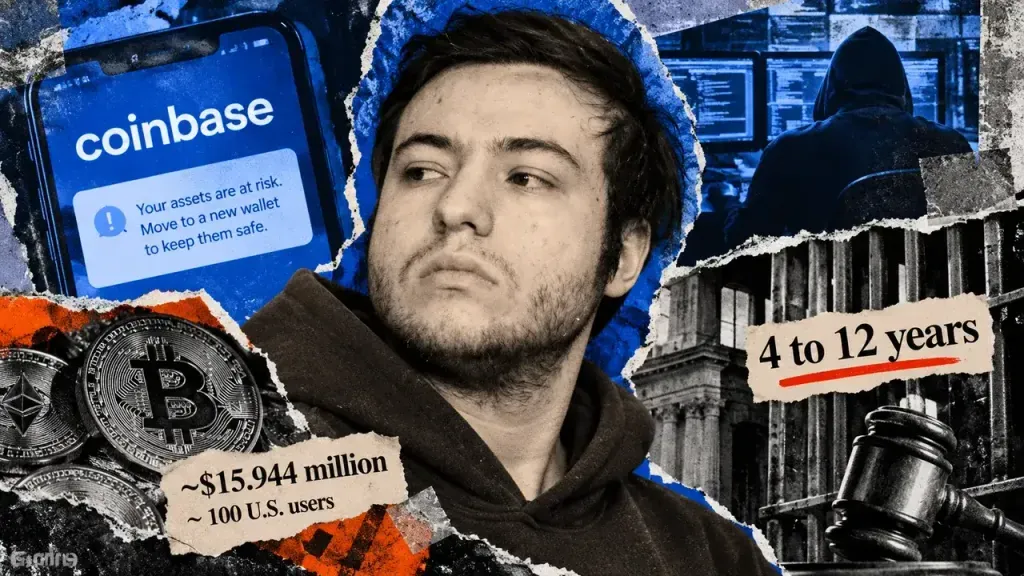
Brooklyn Man Sentenced to 12 Years for $16M Coinbase Phishing Scheme
Ronald Spektor, 23, was sentenced to 12 years in prison for orchestrating a phishing scheme that defrauded approximately 100 Coinbase users of $16 million. Spektor used social engineering tactics to convince victims their accounts had been compromised and persuade them to transfer funds to accounts he controlled.
Written by CoinArticle’s AI Newsroom · from 2 cited sources. How we work
The Scheme and Sentencing
Ronald Spektor, 23, a Brooklyn resident, was sentenced to 12 years in federal prison for wire fraud and money laundering related to a coordinated phishing campaign targeting Coinbase customers. According to court records, Spektor targeted roughly 100 victims across the United States, convincing them through social engineering that their Coinbase accounts had been hacked and needed immediate action to secure their funds.
How the Fraud Operated
Spektor impersonated Coinbase support representatives and instructed victims to transfer their cryptocurrency holdings to accounts under his control, claiming the transfers were necessary to protect their assets. The scheme netted approximately $16 million in stolen funds. Spektor, who lived with his father in Brooklyn, managed the operation from a residential address, according to court filings.
Charges and Enforcement Context
The conviction and sentencing underscore ongoing U.S. law enforcement focus on cryptocurrency-related fraud. The case involved federal charges for wire fraud and money laundering, both of which carry substantial prison terms. The sentence reflects the scale and sophistication of the phishing operation, which required sustained impersonation of a major exchange to maintain credibility across dozens of separate victims.
Why It Matters
For Traders
Phishing schemes targeting major exchanges remain an active threat; using hardware wallets and avoiding non-official communication channels reduces exposure to account takeover vectors.
For Investors
High-profile prosecutions signal law enforcement capacity to trace and prosecute cross-border theft, though recovery of stolen funds remains limited in most cases.
For Builders
Exchange platforms face ongoing pressure to implement additional authentication and account-recovery protocols to counter sophisticated social engineering attacks like this one.
This article is for information only and is not financial advice. Read the full disclaimer.