Schiff Predicts Bitcoin Below $20K as Analysts Split on Demand and Holder Conviction
Bitcoin critic Peter Schiff said BTC could fall below $20,000 once it breaks $50,000, with the asset trading near $67,000 after a 16% monthly decline. Other market participats attribute the weakness to contracting demand rather than macro factors, while sources differ on whether a deeper drop would shake long-term holders.
Written by CoinArticle’s AI Newsroom · from 2 cited sources. How we work
Schiff's Call and the Price Backdrop
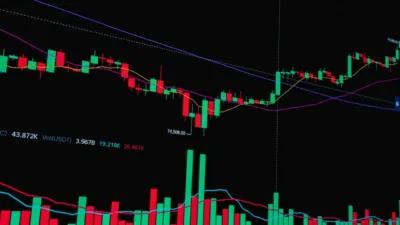
Peter Schiff said Bitcoin could fall below $20,000 once it breaks through $50,000, a move he described as a "quick fall." The forecast was posted on X while Bitcoin traded around $67,000, down more than 4% over 24 hours and over 16% across 30 days, according to CryptoPotato. CCN reported the same $20,000 target and framed it as a warning that long-term holders could capitulate.
Schiff's central argument is sentiment rather than price. He said there is "way too much complacency" in Bitcoin for the market to be near a bottom, and that a sharp move lower would push long-term holders to "finally throw in the towel." He also suggested that a Bitcoin selloff could either spread to broader risk assets or remain confined to crypto, with either outcome pushing investors toward value and safety, a framing that tracks his long-running case for gold.
Strategy and the STRC Critique
Schiff also targeted Strategy's STRC preferred stock, which was trading below $96 at the time, implying a yield of roughly 12%. He argued that if investors lose confidence in the company's ability to pay that yield, the price would keep falling, forcing the firm to raise the coupon to hold STRC at its $100 face value. He called this a "death spiral."
The critique comes as Strategy has sold part of its holdings, 32 BTC, for the first time since 2022. According to the reporting, the roughly $2.5 million raised is earmarked for preferred stock dividends. Strategy holds over 843,000 BTC, so the sale is small relative to its position. Schiff's argument rests on the structure of STRC rather than on the size of the sale.
Where Other Market Voices Disagree
The sources differ on how a deeper drop would affect holders. Crypto commentator Alex Marzell argued that a move to $20,000 would test only his available cash, rejecting the idea that it would shake long-term conviction. Bitget CEO Gracey Chen said she was waiting to buy near $50,000, citing global money printing as the long-term driver for both Bitcoin and gold. She also flagged short-term risks, including CPI pressure, potential rate hikes, possible selling by Strategy and Mt. Gox creditors, and heavy AI-sector IPOs that could drain liquidity.
On cause, the sources diverge from Schiff's and Chen's macro emphasis. CryptoQuant head of research Julio Moreno said overall Bitcoin demand is contracting at a pace of 232,000 BTC per month and that the correction reflects weakening demand rather than stock market or macroeconomic developments. Bitfinex's recent report similarly described a "slow bleed" driven by distribution and fading investor conviction. Taken together, the on-chain and research views point to demand as the proximate driver, while the price forecasts rest on sentiment and the macro outlook.
What to Watch
The $50,000 level is the reference point in every source, and the sources agree on little beyond that. The next signals are whether the demand contraction Moreno describes continues, whether STRC pricing stays under its face value, and how the macro events Chen cited, including CPI and rate decisions, unfold.
Why It Matters
For Traders
Watch whether the $50,000 level holds and whether STRC trades below its $100 face value, since both are cited as near-term stress points.
For Investors
Demand contraction at 232,000 BTC per month, if confirmed, signals a sentiment-driven correction rather than one driven by macro conditions.
For Builders
Strategy's STRC structure and any further treasury sales are a reminder that protocols and products depending on corporate Bitcoin treasuries carry financing-structure risk.
This article is for information only and is not financial advice. Read the full disclaimer.