TronBid Expands TRON Energy Marketplace to Cut USDT Transfer Costs
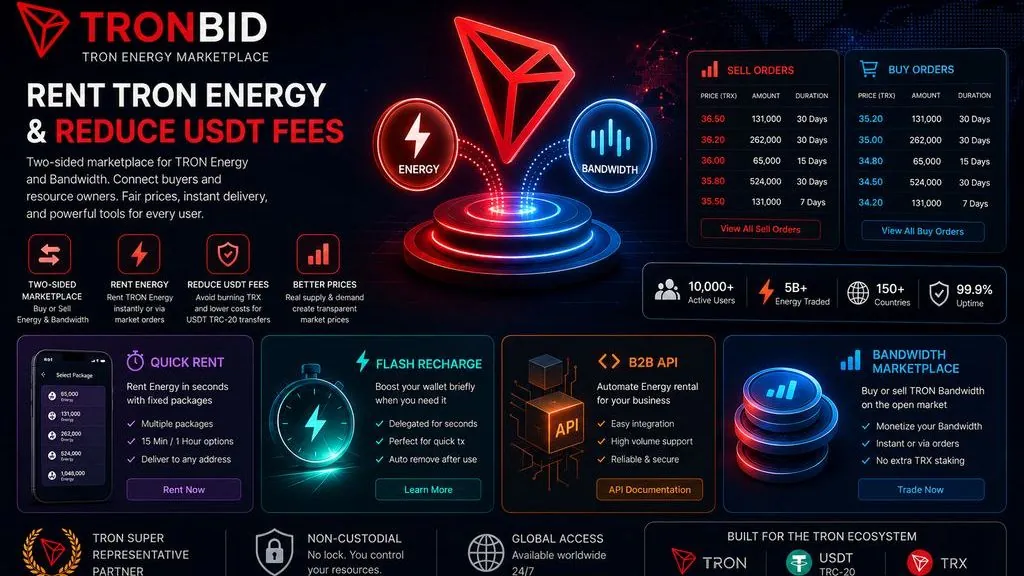
TronBid, a peer-to-peer marketplace for TRON network resources, has expanded its platform to allow users to rent Energy and Bandwidth without maintaining large staked TRX balances. The expansion aims to reduce transaction costs for frequent USDT transfers on the TRON network.
Written by CoinArticle’s AI Newsroom · from 3 cited sources. How we work
The Problem TronBid Addresses
Sending USDT over the TRON network is popular because of its speed and broad adoption, but TRC-20 transfers still require network resources known as Energy. When a wallet lacks sufficient Energy, TRX tokens are burned to cover the remaining execution cost. For users who make frequent transfers, this can add up significantly.
How the Expanded Marketplace Works
TronBid now operates as a two-sided marketplace where both buyers and sellers can create orders for TRON Energy and Bandwidth. Rather than burning TRX or maintaining large staked balances to generate Energy through delegation, users can rent resources directly from others on the platform. The expansion gives users multiple options: rent Energy temporarily, trade Energy directly with peers, or purchase Bandwidth outright.
Why This Matters for Active Users
The peer-to-peer model eliminates the friction of committing capital to earn Energy through staking. Users who need resources occasionally can now access them without the lock-up period or opportunity cost of holding delegated TRX, making small and frequent USDT transfers more economical on the TRON network.
Why It Matters
For Traders
Reduced Energy costs lower execution friction for frequent TRON-based USDT trades, particularly relevant for arbitrage-oriented traders.
For Investors
A functioning secondary market for network resources could increase TRON adoption for stablecoin transfers by lowering practical barriers for retail users.
For Builders
The two-sided marketplace model for network resources suggests a replicable pattern for other Layer 1 chains seeking to optimize user economics around constrained network capacity.
This article is for information only and is not financial advice. Read the full disclaimer.