Uniswap Opens TJAR Fee Converter to Outside Apps as Robinhood Adopts It
Uniswap opened its Token Jar (TJAR) fee converter to other applications on October 29, with Robinhood already using it to receive USDC and USDG for fees collected through the Uniswap API. Sources differ on how much conversion volume the system has processed and how much surplus searchers can capture.
Written by CoinArticle’s AI Newsroom · from 2 cited sources. How we work
What Uniswap Launched
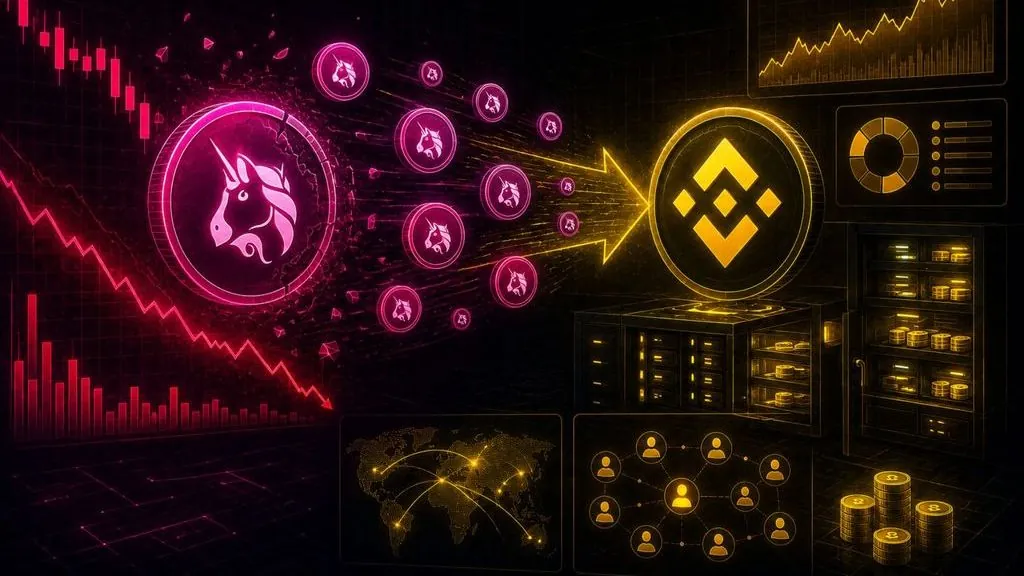
Uniswap opened its Token Jar (TJAR) fee converter to other applications on October 29, according to the company. Applications deposit accumulated fee tokens into an on-chain Token Jar and specify the asset they want to receive, and outside traders, known as searchers, pay that asset to claim the jar's contents.
Uniswap says Robinhood already uses TJAR for fees collected through the Uniswap API across its supported chains, receiving USDC and USDG. Uniswap's protocol-fee deployment works differently: it sends UNI to a burn address, while TJAR lets each operator choose its own destination.
How the Mechanism Works
A Token Jar holds incoming assets, and a Releaser contract sets the payment token, the payment amount and the recipient. The operator of each app selects those terms. Developer documentation says a searcher pays the full release amount even if it selects only some of the assets, and receives the full balance of each asset it names. Unselected assets remain in the jar.
The jar does not value its holdings, and no price oracle adjusts the payment. Asset balances and market prices can therefore move while the required payment stays fixed. A searcher acts when the recoverable value exceeds the payment plus execution costs. Competition can narrow that margin, but the design does not guarantee a profit for anyone.
Where the Sources Diverge
The two accounts describe the system's scale differently. CryptoSlate reports the protocol-fee deployment's conversion history only in general terms, while NewsBTC states that Uniswap's original protocol-fee system processed more than $15.3 million of conversions in the preceding month. NewsBTC's figure is attributed to Uniswap, and neither account independently verifies it, so it should be treated as the company's own reported number.
CryptoSlate also says the documentation currently leaves TJAR's optional protocol fee unset, though the Uniswap DAO controls that parameter. NewsBTC does not address the fee setting. Readers should note that the fee is governance-controlled and currently unset, and that this can change.
Threshold Design and Surplus
Uniswap's October 30 explanation says a lower release threshold generally lets jars clear more often, which shortens operators' exposure to token-price moves. A large deposit can, however, push holdings well above the fixed payment. In Uniswap's hypothetical, a jar holding $950 of assets with a 1,000 USDC release price receives a $500 deposit, bringing holdings to $1,450. That gap rewards the searcher at the operator's expense.
A higher threshold makes individual deposits less significant relative to the payment but leaves assets waiting longer before conversion. Operators therefore trade off receipt frequency against price exposure and the surplus left for searchers. Uniswap's example is hypothetical and does not report observed surplus figures.
What to Watch
Useful indicators include adoption by third-party applications, conversion efficiency, the range of supported networks and how operators set their thresholds. Robinhood's use is the one named live integration in the reporting so far. The announcement does not establish that TJAR is the cheapest route for every asset mix, and token liquidity will determine whether searchers participate. Neither source reports how much value, if any, has been captured by searchers in practice.
Market Context
NewsBTC frames the launch as an example of decentralized finance moving toward business infrastructure, noting that fee income spread across long-tail assets complicates accounting for wallets, exchanges and payment applications. It also cautions that revenue accruing to a company or treasury does not necessarily translate into demand for a related token. That distinction matters because a protocol upgrade alone does not establish a token price effect.
Why It Matters
For Traders
Watch whether searchers actually claim TJAR jars in the coming days, since uptake will show whether the fixed-payment surplus is attractive enough to draw competition.
For Investors
TJAR signals a shift toward standardized fee-conversion infrastructure, but the sources do not show that it changes demand for UNI or any other token.
For Builders
Applications integrating TJAR must set release thresholds deliberately, since large deposits can create a gap between holdings and the fixed payment that searchers capture.
This article is for information only and is not financial advice. Read the full disclaimer.