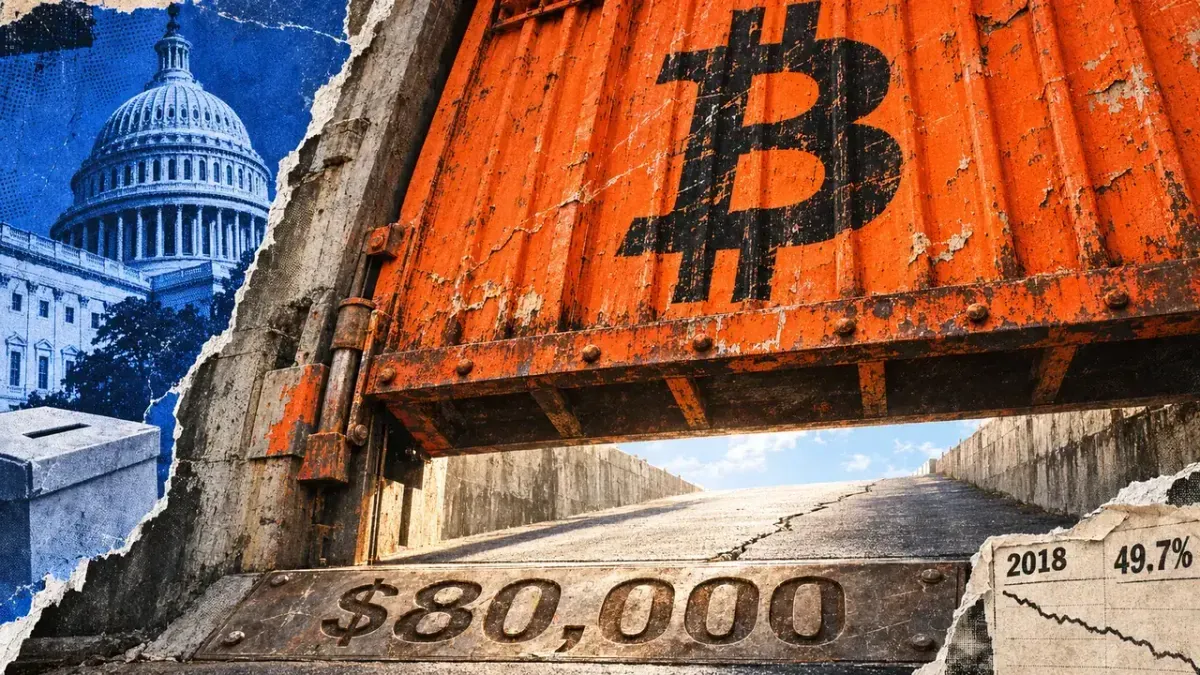
Bitcoin Reclaims $80,000 as Short Liquidations Top $378 Million in One Hour
Bitcoin traded back above $80,000 on Nov. 4 as short liquidations reached $378 million in one hour, according to CoinGlass, following several sessions of U.S. spot ETF outflows. Analysts differ on whether the rally reflects returning demand, with Bitfinex saying sustained ETF inflows are still needed to confirm it.
Written by CoinArticle’s AI Newsroom · from 2 cited sources. How we work
The Price Move and Liquidation Data
Bitcoin climbed back above $80,000 on Nov. 4, trading near $80,470 and up 4.1% over 24 hours, according to figures cited in the reporting. Ethereum rose faster, gaining about 5% within a couple of hours and 6.1% on the day.
The rally forced heavy liquidations of leveraged bets against the market. CoinGlass data cited by Crypto.news put one-hour liquidations at $466.33 million, of which $378 million were short positions. CryptoSlate, using CoinGlass figures, reported a larger one-hour total of $453.32 million, mostly shorts, and $913.34 million over 24 hours. The two outlets captured different time windows and dashboard snapshots, so the totals should not be treated as a single reconciled number. Both agree that shorts accounted for most of the forced closures.
Liquidations record positions being closed under exchange collateral rules. They do not measure new spot buying, which is why they are read as a sign of short covering rather than fresh demand.
ETF Outflows Preceding the Rally
The move followed a stretch of withdrawals from U.S. spot Bitcoin ETFs. According to Bitfinex, the funds recorded $1.16 billion in outflows across three sessions, their largest such withdrawal since late June. BlackRock's IBIT accounted for $405.3 million of outflows on Nov. 2, its biggest single-day withdrawal of the year.
Bitcoin had struggled below $80,000 through the U.S. midterm period amid those redemptions and weakness in technology shares. It fell below $77,000 on Nov. 3 before recovering.
Competing Readings of the Recovery
The two sources offer different explanations for the rebound. Crypto.news frames the move largely through the liquidation data and the ETF backdrop. CryptoSlate attributes part of the relief to the Democratic takeover of Congress being priced in beforehand. CoinShares research head James Butterfill told CryptoSlate that divided government could complicate the CLARITY Act and draw attention to Trump-linked crypto businesses, but he argued that exchanges and token issuers would face more regulatory exposure than Bitcoin itself. He said Bitcoin's direction remains tied more closely to real yields, dollar liquidity and ETF flows.
Talos data cited by CryptoSlate showed Bitcoin's DVOL, a volatility gauge, down 6% and the VIX down 10%, alongside a weaker dollar and lower Treasury yields.
On-chain signals point in a similar direction but are not conclusive. CryptoQuant analyst Darkfost said his seller exhaustion model had fallen to levels historically associated with bear-market lows. He cautioned that buyers have not yet shown the same conviction as sellers who recently exited, and that the indicator does not guarantee an immediate recovery.
Overhead Supply and What Would Confirm Demand
Bitfinex's Nov. 2 analysis identified about 2.26 million BTC acquired between $81,000 and $85,500, with holders near breakeven in the $84,000 to $85,500 zone potentially selling into a recovery. It presented that as possible supply, not a forecast. The exchange also reported spot bids between $78,000 and $79,000 had risen to about $42 million from $24 million in mid-October.
Bitfinex's stated test for renewed demand is three consecutive ETF inflow sessions of comparable size to the recent outflows. Those inflows have not been reported as of this writing.
Why It Matters
For Traders
Short liquidations have already flushed much of the crowded bearish positioning, so the next signal to watch is whether ETF flows turn positive over the coming sessions.
For Investors
Sustained ETF inflows, not liquidation spikes, would be the structural evidence that institutional demand has returned after the recent outflows.
For Builders
Liquidation volumes and ETF flow data are the inputs most likely to drive volatility on exchange-facing products, so margin and risk parameters deserve review.
This article is for information only and is not financial advice. Read the full disclaimer.