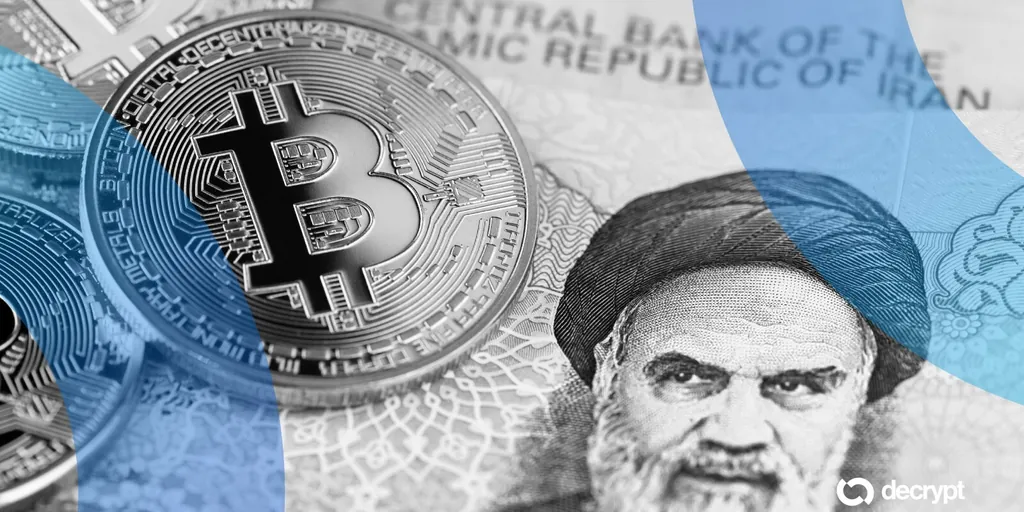
Bitcoin Hits Three-Month High Above $82,000 on Reported US-Iran Framework
Bitcoin reached a three-month high above $82,000 on Wednesday after reports of a US-Iran memorandum to end hostilities and reopen safe passage through the Strait of Hormuz. Sources differ on the exact intraday peak, and the framework has not been formally agreed.
Written by CoinArticle’s AI Newsroom · from 2 cited sources. How we work
Price Action and Reported Levels
Bitcoin traded near $82,330 on Wednesday, up 1.4% over 24 hours, according to CoinGecko data cited by Decrypt. The Defiant reported an intraday high of $82,800, a figure that sits above Decrypt's cited trading level. The two outlets are reporting different points in the session, and neither source gives a timestamp for its figure, so the gap should be read as a difference in measurement window rather than a dispute over the same print.
The move took Bitcoin to its highest level in roughly three months. Decrypt reported that its one-day relative strength index reached 71, the highest reading in seven months, a level last seen when Bitcoin set its all-time high of $126,080.
The Diplomatic Backdrop
Axios, citing four sources familiar with the matter, reported that the White House believes it is nearing a one-page, 14-point memorandum of understanding with Iran. The document, being negotiated by envoys Steve Witkoff and Jared Kushner, would declare an end to hostilities and open a 30-day window for detailed talks on Strait of Hormuz transit, Iran's nuclear program and US sanctions relief. Axios cautioned that nothing has been formally agreed and said the US expects Iranian responses on several provisions within 48 hours.
Iran's Revolutionary Guards Navy said separately, according to state media, that it may allow safe passage through the Strait of Hormuz following a pause in US naval operations in the region. Iran has said it would accept a deal only if it was "fair." If talks collapse, US forces would retain the ability to restore the blockade or resume military action, according to Axios.
In a Truth Social post, President Trump described the deal as conditional. "Assuming Iran agrees to give what has been agreed to, which is, perhaps, a big assumption," he wrote, adding that if Iran does not agree, "the bombing starts."
Cross-Asset Context
Decrypt reported that the S&P 500 rose 0.85% to a record 7,366.25 and that West Texas Intermediate crude fell more than 10% to $93 per barrel, easing an inflation source that had kept rate-cut expectations subdued. Over the course of the conflict, Decrypt said Bitcoin has gained 25%, compared with an 8% gain for the S&P 500 and an 11% decline for gold. Prediction-market figures cited by Decrypt from its parent company's Myriad platform put an 87% probability on Bitcoin's next major move being a rally to $84,000 rather than a drop to $55,000.
Treasury Company Caveat
The Defiant flagged a counterweight to the rally. Strategy's chairman opened the door to selling Bitcoin to fund preferred dividends, a comment that bears on the balance-sheet position of the largest corporate Bitcoin holder. The Defiant did not quantify any potential sale, and Decrypt's coverage does not address the remark, so the scale and timing of any such action remain unknown from the available reporting.
Why It Matters
For Traders
Bitcoin's move hinges on whether Iran's expected 48-hour responses arrive, so the next two days carry headline risk in both directions.
For Investors
Bitcoin's outperformance against equities and gold during the conflict suggests it is being traded partly as a geopolitical and macro asset, though a single framework report is a thin basis for a durable regime call.
For Builders
Volatility driven by geopolitical headlines rather than protocol events means wallets, exchanges and treasury tooling should be stress-tested for rapid intraday moves.
This article is for information only and is not financial advice. Read the full disclaimer.