Bitget Revises Hack Total to $387.6M, Offers 10% Recovery Bounty
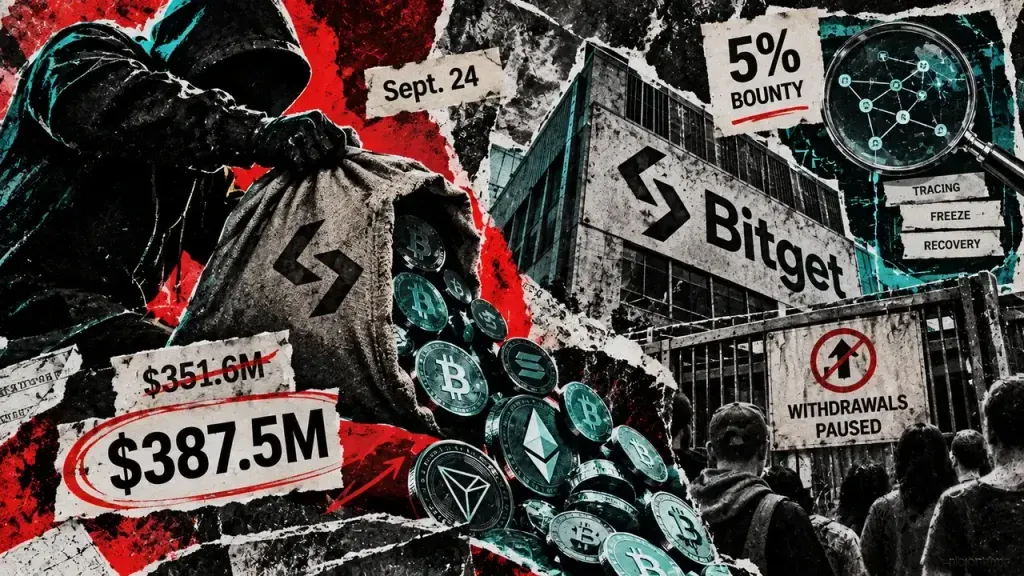
Bitget increased its reported theft total by $36 million to $387.6 million, citing additional assets identified from the same incident. The exchange is offering a 10% bounty—5% for freezing stolen funds and 5% for recovery—and plans to announce a withdrawal timeline by September 26.
Written by CoinArticle’s AI Newsroom · from 2 cited sources. How we work
Revised Theft Total and Bounty Program
Bitget raised its reported hack total from $351.6 million to $387.6 million on Monday, adding assets identified as part of the same attack. The exchange announced a tiered bounty structure offering 5% of recovered value to parties who freeze stolen assets and another 5% to those who recover them after the freeze, CEO Gracy Chen said in a post on X. Bitget did not specify which assets accounted for the $36 million revision or whether the additional funds had already left the exchange.
Recovery Plan Timeline
Bitget committed to announcing a withdrawal plan by September 26, though it did not detail how long users might wait to access their funds or what proportion of losses the bounty program is expected to cover. The exchange has not disclosed whether it is dipping into reserves to compensate users or relying entirely on recovery efforts and freezes orchestrated by partner exchanges and blockchain monitoring firms.
Why It Matters
For Traders
Users with funds on Bitget face continued withdrawal delays and uncertainty; even if the bounty succeeds, it only covers a portion of losses and timeline remains unconfirmed.
For Investors
The upward revision and bounty structure signal Bitget is still discovering the full scope of the breach; opacity around reserve adequacy raises questions about whether the exchange can meet all obligations.
For Builders
This incident reinforces that off-chain asset custody and cross-exchange recovery coordination remain fragile; protocols should continue stress-testing bridge and liquidity models that assume exchange availability.
This article is for information only and is not financial advice. Read the full disclaimer.