Buterin Says ETH Value Should Rest on Store-of-Value, Not Fee Burns
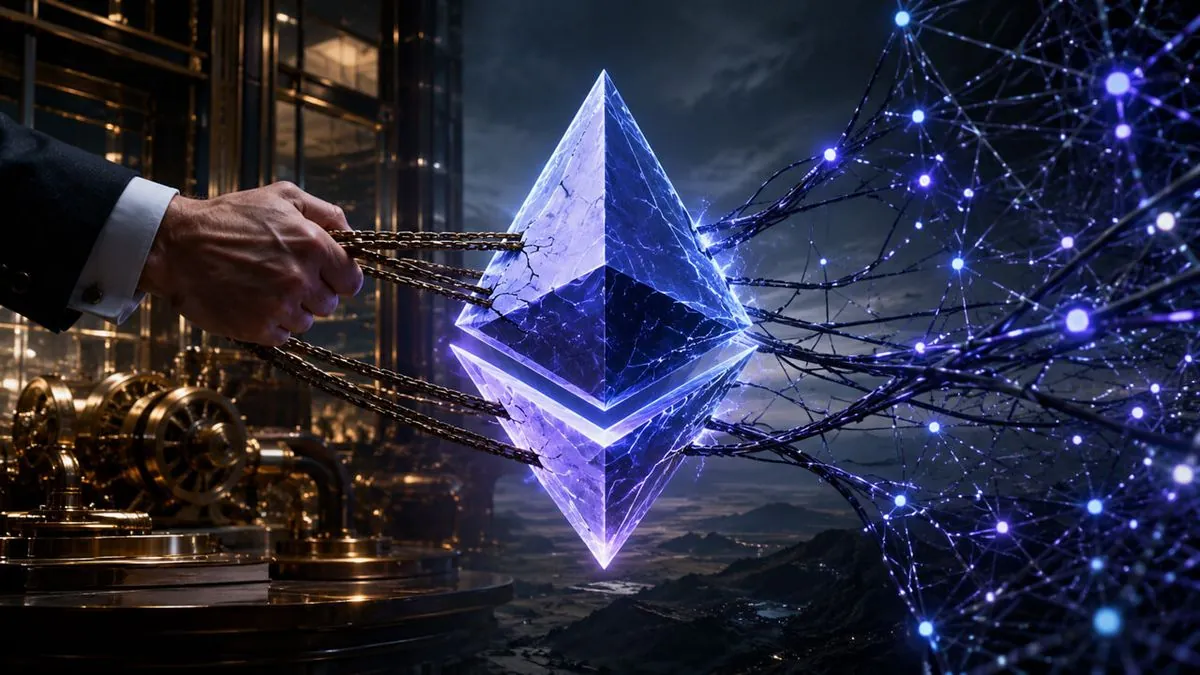
Ethereum co-founder Vitalik Buterin argued in a Sunday post on X that ETH's long-term value should depend more on its ability to act as a store of value than on the amount of ETH burned through transaction fees. He said the network's fee burns have not always offset new issuance and that prioritizing fee maximization could weaken decentralization and censorship resistance.
Written by CoinArticle’s AI Newsroom · from 2 cited sources. How we work
Buterin's Argument
Ethereum co-founder Vitalik Buterin said in a Sunday post on X that ETH's value should be framed around its role as a store of value rather than its fee-burn mechanism. He said he continues to support the EIP-1559 fee-burn design introduced in 2021, but argued it should not be the central measure of the asset's success.
Buterin's central point is that the burn has not always been large enough to offset new token issuance, so the deflationary case was never as strong as widely presented. He wrote that even if burns stay below 10% of the level needed to offset issuance indefinitely, "we should not feel sad," adding that "the value of ETH comes from elsewhere."
Trade-offs Against Decentralization
Buterin also warned that designing Ethereum primarily to maximize burns could push the network toward choices that conflict with its core principles. According to his post, aggressive fee targets could require trade-offs that make the network less open and less resistant to external control.
He pointed to what he calls CROPS: censorship resistance, open source, privacy, and security. He argued these properties give Ethereum a more durable foundation for long-term value than heavy reliance on fee revenue to shrink supply. The fee-burn thesis, sometimes called the "ultrasound money" narrative, gained wide traction among ETH investors during the 2021 bull run.
Market Context and Industry Reaction
The remarks come as declining transaction-fee burns have weakened the deflationary story that drew many investors to ETH. ZyCrypto framed the post as a possible shift in how Ethereum presents its value proposition, though the post itself is a statement of opinion from a co-founder rather than a protocol change or governance proposal.
Buterin tied the store-of-value case to the spread of artificial intelligence, writing that "in the era of AI disruption, stability will be highly valued." Solana co-founder Anatoly Yakovenko reportedly shared skepticism about making transaction fees the centerpiece of a blockchain's value proposition, according to the coverage of the post. The sources reviewed for this article did not provide Yakovenko's full comments or any on-chain figures on current burn volumes, so those points remain unverified here.
Why It Matters
For Traders
ETH traders who priced in a deflationary burn narrative may need to reassess whether that thesis still underpins current positions, though no near-term protocol change was announced.
For Investors
A leading co-founder publicly de-emphasizing fee burns signals that Ethereum's long-term investment case may shift toward security, decentralization, and stability.
For Builders
Builders modeling ETH supply or fee revenue should treat burn assumptions as less central to the protocol's stated direction, given the co-founder's emphasis on decentralization over fee maximization.
This article is for information only and is not financial advice. Read the full disclaimer.