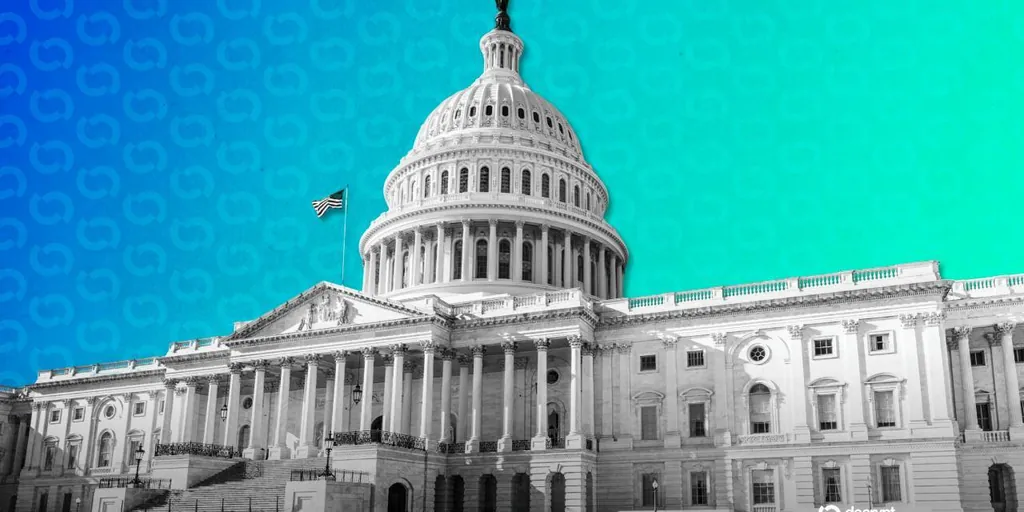
CLARITY Act Heads to Senate Banking Vote as Stablecoin Yield and Ethics Fights Persist
The Senate Banking Committee is scheduled to vote on the CLARITY Act, a bill that would formally legalize most US crypto activity, with stablecoin yield and ethics provisions still unresolved. Hashdex argues markets are underpricing passage, while the bill needs at least seven Democratic votes to advance in the full Senate.
Written by CoinArticle’s AI Newsroom · from 2 cited sources. How we work
Committee Vote Set Amid Unresolved Disputes
The Senate Banking Committee is scheduled to take up the CLARITY Act in executive session on May 14, according to CryptoSlate. Decrypt reported the vote is set for Thursday and described it as a do-or-die moment for the legislation, which would formally legalize most crypto activity in the United States. The bill already passed the House 294-134 in July 2025, and under CryptoSlate's account it needs at least seven Democratic votes to advance in the full Senate.
Decrypt reported that several key provisions remain unsettled, though crypto policy leaders are increasingly confident the bill can pass before Congress recesses ahead of the November midterm elections.
The Stablecoin Yield Standoff
The most contentious issue is whether crypto firms can offer rewards on stablecoins. Decrypt reported that banks, including national and community institutions, want language banning yield on stablecoins, arguing it could pull deposits from low-yield savings accounts. Crypto firms say such programs were already legalized under last year's GENIUS Act.
The two sources describe the same compromise differently in emphasis. CryptoSlate says the draft bans rewards on idle stablecoin balances that resemble bank deposits, permits transaction-based rewards, and requires the SEC, CFTC and Treasury to write joint rules. Decrypt reported that Senators Thom Tillis (R-NC) and Angela Alsobrooks (D-MD) unveiled a compromise restricting rewards in some circumstances but permitting them in others. Crypto leaders backed the compromise, while the American Bankers Association called it loophole-ridden and urged member banks to lobby senators before the vote. Decrypt also reported that Alsobrooks's office still stands by a joint statement saying the senators "respectfully agree to disagree" with the banks.
Ethics Provisions and Committee Jurisdiction
Decrypt reported that a second open question is whether the bill should restrict public officials from launching or promoting their own crypto products while in office. The White House has resisted language that would affect President Donald Trump's crypto ventures, while Senate Democrats have increasingly called such a restriction essential. Banking Committee Chairman Tim Scott (R-SC) has argued ethics language falls outside the committee's jurisdiction and should wait for a Senate floor vote. Decrypt reported that Democrats are pushing back, and that pro-crypto Democrats on the committee, including Ruben Gallego (D-AZ), have said they may vote no without it.
Institutional Demand and Market Pricing
Hashdex CIO Samir Kerbage, quoted by CryptoSlate, argues the market is not fully pricing an approved bill. He said passage would be "a market activation event" bringing product development and institutional inflows, and that Hashdex is optimistic the bill reaches President Trump's desk this summer. He cited the SEC's January 2024 approval of spot Bitcoin ETFs, which he said produced more than $70 billion in cumulative flows over two years, and expects a similar path for other smart contract platforms.
The scale of current altcoin products is smaller. CryptoSlate, citing Farside Investors data, reported roughly $12 billion in cumulative net flows into US-traded Ethereum ETFs and more than $1 billion into Solana ETFs since launch. Kerbage's view is a forecast, not a measured outcome, and neither source provides independent market-pricing analysis to confirm his assessment.
Why It Matters
For Traders
Committee outcome on Thursday and any stablecoin-yield or ethics amendments could move sector sentiment within days, so watch the vote tally and language changes closely.
For Investors
Passage would give the market a statutory definition of which tokens are securities or commodities, a structural change that could shape institutional allocation over multi-month horizons.
For Builders
Stablecoin reward rules and Bank Secrecy Act treatment for exchanges and brokers would directly constrain product design, so protocols offering yield or custody should track the final text.
This article is for information only and is not financial advice. Read the full disclaimer.