Ethereum's Glamsterdam Upgrade Raises Sepolia Gas Limit to 200M
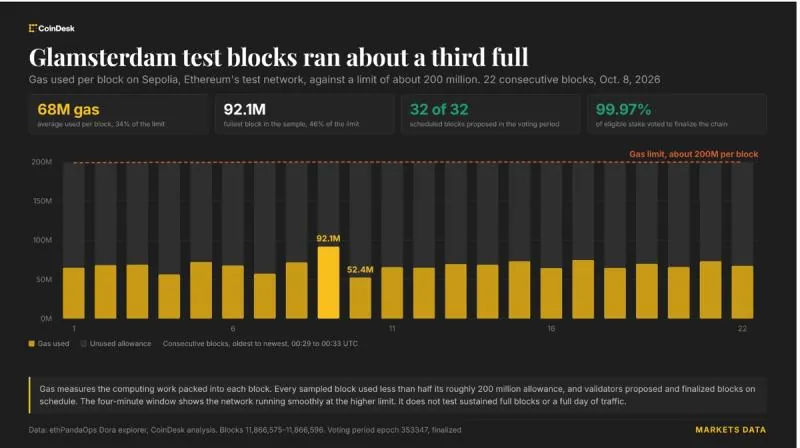
Ethereum's Glamsterdam upgrade increased the Sepolia testnet's gas per block limit to nearly 200 million, more than tripling the previous allowance. Early block samples show actual gas usage remains well below the new ceiling, suggesting room for further throughput gains.
Written by CoinArticle’s AI Newsroom · from 2 cited sources. How we work
Test Upgrade Parameters
Ethereum's Glamsterdam upgrade raised Sepolia's processing budget from approximately 60 million gas per block to close to 200 million gas per block, according to testing results reported by CoinDesk. This represents a more than threefold increase in the theoretical transaction capacity per block.
Early Utilization Remains Conservative
Despite the higher limit, sampled blocks on Sepolia have used less than half the new 200 million gas allowance, according to CoinDesk's report. The gap between available capacity and actual usage suggests the network is operating with substantial headroom, typical of testnet rollouts where validators and applications gradually ramp up activity.
Implications for Mainnet
Successful test runs on Sepolia historically precede mainnet deployment. If Glamsterdam advances to Ethereum's main network, the upgrade could increase transaction throughput and potentially reduce congestion-driven fee spikes. However, the upgrade remains in testing phases and no mainnet activation date has been announced.
Why It Matters
For Traders
Mainnet deployment of higher gas limits could ease fee pressure during peak usage periods, though testnet success does not guarantee immediate market repricing.
For Investors
Validated throughput improvements on testnet strengthen the case for Ethereum's continued competitiveness against higher-capacity rivals, supporting long-term network value.
For Builders
A successful 200M gas limit on mainnet expands DApp design space and may reduce gas optimization requirements, but builders should monitor actual vs. theoretical adoption before redesigning for higher throughput.
This article is for information only and is not financial advice. Read the full disclaimer.