Garlinghouse Sets End-of-May Target for CLARITY Act as Senate Markup Remains Unscheduled
Ripple CEO Brad Garlinghouse says the CLARITY Act will pass by the end of May, his third public deadline for the crypto market-structure bill. Senate Banking Committee markup has not been scheduled, and market forecasts for 2026 passage range from one-in-three to 50-50.
Written by CoinArticle’s AI Newsroom · from 2 cited sources. How we work
Garlinghouse's Revised Timeline
Ripple CEO Brad Garlinghouse said at XRP Las Vegas on April 30 that the CLARITY Act will pass before the Memorial Day recess, which begins May 21. Disruption Banking reported that he expects the bill to clear the Senate Banking Committee, pass the Senate floor, and reach President Trump's desk within that window. Garlinghouse had previously placed an 80% probability on April passage during a February appearance on Fox Business, and has since moved the target twice.
Calendar and Procedural Status
The Senate returns May 11, leaving roughly two weeks before recess. Senate Banking Committee Chairman Tim Scott has not yet set a markup date. Earlier, on April 23, a coalition of more than 120 firms, including Ripple, Coinbase, Kraken and Andreessen Horowitz, sent a joint letter demanding an immediate markup.
Speaking at CoinDesk's Consensus Miami event, Garlinghouse said the next two weeks could be decisive. He argued that if the Banking Committee hearing does not happen in that period, the likelihood of passage will "drop precipitously," though he still believes the bill is likely to advance.
The Stablecoin Yield Dispute
The main obstacle has been the question of whether third-party platforms can offer rewards on stablecoin balances. Garlinghouse describes the dispute as largely resolved, citing a White House Council of Economic Advisers report that estimated a full yield ban would cost consumers $800 million annually.
The draft language released by the Senate Banking Committee would bar firms from paying customers "any form of interest or yield" for holding payment stablecoins. It permits incentives or rewards only if they are not functionally or economically comparable to bank deposit interest. Garlinghouse acknowledged the compromise is imperfect, saying, "Do I think it's perfect? Hell, no."
Bank reaction is divided. According to Eleanor Terrett of Crypto In America, some crypto participants read the draft as a win for banks. By Tuesday, she reported a split among banks: larger institutions with consumer-facing operations object to parts of the final wording, while smaller banks appear more comfortable. The industry group ICBA has raised concerns, and at least one major bank has argued the language may be drafted too narrowly to prevent repackaged yield products.
Forecasts Diverge
Market forecasts for 2026 passage are considerably more cautious than Garlinghouse's timeline. Polymarket prices passage at about 46%, Galaxy Research at 50-50, and TD Cowen at one-in-three, according to crypto.news. Coverage of the bill also differs on the strength of the coalition's support. Crypto.news characterizes Garlinghouse's revisions as a sign of growing backing as deadlines pass, while NewsBTC's reporting emphasizes the risk that stalled procedure could sharply lower odds.
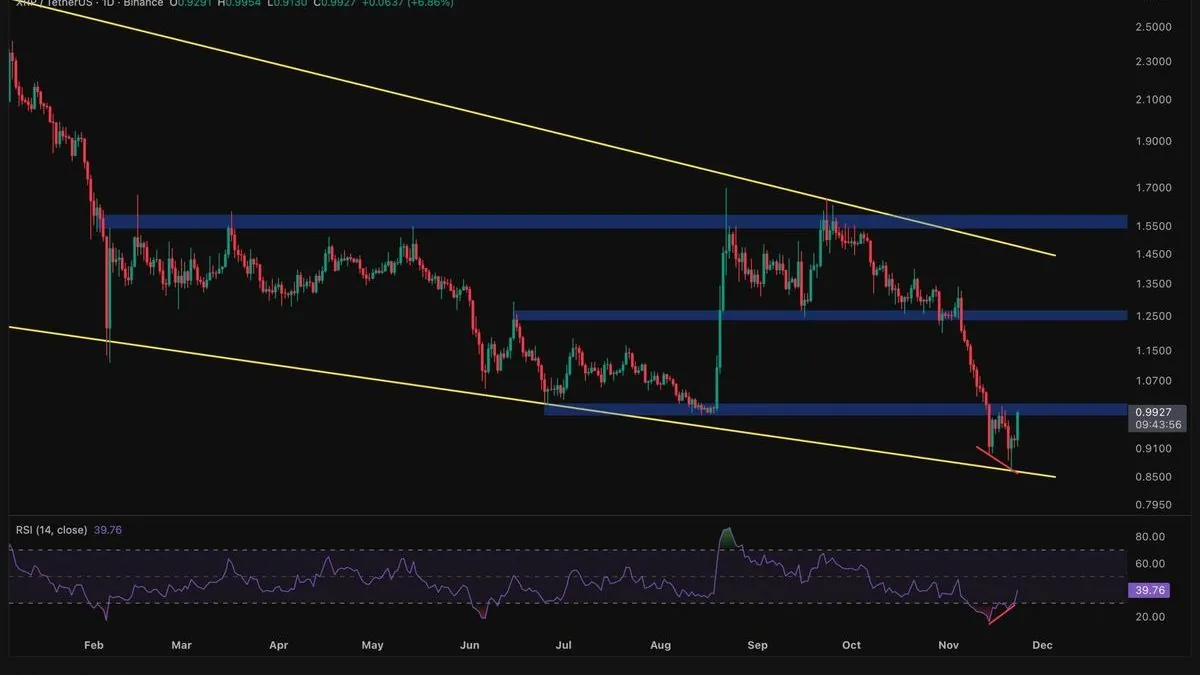
At the time of NewsBTC's reporting, XRP traded at $1.41, up 2.5% over the prior week.
Why It Matters
For Traders
Whether the Senate Banking Committee schedules a markup before May 21 is the key near-term signal, and XRP has been trading around $1.41 without a clear reaction to the timeline.
For Investors
A stablecoin yield framework would set the regulatory boundary for rewards on payment stablecoins, a structural question that persists regardless of whether the May deadline holds.
For Builders
Products that offer rewards on stablecoin balances should model compliance under the draft's rule that incentives cannot be economically comparable to bank deposit interest.
This article is for information only and is not financial advice. Read the full disclaimer.