Kava Moves to Retire HARD Lend After $3.7M KAVA Exploit Drains Lending Pool
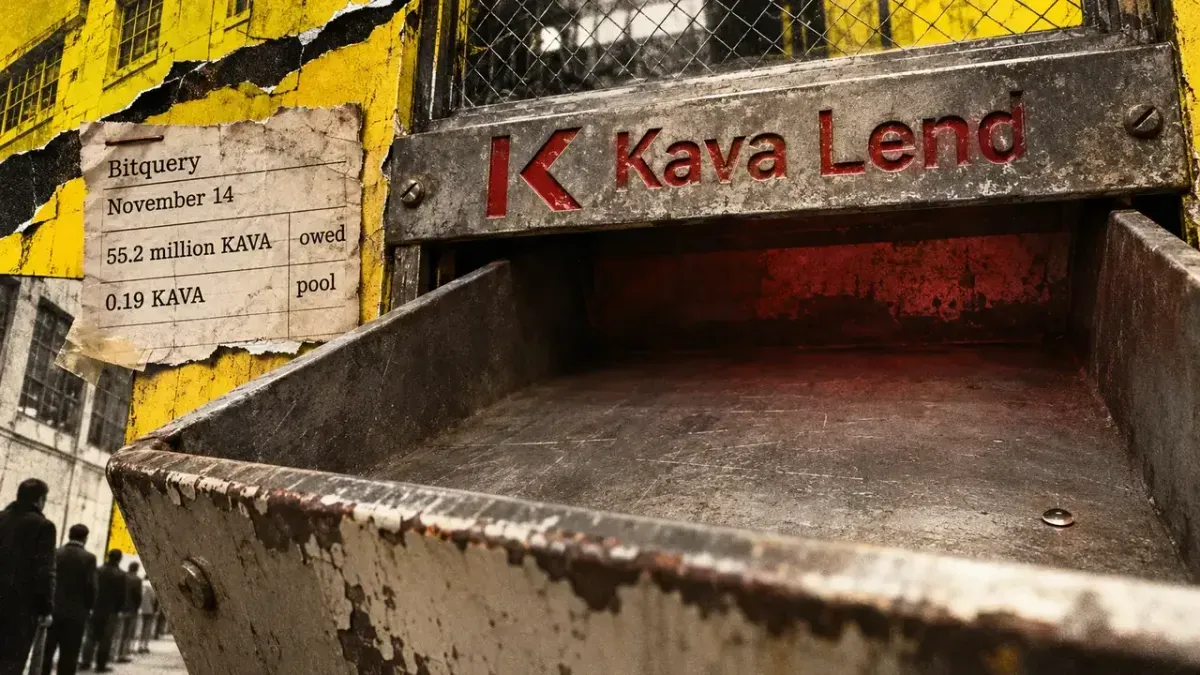
Kava plans a seven-day governance vote to permanently disable new lending and borrowing on HARD Lend after attackers stole 53.9 million KAVA on November 14. Bitquery's reconstruction shows the pool owed lenders roughly 55.2 million KAVA while holding only 0.19 KAVA available for withdrawals.
Written by CoinArticle’s AI Newsroom · from 2 cited sources. How we work
The Exploit and Its Mechanics
Kava said on November 16 that an exploit of HARD Lend on November 14 allowed attackers to withdraw KAVA tokens by manipulating the value of BUSD collateral inside the protocol's accounting system. The attackers repeatedly borrowed KAVA and triggered liquidations that cleared their debts without returning the borrowed tokens. Kava said the vulnerability has been patched and that new safeguards are in place.
Blockchain analytics firm Bitquery reconstructed the attack and found the attackers borrowed about 55.2 million KAVA across 127 transactions, retaining 53.9 million tokens after repayments by other borrowers. The sources differ on how to value the loss. The Defiant reports the theft at 53.9 million KAVA, while CryptoSlate's headline cites nearly $4 million; Bitquery put the stolen tokens at $3.7 million before a subsequent market selloff. The dollar figure is therefore a pre-selloff estimate, and the token count is the more stable measure.
Fund Movements and Partial Freezes
Bitquery traced about 49.2 million KAVA moved to BNB Chain through LayerZero, and identified sales of 48.4 million KAVA that produced roughly $2.09 million in BNB and USDT. A separate attempt to bridge 612,416 USDT through the Relay bridge failed when the service returned a "BLOCKED_WALLET" message, preventing the payout to Ethereum.
Kava said part of the attackers' funds has been frozen and that it is working with exchanges, ecosystem partners and law enforcement to trace and recover the rest. It did not disclose how much has been secured, nor whether the frozen assets include the USDT that Bitquery identified. Recovery is therefore unquantified as of the latest reporting.
Depositor Exposure and the Retirement Vote
Kava's plan is to put a governance proposal to a seven-day vote that would permanently disable new lending and borrowing on HARD Lend. Existing protective measures remain in force while the vote runs. The company said remaining positions will be handled through an orderly process, but has not published the mechanics.
The central unresolved question is solvency of the pool. Bitquery's November 14 reconstruction shows the pool owed users about 55.2 million KAVA while holding just 0.19 KAVA available for withdrawals. Kava stated that "Individual user deposits were largely unaffected," but did not explain how that statement reconciles with outstanding lender claims and depleted liquidity. Freezing or blocking attacker-held assets does not by itself return KAVA to the pool, so the recovery path for depositors remains open. The Defiant and CryptoSlate both report the same governance timeline and the same core facts; neither has supplied a depositor-level repayment plan.
Why It Matters
For Traders
KAVA liquidity and price may stay volatile through the seven-day vote and any recovery announcement, which is still unquantified.
For Investors
The incident shows how a single accounting weakness in a lending protocol can leave lenders with near-zero withdrawable liquidity, a risk signal for Kava's broader DeFi exposure.
For Builders
Collateral valuation and liquidation logic that depend on manipulable inputs can let attackers extract pool liquidity without repaying, so oracle and accounting checks deserve review.
This article is for information only and is not financial advice. Read the full disclaimer.