Ledger Adds Clear Signing for Solana, Starting With Jupiter Swaps
Ledger launched Clear Signing for Solana, letting hardware wallet users read a plain-language summary of DeFi transactions before approving them. The feature currently covers nine Solana apps and 18 of the 22 most common on-chain actions, with Jupiter and Kamino as first supported apps.
Written by CoinArticle’s AI Newsroom · from 2 cited sources. How we work
What Ledger Launched
Ledger has added Clear Signing to Solana, allowing users of its hardware wallets to see a plain-language summary of a transaction before approving it. The company said on Monday that most Solana DeFi activity on a Ledger device had previously required signing transactions whose contents were displayed as unreadable data. Decrypt reported the launch from Solana's Breakpoint conference, while Crypto Briefing placed the unveiling at the same event in London.
The feature covers nine Solana applications and 18 of the 22 most common on-chain actions on the network, according to Ledger. Jupiter, the decentralized exchange aggregator, and lending protocol Kamino are the first supported apps. Ledger built the feature with the Solana Foundation and Anza, the developer of Solana's Agave validator client.
Why Blind Signing Was a Problem
Blind signing, in which a user approves data they cannot read, has been a recognized weakness for hardware wallets because it leaves users unable to spot a malicious request. Ian Rogers, Ledger's chief human agency officer, described it at Breakpoint as "signing a blank check." The problem is structural on Solana: a single DeFi action typically bundles five to eight separate instructions, which appear as technical data that is hard for most users to interpret.
Interface Changes and Requirements
The two sources differ on how many confirmation steps the change removes from a Jupiter swap. Decrypt, citing Rogers, said the process previously meant scrolling through 13 hard-to-read screens and now takes three, showing what the user gives, what they receive and the counterparty. Crypto Briefing reports the same drop from 13 confirmation screens to three, so the figures align across both accounts.
Users need version 1.17.0 or higher of the Ledger Solana app to use the feature, and it works only with wallets built on Ledger's DMK developer toolkit, according to Crypto Briefing. Developers who want their apps to display clearly on Ledger devices are being asked to submit Codama IDLs, which are machine-readable maps of how a program's instructions are structured. The feature is built on sRFC 41, a Solana community standard for turning a set of instructions into a single readable intent.
Agents and Hardware Roadmap
Rogers also pitched Ledger's tools for AI agents, arguing that an agent "never holds the keys" and must request approval from the user's device to move funds. Ledger launched Agent Intents last month, a queue where approval requests collect so agents can continue working while users sign off. Decrypt reported that the service works with Pay.sh, which lets AI agents pay for APIs on Solana.
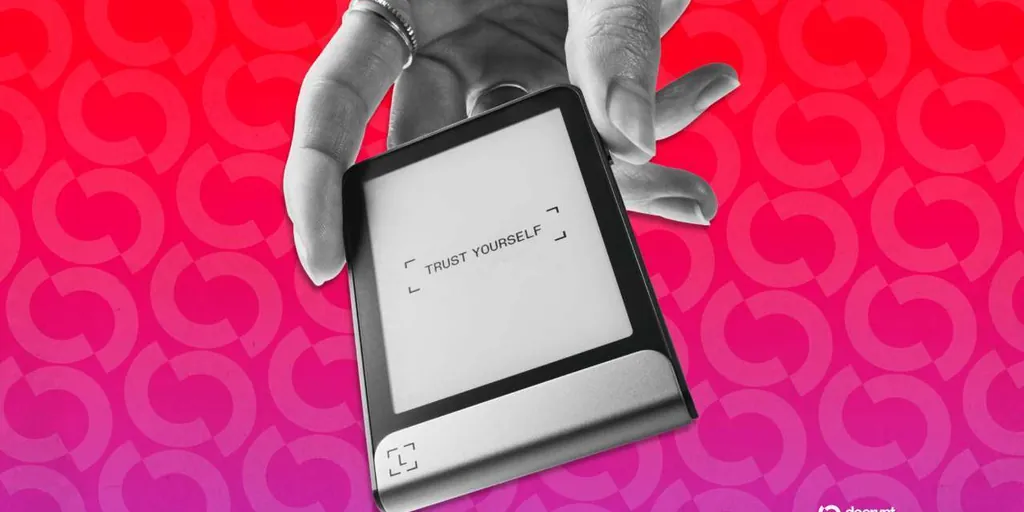
Ledger also showed its upcoming Atom touchscreen device, which runs on Android's open-source code and switches to Ledger's secure chip when signing. Decrypt reports that Atom will be the first hardware beyond the Solana Seeker phone to carry the Seeker platform and its more than 1,500 apps. Crypto Briefing describes the Seeker app store as a sign of Ledger's deeper push into the Solana mobile ecosystem.
Context
The launch comes weeks after Ledger investigated a suspected $87 million drain of user funds. Ledger later said all confirmed cases were tied to a reseller, Cryptobilis. Ledger has also previously worked with MoonPay on tools that let users control AI agents' crypto spending through hardware wallets. Crypto Briefing noted that the remaining gaps in coverage are where blind signing will persist, and that the Foundation and Anza work around sRFC 41 reflects a wider Solana goal of standard transaction descriptions rather than per-wallet decoding.
Why It Matters
For Traders
Users swapping on Jupiter through a Ledger can now verify amounts before signing, though the feature only applies to supported apps and wallet versions.
For Investors
Closing a structural security gap on Solana's hardware wallet path could make self-custody of DeFi activity more palatable to institutional and retail users over time.
For Builders
Developers should submit Codama IDLs and align with sRFC 41, since machine-readable instruction maps determine whether their protocol displays clearly on Ledger devices.
This article is for information only and is not financial advice. Read the full disclaimer.