Nvidia CEO Jensen Huang Resigns; CFO Colette Kress Named Interim CEO
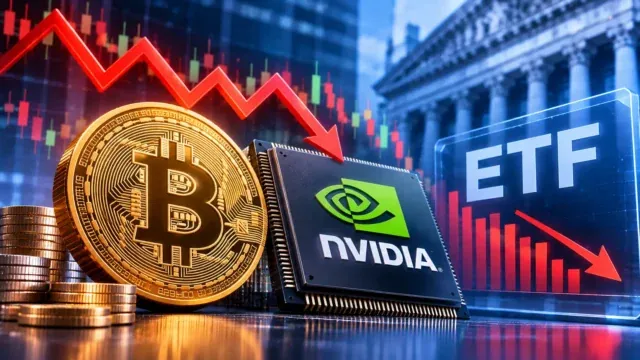
Nvidia co-founder Jensen Huang resigned as chief executive and board member effective immediately, with CFO Colette Kress named interim CEO while the board searches for a permanent successor. Nvidia shares fell sharply in early trading, and prediction markets have cut the odds of a close above $140 by end-November 2026 to 58%.
Written by CoinArticle’s AI Newsroom · from 5 cited sources. How we work
Story Updates
- Updated Nov 12, 2026, 04:29 PM: Adds Crypto Briefing details on Kress's interim role, the new independent chair, and the 14% intraday drop.
- Updated Nov 12, 2026, 03:58 PM: Adds Crypto Briefing report of a 35% drop from all-time high and prediction-market odds falling to 58%.
- Updated Nov 12, 2026, 03:39 PM: Adds 99Bitcoins report on the announcement and notes tokenized NVDA products fell in line with the stock.
The Resignation and Interim Leadership
Nvidia said on Thursday that Jensen Huang has stepped down as president, chief executive and board member, effective immediately, ending a 33-year tenure at the chipmaker he co-founded in 1993. Colette Kress, who has served as chief financial officer since September 2013, will act as interim CEO while keeping her CFO role. The board is searching for a permanent successor from inside and outside the company, according to 99Bitcoins, which reported the announcement.
The board also created an independent chair position, a role the company had not previously had, and appointed Harvey Jones, former CEO and executive chairman of chip design software firm Synopsys, to fill it. Crypto Briefing reported the chair appointment and the board's plan to consider both internal and external candidates. Jones said the board had "full confidence" in Kress and the leadership team and expected customer commitments and the product roadmap to continue without interruption. Nvidia said it will report third-quarter fiscal 2027 results as scheduled, on November 17, followed by an earnings call.
Crypto Briefing described Kress, 59, as having spent much of her tenure working to reduce the risks tied to some of Nvidia's most aggressive AI investments, though it did not identify the specific bets. The report noted that holding both the CEO and CFO roles concentrates significant responsibility in one executive.
The Conduct Allegations
Huang's exit followed a week of reports about two alleged affairs. He acknowledged in a message to employees on Sunday that he had been unfaithful to his wife and apologized to his family and colleagues. The New York Times reported that he had been intimate with Alice Huang, an executive at Singapore-based Nvidia customer Megaspeed, and that U.S. officials had concluded she was a Chinese intelligence asset. The Financial Times later cited a U.S. government memo describing a romantic involvement. China has denied the allegations.
The situation widened after the Times reported on Wednesday that Huang had also had a relationship with Kimberly Powell, Nvidia's vice president of healthcare, who reports directly to him. The Wall Street Journal then reported that the board was preparing to oust him. Nvidia's board had earlier defended Huang and opened an independent investigation into whether he had been targeted by a foreign intelligence operation, stating on November 8 that it had no reason to believe national security or confidential company information had been compromised.
Market Reaction
Sources differ on the size of the initial share move. Crypto.news reported that Nvidia fell more than 8% in extended trading after the directors' move emerged, and that Nasdaq 100 futures dropped about 1%. Decrypt, citing Yahoo! Finance data, reported Nvidia shares down 7.7% at $160.28 shortly after the Thursday open, having touched a low of $148.80. Crypto Briefing reported an intraday decline of about 14% following the resignation announcement. These figures reflect different trading windows and should be read as a range rather than a single measure.
A separate Crypto Briefing report puts the decline in longer-run terms, stating that Nvidia shares have fallen about 35% from their all-time high. That figure measures peak-to-recent levels rather than a single session, and the report did not specify the price date used.
The wider impact extended beyond Nvidia. Crypto.news reported CoreWeave shares falling about 6% after hours, with rival chipmakers AMD and Broadcom rising roughly 4% and 3%. On the crypto side, Bitcoin fell to $72,467 on November 12, down 1.8% over 24 hours, after briefly trading above $74,500 earlier in the day. Crypto.news tied the decline to sustained withdrawals from US spot Bitcoin ETFs, though that source does not establish a direct causal link to the Nvidia news. Decrypt put the scale of the damage in market-value terms, saying the scandal had erased hundreds of billions of dollars from Nvidia's valuation, with about $430 billion lost over two days earlier in the week.
Prediction markets have also repriced. Per Crypto Briefing, the odds that Nvidia closes above $140 by the end of November 2026 are now 58%, down from earlier higher levels. That is a market-implied probability, not a forecast.
Governance and Legal Exposure
The succession question is open. Decrypt reported that Huang ran Nvidia with about 60 executives reporting directly to him and had said he did not believe in succession planning, leaving no obvious heir. Citing sources, the Financial Times reported that naming Kress interim was the simplest option, while other names floated include Ian Buck, who runs Nvidia's data center business, and Arm CEO Rene Haas, a former Nvidia executive. Huang remains the largest shareholder with a stake of about 3.6%, according to the Wall Street Journal.
Legal and political scrutiny is also active. Nvidia and Huang face a proposed shareholder class action, and lawmakers had threatened to subpoena him. Crypto.news noted that authorities were examining whether Megaspeed had helped Chinese companies obtain advanced chips restricted under US export controls. Nvidia's leadership change comes as the company continues to finance large AI infrastructure projects, including a 20-year data center agreement involving OpenAI and an Ohio facility supported by up to $105 billion in guarantees.
Tokenized Shares and Trading Access
Tokenized Nvidia exposure also moved sharply. 99Bitcoins reported that tokenized NVDA products fell in step with the underlying stock after the announcement, a reminder that on-chain representations of equities track the listed share price and carry the same governance risk. Holders of such products should check the issuer's terms, since the degree of underlying ownership and redemption rights varies by product.
What to Watch Next
Crypto Briefing identified three open questions: the timeline and shape of the CEO search, including whether the board picks an insider or an outsider; how Kress handles the riskiest AI investments and whether that shows up in future spending; and whether the share price stabilizes once the initial shock fades. The November 17 earnings call is the next scheduled checkpoint for company guidance.
Why It Matters
For Traders
Elevated Nvidia and Nasdaq futures volatility, plus Bitcoin ETF outflows, may persist until the November 17 earnings call clarifies guidance.
For Investors
Succession is now an open governance question at the largest AI chip supplier, raising key-person risk until a permanent CEO and independent chair are in place.
For Builders
Teams relying on Nvidia roadmaps or accelerated-computing supply should watch for any shift in product timing or customer commitments flagged on the earnings call.
This article is for information only and is not financial advice. Read the full disclaimer.