Qivalis Euro Stablecoin Push Grows to 37 Banks as Dollar Dominance Persists
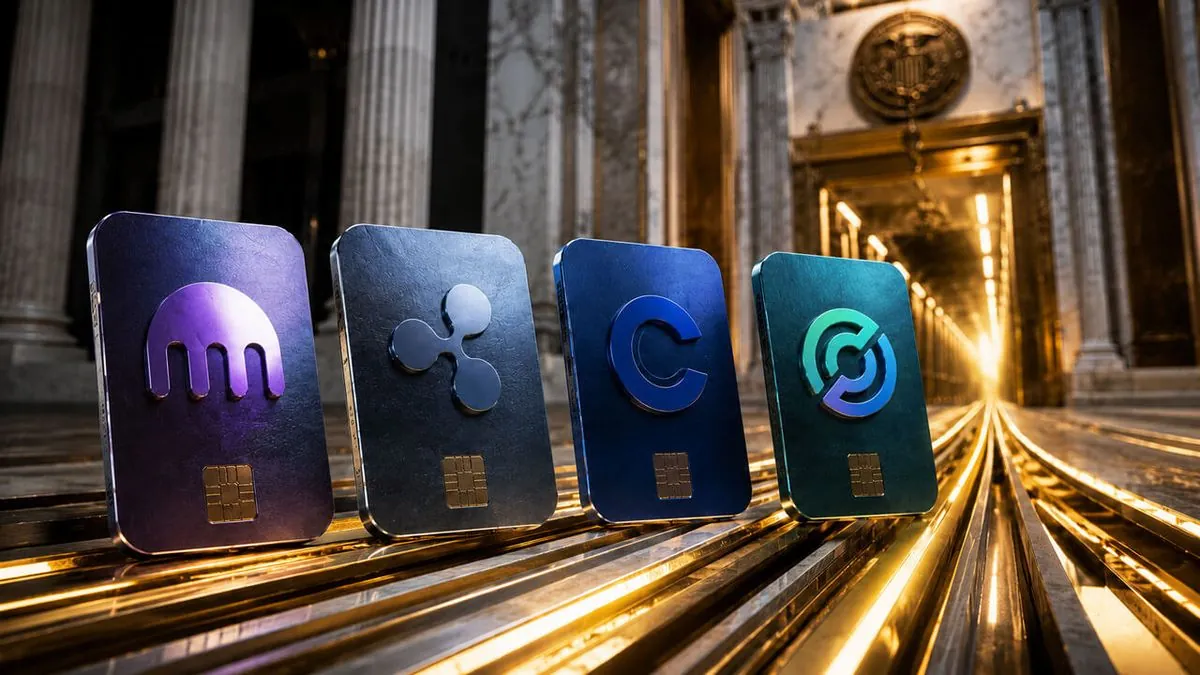
Qivalis, a euro stablecoin initiative backed by 37 banks across 15 countries, plans to launch in the second half of the year. Euro tokens remain a small fraction of a global market in which dollar stablecoins account for more than 80% of supply.
Written by CoinArticle’s AI Newsroom · from 2 cited sources. How we work
Euro Initiative Scale and Timeline
Qivalis, a euro-denominated stablecoin consortium, has received backing from 37 banks across 15 countries, according to CoinDesk and CryptoSlate. Both outlets report that the asset is planned to launch in the second half of the year.
The project is positioned as a challenge to dollar dominance in tokenized finance. Its backers argue that euro-denominated corporate activity, including payroll, taxes and accounting, creates currency exposure when settled in dollar tokens.
The Size of the Gap
DeFiLlama puts the global stablecoin market at $322.1 billion, with Tether's USDT at $189.6 billion and Circle's USDC at $76.3 billion. Together those two dollar tokens account for 82.5% of total supply.
The leading euro tokens are far smaller. Circle reports €387.9 million of EURC in circulation as of May 18, and SG-FORGE's EURCV stands at €105.6 million. Combined, the two equal roughly $572 million, about 0.18% of the global market. CryptoSlate describes this as a gap of roughly 450 to one.
How Stablecoins Are Used
The sources point to a difference between trading use and payments use. The Kansas City Fed estimated that as of November 2025, 48.8% of stablecoins were used as trading assets, while traditional payments accounted for only 0.7%. CEX.IO data for the first quarter put stablecoins at 75% of crypto trading volume, with USDT alone at 68% of all crypto volume.
Traders and market makers concentrate where liquidity already sits, and most of that liquidity is in dollar pairs. CryptoSlate argues that this liquidity concentration is the main obstacle for any euro token seeking to become the default settlement asset.
Policy Context
The White House fact sheet on the GENIUS Act states the law will strengthen the dollar's status as a reserve currency and increase demand for US Treasuries, since issuers must back stablecoins with dollars and Treasury bills. ECB President Christine Lagarde responded in May 2026 that each dollar stablecoin that scales increases demand for dollar-backed assets, citing research that a $3.5 billion inflow could lower three-month Treasury bill yields by 2.5 to 3.5 basis points.
On the regulatory side, euro stablecoins issued by regulated entities can operate across EU member states without separate national licenses under the Markets in Crypto-Assets regulation (MiCA). CryptoSlate notes this gives Qivalis a compliance advantage over Tether, which holds no MiCA license.
Where the Sources Diverge
The two articles frame the competitive outlook differently. CoinDesk presents Qivalis as an effort to deepen the euro's role in tokenized finance. CryptoSlate is more skeptical, arguing that the bank-distribution layer is the differentiator, and that EURC has not yet attracted the institutional liquidity needed for scale. Neither source provides independent evidence of how quickly corporate treasurers will adopt euro tokens once issued.
Growth projections also vary in framing. JPMorgan projects the global stablecoin market will reach roughly $500 billion by the end of 2028, implying about 18.6% annualized growth from the current $322.1 billion base. CryptoSlate's analysis suggests that if dollar stablecoins grow proportionally in that scenario, the euro share would not change materially. The sources do not offer a euro-specific forecast.
Tokenized Assets and Settlement
RWA.xyz data cited by CryptoSlate shows $33.8 billion in distributed tokenized real-world asset value and $340 billion in represented asset value, with tokenized US Treasuries above $15.4 billion. CryptoSlate's argument is that most settlement legs for these assets currently use dollar stablecoins, and that European bonds, funds and receivables settling in USDT or USDC would make those assets dollar-native by default.
Why It Matters
For Traders
Euro stablecoin liquidity remains roughly 0.18% of the market, so euro-pair execution depth is unlikely to shift materially in the next few days.
For Investors
Bank-backed euro issuance under MiCA could slowly diversify stablecoin settlement away from dollar tokens, but the timeline and adoption remain uncertain.
For Builders
Protocols integrating stablecoins should expect continued dollar-token concentration in liquidity while planning for MiCA-compliant euro tokens as a future option.
This article is for information only and is not financial advice. Read the full disclaimer.