South Korea's Ruling Party Moves to Delay Crypto Income Tax Until 2029
South Korea's ruling Democratic Party committee lawmakers agreed on November 3 to recommend a two-year postponement of crypto income taxation to 2029, according to Seoul Economic Daily. The existing law still sets January 1, 2027 as the start date, and the proposal has not received final party or legislative approval.
Written by CoinArticle’s AI Newsroom · from 2 cited sources. How we work
Committee Recommends Two-Year Delay
Members of the National Assembly's Finance, Economy and Planning Committee agreed on November 3 to recommend postponing South Korea's cryptocurrency income tax to 2029, according to Seoul Economic Daily. The recommendation follows a closed-door meeting with government officials and has not yet received final approval. Party leadership and the policy committee will decide whether to adopt the delay and its length.
Democratic Party lawmaker Oh Ki-hyung, the ruling party's secretary on the committee, said lawmakers still back taxing crypto income. "We agree with the tax principle that income should be taxed where it arises," Oh said, adding that current conditions require more preparation time. Under existing law, crypto income taxation begins January 1, 2027.
Overseas Exchange Data Drives the Debate
The central concern is whether authorities can obtain reliable transaction records from exchanges operating outside South Korea. Lawmakers pointed to the OECD's Crypto-Asset Reporting Framework (CARF), which is designed to let tax authorities exchange cryptocurrency transaction information. South Korea is scheduled to begin CARF exchanges in 2027, while the United States is expected to join in 2029, a mismatch that has become a major factor in the timing debate.
Lawmaker Park Min-gyu proposed an October 16 bill that would tie implementation to the first year after a qualifying CARF data exchange, moving the start to January 1 of the following year. Separately, the National Tax Service has said incomplete overseas records do not prevent taxation. Deputy Commissioner Park Hae-young told lawmakers that authorities could rely on foreign account information and CARF data to narrow reporting gaps.
Cost Basis and Exchange Readiness
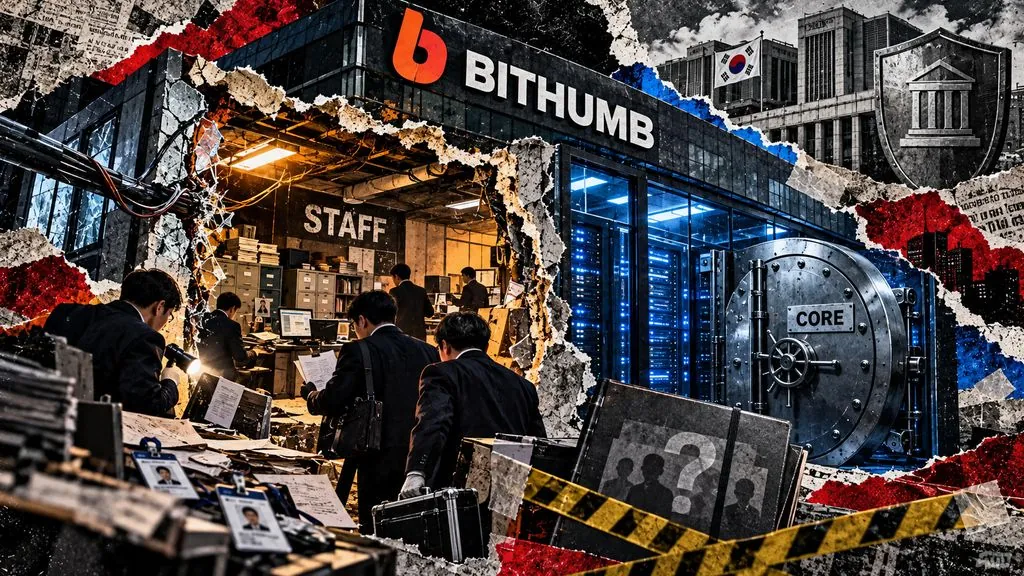
Domestic exchanges face a practical problem when users transfer assets in from overseas platforms. A local operator may record the assets received but lack the original purchase prices needed to calculate taxable gains. Officials are also reviewing whether exchange reporting systems can share records with the National Tax Service at the required scale. Bithumb has estimated the cost and time needed to build and test its reporting systems, although the figures were not finalized in the reporting available to CoinArticle.
Digital Asset Basic Act Adds Uncertainty
Lawmakers have questioned how the planned Digital Asset Basic Act, which covers crypto businesses and transaction structures, would interact with the tax framework. Oh said the government must consider possible changes to business classifications and transaction rules before finalizing the tax treatment. Crypto.news reported in October that the act had reached the final stages of government consultation, but no formal introduction date has been announced.
Sources Differ on Scope of the Delay
Seoul Economic Daily, as reported by Crypto.news, describes the two-year delay to 2029 as the preferred option among committee members. The Defiant characterizes the matter as a formal push by the ruling party, with a two-year postponement under discussion while the legal start date remains January 1, 2027. The sources agree on the status: a recommendation exists, the statute has not changed, and final decisions rest with party leadership and the legislature.
Why It Matters
For Traders
Until the party and legislature act, the January 1, 2027 start date remains law, so positions tied to South Korean tax timing should be assessed against the existing schedule.
For Investors
A delay tied to CARF data access signals that Korean crypto tax policy is being shaped by international reporting infrastructure, a structural factor for long-horizon exposure to the market.
For Builders
Exchanges serving Korean users should watch cost-basis and overseas transfer reporting requirements, since these will define what transaction data must be captured and shared.
This article is for information only and is not financial advice. Read the full disclaimer.