Trezor Confirms Skladon Breach Exposed About 27,000 Hardware Wallet Orders
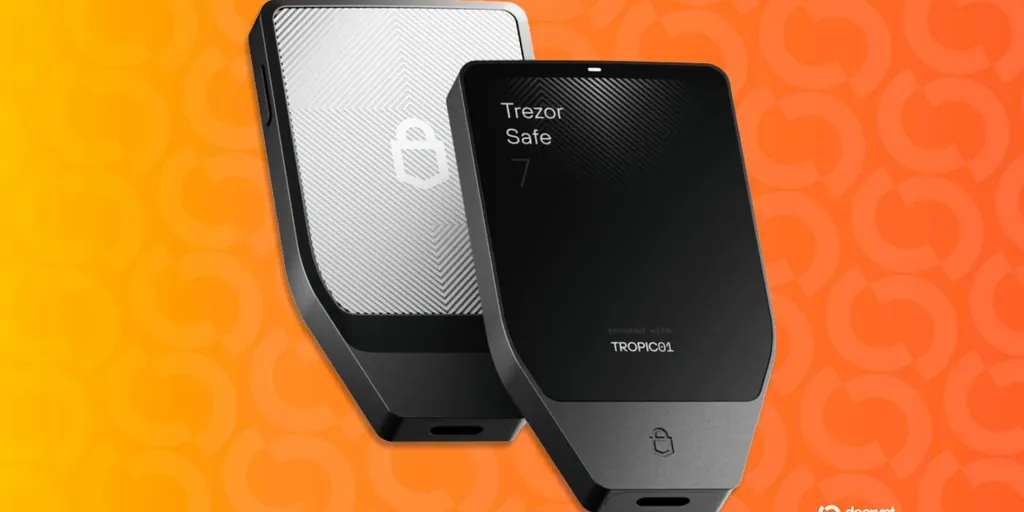
Trezor disclosed that a breach at shipping partner Skladon exposed personal data tied to roughly 27,000 hardware wallet orders placed between August 9 and November 7. The company said some customers have already reported scam calls, and that no PINs, passphrases or wallet backups were involved.
Written by CoinArticle’s AI Newsroom · from 2 cited sources. How we work
What Was Exposed
Trezor said the breach at shipping partner Skladon exposed names, delivery addresses, phone numbers, email addresses, purchase dates, products and prices tied to roughly 27,000 hardware wallet orders. The suspected export covers orders placed between August 9 and November 7, 2026. Trezor's own systems were not compromised, according to the company.
The company said in its November 16 disclosure that the intrusion occurred on November 7 and that Skladon notified Trezor only on November 15. Decrypt, citing the same disclosure, described the records as likely exported rather than confirmed exfiltrated, a distinction the two outlets' framing shares but that Trezor's own notice leaves open.
Scam Risk and Company Response
Trezor's FAQ confirms that some customers have already received scam calls. The company states that it will never call customers or ask for a wallet backup. Both outlets stress that no PINs, passphrases or backups were exposed, which limits the direct risk of fund theft; the main threat is social engineering that uses a buyer's name, address and device model to appear credible.
A small group who ordered between August 9 and 14 may not receive a notification email, because Trezor had already anonymized their records. Trezor said it has notified the data protection authority and is reviewing partner security requirements.
A Pattern of Third-Party Incidents
The Skladon incident is the third third-party security event involving Trezor customer data in roughly three months. Decrypt counts it alongside an August breach at logistics provider ShipMonk and a September intrusion at email provider Brevo. The two outlets differ on how many people the ShipMonk breach affected: Crypto.news reports 13,689 customers in the August disclosure, expanded by about 67,000 US records found in September, for more than 80,000 in total; Decrypt gives a combined total of 80,689 after an initial estimate of fewer than 14,000. Both agree the expanded figure reflects older records that ShipMonk had been assured were deleted.
The Brevo figures also diverge. Crypto.news attributes the intrusion to an authorization flaw affecting 138 customer accounts, with contacts exported from 43. Decrypt reports that 347,149 email addresses were exported. The gap likely reflects different measures of accounts accessed versus contact records taken, and neither source reconciles the two.
Remediation Steps
Trezor is working to cut its standard order retention period from 90 days to 45 days and to require shipping partners to follow the same policy. In a November 13 product announcement it also introduced anonymous pickup in supported countries, allowing buyers to use an alias, a disposable email address and an unbranded parcel without supplying a home address or phone number. Decrypt reports the option is available in 18 European countries; Crypto.news describes Germany as using a separate Discreet Pickup option that requires identification and notes the US is next for expansion without a date.
Trezor has told customers to ignore unexpected messages about orders, verify concerns through its official support site, and never share a wallet backup. Phishing can be reported through the support service on Trezor's website.
Why It Matters
For Traders
Trezor's exposure is primarily a social-engineering risk to individual holders rather than a protocol-level flaw, so near-term market impact on TREZOR-linked assets is likely limited.
For Investors
Repeated third-party breaches raise questions about Trezor's vendor oversight, a factor that may weigh on the perceived security premium of its hardware wallets over the coming quarters.
For Builders
The incident underscores that customer PII held by logistics and email vendors is a standing attack surface, pointing to data minimization and short retention as design requirements for wallet supply chains.
This article is for information only and is not financial advice. Read the full disclaimer.